
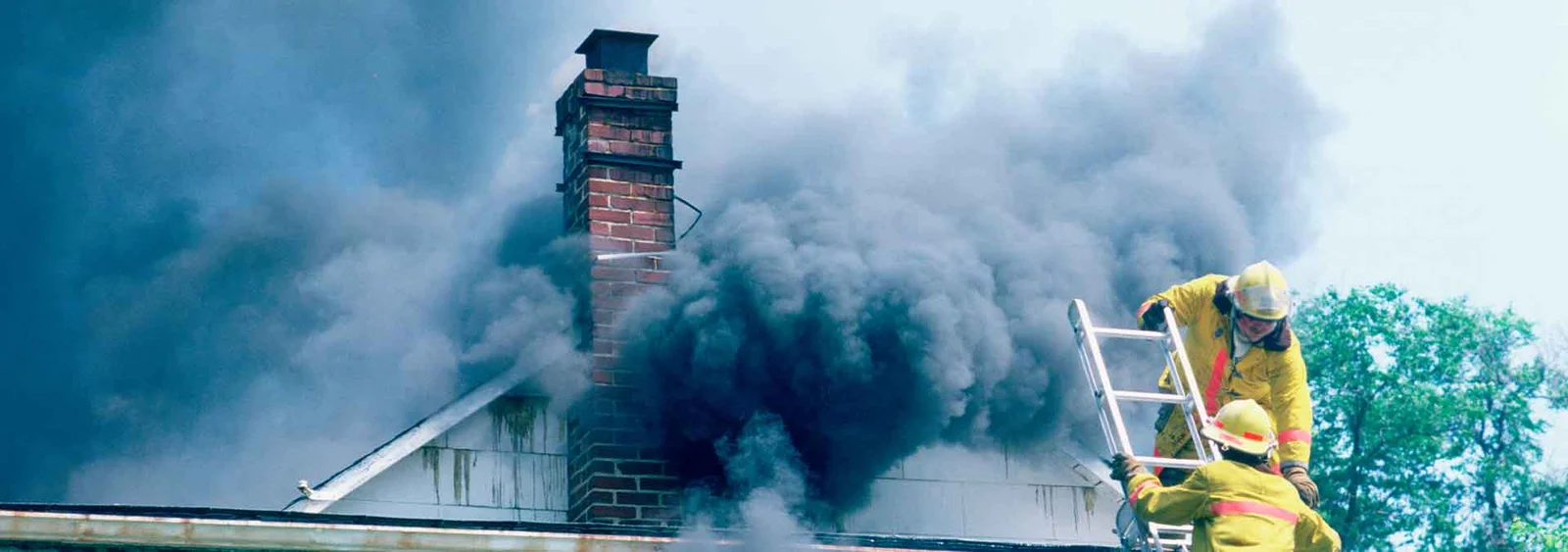
Best Option Restoration of Lakewood provides smoke damage restoration services in Federal Heights, CO, addressing hidden contamination from soot particles, acidic residues, and persistent odors that spread through homes after fires.
- Smoke particles as small as 0.1 microns can infiltrate HVAC systems, carpets, and wall cavities, continuing to degrade air quality for months if untreated. Federal Heights' semi-arid climate and elevation cause soot to spread further and bond differently to surfaces.
- The restoration process includes emergency assessment, containment, air quality stabilization, specialized soot removal, deep cleaning, and odor elimination using techniques like thermal fogging and HEPA vacuuming.
- The company offers 24/7 emergency response, IICRC-certified technicians, direct insurance billing, and thorough documentation to support claims. Homes built between 1955 and 1985 in the area present specific challenges due to older construction materials and HVAC systems.
Smoke damage restoration is the professional process of removing smoke particles, soot, and odors from a property after a fire. It is necessary because smoke spreads far beyond visible fire damage - particles infiltrate HVAC systems, settle into carpets and fabrics, and penetrate walls. Without proper restoration, lingering odors and harmful residues can persist indefinitely, affecting air quality and property value.
Overview
When a kitchen fire left the Martinez family's Federal Heights home filled with thick, acrid smoke last winter, they discovered something unsettling – the visible flames had been extinguished quickly, but the invisible damage had already spread through every room. Smoke particles had infiltrated their HVAC system, settled into carpet fibers, and left a persistent odor that seemed impossible to eliminate.
Smoke damage restoration involves far more than airing out a space or wiping down surfaces. Professional restoration addresses the microscopic soot particles that penetrate porous materials, the acidic residues that continue corroding surfaces long after flames are gone, and the complex odor molecules that embed themselves in building materials. Federal Heights' semi-arid climate and elevation of approximately 5,200 feet create unique challenges – dry air can cause soot to become more airite and spread further, while temperature fluctuations common along the Front Range can affect how smoke residues settle and bond to surfaces.
Professional smoke damage restoration matters because:
- Soot particles measure between 0.1 and 4 microns – small enough to bypass standard air filters and penetrate deep into lungs
- Acidic smoke residues begin corroding metals and discoloring surfaces within hours if untreated
- Improper cleaning techniques can permanently set stains and odors into materials
- Hidden smoke damage in wall cavities and ductwork continues degrading indoor air quality for months
Common Issues in Federal Heights, CO
When Smoke Damage Peaks in Federal Heights
Colorado's peak wildfire season brings smoke infiltration to homes even when fires are distant, requiring professional smoke odor and residue removal.
Increased use of fireplaces, space heaters, and holiday cooking leads to more residential fires and smoke damage incidents.
Dry conditions and high winds before spring moisture create elevated grass fire risk along the Front Range.
Best Option Restoration of Lakewood provides Smoke Damage Restoration services in all neighborhoods of Federal Heights including Countryside Village, Denver Cascade, Friendly Village, Holiday Hills Village, Kimberly Hills, Lamplighter Trailer Park, Redwood Estates, The Lodge, and Tuscan Heights.
Federal Heights sits within Adams County along the northern edge of the Denver metropolitan area, where residential neighborhoods blend with commercial corridors. The community experiences distinct seasonal patterns that influence both fire risks and smoke damage complications. Winter months bring increased heating appliance usage – a primary source of residential fires – while summer's dry conditions and occasional wildfire smoke from mountain regions compound indoor air quality concerns.
The area's housing stock, developed primarily between the 1950s and 1980s, presents specific vulnerabilities. Older construction often features less compartmentalized layouts, allowing smoke to travel more freely between rooms. Original HVAC systems in these homes may lack modern filtration, distributing smoke particles throughout entire structures before residents even notice a problem.
Common smoke damage scenarios in Federal Heights include:
- Kitchen fires from cooking oils and grease – the most frequent residential fire cause nationwide
- Furnace malfunctions during cold snaps when heating systems run continuously
- Electrical fires in older homes with original wiring systems
- Candle-related incidents, particularly during power outages from winter storms
- Wildfire smoke infiltration during summer months, seeping through gaps in older construction
- Fireplace and wood stove backdrafts caused by rapid pressure changes during Front Range wind events
Warning signs that smoke damage requires professional attention include persistent odors that return after cleaning, visible discoloration on walls or ceilings that spreads over time, respiratory irritation when spending time indoors, and HVAC systems that seem to distribute unusual smells throughout the home.
How Best Option Restoration of Lakewood Can Help
Our smoke damage restoration process begins with a thorough assessment that goes beyond surface appearances. We examine your Federal Heights property systematically, identifying both obvious damage and hidden contamination that untrained eyes might miss.
Our Step-by-Step Restoration Process
- Emergency Response and Assessment – Our team arrives to evaluate the extent of smoke penetration, document damage for insurance purposes, and develop a customized restoration plan
- Containment and Protection – We isolate affected areas to prevent cross-contamination and protect undamaged belongings and surfaces
- Air Quality Stabilization – Industrial air scrubbers and negative air machines begin removing airborne particles immediately
- Soot and Residue Removal – Using specialized techniques matched to each surface type, we remove smoke residues before they cause permanent damage
- Deep Cleaning and Sanitization – All affected surfaces, contents, and materials undergo thorough cleaning using professional-grade solutions
- Odor Elimination – We deploy thermal fogging, ozone treatment, or hydroxyl generators based on the specific smoke type and materials affected
- Final Inspection and Air Quality Testing – Before completion, we verify that smoke contamination has been fully addressed
Specialized Techniques We Employ
- Dry sponge cleaning for light, dry smoke residues on painted surfaces
- Wet cleaning methods for protein-based smoke from kitchen fires
- HEPA vacuuming for loose soot particles on textiles and upholstery
- Ultrasonic cleaning for electronics and delicate items
- Thermal fogging that penetrates the same pathways smoke traveled
Throughout the restoration process, we maintain open communication with you. Expect regular updates on progress, clear explanations of what we're doing and why, and honest assessments of what can be restored versus what may need replacement. Our goal is eliminating uncertainty during an already stressful situation.
Insurance & Documentation
Navigating insurance claims after smoke damage can feel overwhelming, but proper documentation makes the process significantly smoother. We work alongside your insurance adjuster – not against them – to ensure your claim accurately reflects the full scope of damage.
Our documentation practices include:
- Comprehensive photo and video documentation of all affected areas before restoration begins
- Detailed written inventories of damaged contents with condition assessments
- Moisture and air quality readings that provide objective damage measurements
- Daily work logs documenting all restoration activities performed
- Material and equipment records showing industry-standard methods were used
We maintain IICRC certification – the Institute of Inspection, Cleaning and Restoration Certification – which insurance companies recognize as the industry standard for restoration work. This certification ensures our methods meet or exceed the protocols insurers expect, reducing claim disputes and delays.
Our team can communicate directly with your insurance adjuster, provide supplemental documentation if initial estimates prove insufficient, and help you understand what your policy covers. We believe you shouldn't have to become an insurance expert during an emergency – that's part of what we handle for you.
Why Choose Best Option Restoration of Lakewood
Serving the greater Denver metro area including Federal Heights, our team combines technical expertise with genuine local understanding. We know the specific challenges Front Range properties face, from the effects of low humidity on smoke residue behavior to the construction methods common in Adams County neighborhoods.
What sets our approach apart:
- 24/7 emergency response – smoke damage worsens by the hour, so we're available when disasters happen
- IICRC-certified technicians trained in the latest restoration science
- Direct insurance billing that simplifies your claims process
- Clear, upfront communication about realistic timelines and expectations
- Follow-up inspections to ensure odors and contamination don't return
We've built our reputation on treating every property as if it were our own home. That means honest assessments, respectful treatment of your belongings, and restoration work we stand behind completely.
Housing Characteristics & Smoke Damage Restoration Considerations
Federal Heights developed primarily during the post-World War II suburban expansion, with the majority of homes constructed between 1955 and 1985. This housing stock reflects the building practices of that era – single-story ranch homes and split-level designs dominate the landscape, typically ranging from 1,000 to 1,600 square feet. These modest-sized homes were built for growing families seeking affordable homeownership along Denver's northern corridor.
Construction materials common to this period create specific smoke damage considerations:
- Plaster walls in older homes absorb smoke odors deeply but can often be restored with proper techniques
- Original hardwood floors under carpet may have hidden smoke damage requiring specialized assessment
- Aluminum wiring in 1960s-1970s construction increases fire risk and may indicate homes more susceptible to electrical fires
- Single-pane windows and minimal insulation allow smoke to penetrate wall cavities more readily
- Original HVAC ductwork – often unlined sheet metal – accumulates soot that continues circulating after fires
Multi-family properties, including apartment complexes and duplexes common along Federal Boulevard, present additional challenges. Shared wall construction means smoke from one unit frequently affects neighbors, requiring coordinated restoration efforts. The relatively compact lot sizes typical of Federal Heights also mean fires in one property can deposit smoke residues on adjacent homes, even without flame spread.
Understanding these housing characteristics allows us to anticipate where smoke damage hides and develop restoration approaches specific to Federal Heights construction patterns.
Environmental Conditions & Smoke Damage Restoration Implications
Federal Heights experiences the classic Front Range climate – semi-arid conditions with approximately 15 inches of annual precipitation, low average humidity around 40-50%, and over 300 days of sunshine annually. These environmental factors significantly influence how smoke damage develops and how restoration must be approached.
Low humidity affects smoke damage restoration in several ways:
- Dry air causes soot particles to remain airborne longer, spreading contamination further from fire sources
- Smoke residues dry quickly, potentially setting into surfaces before cleaning can occur
- Static electricity buildup in dry conditions attracts soot particles to synthetic materials
- Dehumidification – standard in humid climates – plays a smaller role here, while air scrubbing becomes more critical
The region's air quality presents additional considerations. Federal Heights sits within the Denver-Aurora-Lakewood metropolitan area, which occasionally experiences elevated ozone levels and particulate matter from vehicle emissions and industrial activity. During summer months, wildfire smoke from mountain regions can drift into the area, compounding indoor air quality problems in homes already affected by fire damage.
Temperature extremes – from summer highs exceeding 95°F to winter lows well below freezing – affect restoration timing and techniques. Thermal fogging for odor elimination works best within specific temperature ranges, and certain cleaning solutions require climate-controlled conditions for optimal effectiveness. Our team adjusts methods based on current environmental conditions to ensure thorough restoration regardless of season.
Population Characteristics & Smoke Damage Restoration Considerations
Federal Heights is home to approximately 13,000 residents in a compact 1.5 square mile area, creating one of the denser suburban communities in Adams County. This population density means more homes in close proximity – when one property experiences fire or smoke damage, neighboring homes often require assessment and sometimes restoration services as well.
The community's demographic profile influences service needs:
- Median household income around $45,000-$50,000 means many residents rely heavily on insurance coverage for restoration costs
- Significant renter population requires coordination between tenants, landlords, and sometimes multiple insurance policies
- Diverse community with substantial Spanish-speaking population – we provide bilingual communication when needed
- Higher proportion of working families means scheduling flexibility for inspections and restoration work is essential
- Elderly residents on fixed incomes may need assistance understanding insurance options and restoration priorities
Employment patterns in Federal Heights lean toward service industry, retail, and light industrial work, with many residents commuting to jobs throughout the Denver metro area. This working population often cannot take extended time off to manage restoration projects, making our comprehensive project management and direct insurance communication particularly valuable.
The community's economic diversity also means housing conditions vary significantly. Some properties have been well-maintained and updated, while others retain original systems and materials that may complicate restoration. We approach each property individually, providing honest assessments and restoration plans that respect both the home's condition and the homeowner's circumstances.
Fire Incident Data and Risk Factors in Federal Heights
Adams County, which includes Federal Heights, responds to thousands of fire-related calls annually through its network of fire protection districts. The North Metro Fire Rescue District serves Federal Heights and surrounding communities, maintaining stations positioned to provide rapid response to this densely populated area. Understanding local fire patterns helps homeowners recognize risks and respond appropriately when incidents occur.
Residential fire statistics relevant to Federal Heights include:
- Cooking fires account for approximately 50% of residential fires nationally – a pattern reflected locally
- Heating equipment fires spike during November through February, coinciding with Colorado's coldest months
- Electrical fires occur disproportionately in homes built before 1980 – the majority of Federal Heights housing stock
- Smoke alarm presence reduces fire death risk by approximately 50%, yet many older homes lack interconnected alarm systems
- Attached garage fires can produce particularly toxic smoke due to vehicle fluids, paints, and chemicals stored there
The compact, grid-pattern streets of Federal Heights allow fire department response times generally under five minutes for most addresses. However, even brief fires produce significant smoke damage. A kitchen grease fire extinguished within minutes can deposit soot throughout an entire home via HVAC circulation. Structure fires that burn for 10-15 minutes before suppression typically require comprehensive restoration of all affected areas.
Wildfire smoke infiltration represents a growing concern for Front Range communities. During active fire seasons, air quality alerts become common, and homes with older windows, doors, and weatherstripping allow outdoor smoke to penetrate indoor spaces. While not producing the same concentrated damage as structure fires, prolonged wildfire smoke exposure can leave lasting odors in soft furnishings, require HVAC cleaning, and exacerbate respiratory conditions for sensitive residents. Our restoration services address both acute fire damage and the cumulative effects of smoke infiltration from external sources.
Weather & Alerts in Federal Heights, CO
Current Conditions
Temp: 65°F · Feels like: 63°F
Humidity: 56% · Wind: 5 mph
Emergency Alerts
No active alerts.
Smoke Damage Restoration in Other Service Areas
Useful Numbers
- Life-threatening emergencies
- 911
- Poison Control
- 1-800-222-1222
- Suicide Prevention Lifeline
- 988
- Police (non-emergency)
- Visit your local police department website
- Fire Department (non-emergency)
- Check the Federal Heights city website
- City Hall
- Available on the official Federal Heights government website
- Non-Emergency Services
- Call 311 if available in your area
Always verify numbers from official city/county websites.