
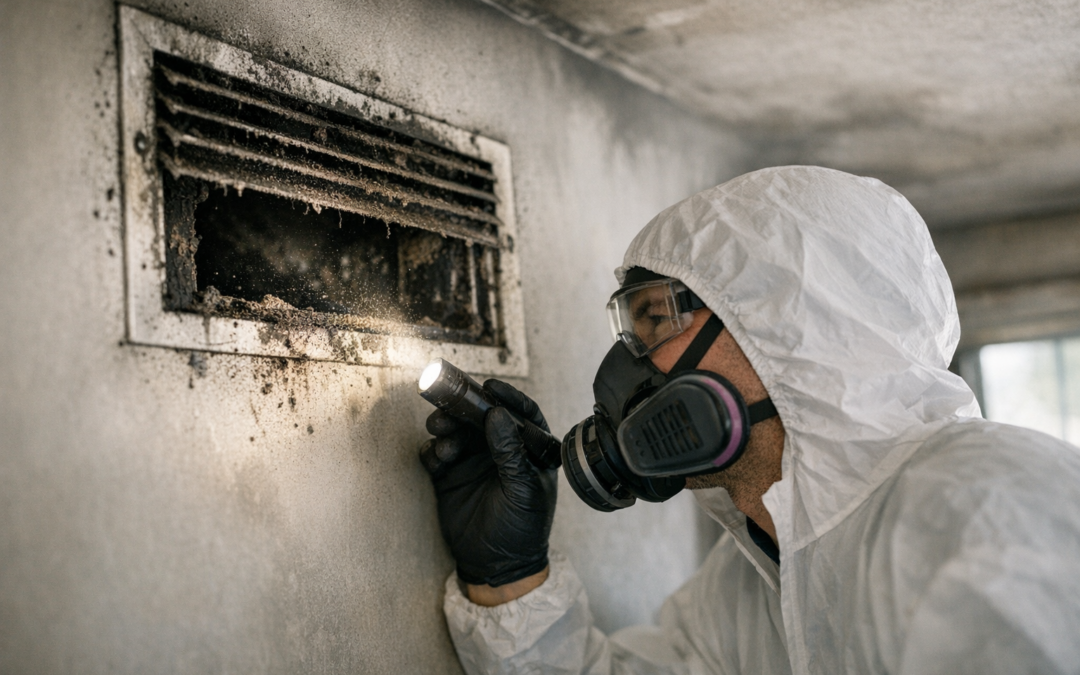
Smoke damage air quality issues persist long after visible soot is cleaned, as fine particles, gases, and odor compounds settle into drywall, insulation, and HVAC systems where they continue polluting indoor air for months.
- Fine particulate matter (PM2.5) from smoke bypasses the nose and throat to reach deep lung tissue, while burning synthetic materials release toxic VOCs and cancer-linked PAHs that embed in porous surfaces.
- Hidden reservoirs like air ducts, wall interiors, insulation, and attic spaces trap smoke residue and slowly release contaminants - explaining why homes can smell fine one week and sour the next.
- Surface cleaning alone is not enough since standard vacuums push particles back into the air. Effective remediation requires HEPA filtration, deep duct cleaning, thermal fogging, and replacing contaminated materials.
Smoke damage continues to affect indoor air quality long after visible soot is cleaned. Fine particles, gases, and odor compounds settle deep into drywall, insulation, and HVAC systems where they keep releasing pollutants into the air. Even months after a fire, homes can still show elevated contaminant levels that pose ongoing health risks to occupants.
Smoke damage air quality problems do not disappear when the visible soot is wiped away. Fine particles, gases, and odor compounds settle into drywall, insulation, and HVAC systems where they keep polluting the air you breathe. Months after a fire, a home can still register elevated contaminant levels.
This post explains how smoke affects the air inside your home, what happens over the long term, and which health risks matter most. You will learn what stays behind, why it lingers, and how to restore breathable air.
How Smoke Damage Affects Indoor Air Quality
Smoke damage lowers indoor air quality by loading the air with microscopic particles and toxic gases. A single house fire produces soot, ash, and volatile organic compounds that spread far beyond the burn area.
Fine particulate matter (PM2.5) is the main concern. These particles measure less than 2.5 microns wide. They bypass the nose and throat and reach the deepest part of the lungs.
Smoke residue carries more than carbon. Burning synthetic materials like carpet, foam, and plastics creates a chemical mix that keeps releasing fumes.
What Smoke Leaves Behind
After a fire, several contaminants stay in the air and on surfaces:
- Soot and ash — carbon particles that coat walls, ceilings, and vents
- Volatile organic compounds (VOCs) — gases released from scorched plastics and finishes
- Polycyclic aromatic hydrocarbons (PAHs) — chemical compounds linked to cancer risk
- Carbon monoxide and other gases — dangerous during and shortly after combustion
- Odor molecules — tiny compounds that embed in porous materials
Grease fires, electrical fires, and wildfire smoke each leave a different residue. A protein fire from cooking, for example, leaves a thin, greasy film with a sharp smell that clings to every surface.
Why Smoke Contaminants Linger for Months
Smoke does not stay where the fire happened. Hot air carries particles into cooler spaces, forcing residue into wall cavities, attics, and ductwork.
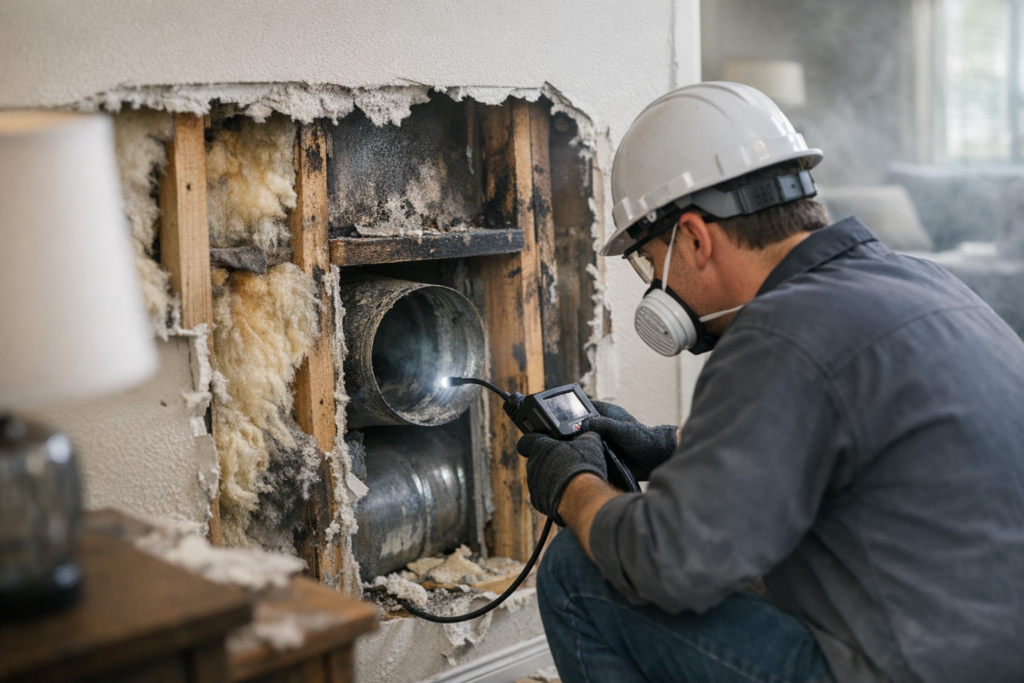
Porous materials trap smoke and release it slowly. Drywall, carpet padding, and upholstery absorb odor compounds like a sponge. Warm, humid days reactivate that residue and push the smell back into the room.
HVAC systems make the problem worse. When the furnace or air conditioner runs, it pulls contaminated air across coils and filters, then spreads it to every room.
The Hidden Reservoirs
Homeowners clean the visible surfaces and assume the job is finished. The real reservoirs sit out of sight:
- Air ducts — soot settles inside metal and flex ducting
- Insulation — fiberglass and cellulose hold odor and particles
- Wall interiors — smoke migrates behind outlets and baseboards
- Attic and subfloor spaces — residue collects where airflow is low
Without treatment, these areas keep feeding contaminants into your living space. That is why a home can smell fine one week and sour the next.
Long-Term Health Effects of Smoke Damage Air Quality
Long-term exposure to smoke residue raises the risk of respiratory disease, heart problems, and repeated infections. The danger comes from breathing low-level particles day after day, not from a single event.
Children, older adults, and people with asthma face the highest risk. Their lungs and immune systems react faster to airborne irritants.
Respiratory and Cardiovascular Damage
Fine particles inflame lung tissue over time. Chronic exposure can worsen asthma, trigger bronchitis, and reduce lung function.
PM2.5 also enters the bloodstream. Research links long-term particle exposure to higher rates of heart attack and stroke.
Chemical Exposure and Cancer Risk
PAHs and other combustion byproducts settle into house dust. People touch surfaces, then transfer residue to their mouths, food, and skin.
Some of these compounds are known carcinogens. Firefighters face elevated cancer rates in part because of repeated smoke exposure, and lingering home residue creates a milder version of the same risk.
Symptoms That Point to Poor Air Quality
Ongoing indoor air pollution from smoke shows up as physical complaints. Watch for signs that persist after cleanup:
- Frequent headaches or dizziness indoors
- Sore throat, coughing, or chest tightness
- Itchy or watering eyes
- Worsening allergy or asthma symptoms
- A smoky odor that returns in warm weather
If symptoms ease when you leave the house and return when you come back, the air inside likely still holds contaminants.
Why Surface Cleaning Is Not Enough
Wiping soot off walls removes what you can see, not what you breathe. Odor and gas molecules keep releasing from materials that hold them.
DIY cleaning frequently spreads soot instead of removing it. Standard vacuums push fine particles back into the air. Household cleaners can set greasy residue into paint and grout.
Effective smoke restoration reaches the sources of indoor air pollution, not just the surfaces. That means addressing ducts, insulation, and hidden cavities where particles hide.
What Real Smoke Remediation Involves
Restoration crews target contaminants at every level of the home:
- Air testing to identify particle and VOC levels
- HEPA filtration and air scrubbers to capture PM2.5
- Deep cleaning of walls, ducts, and framing
- Thermal fogging or hydroxyl treatment to neutralize odor molecules
- Sealing or replacing materials that cannot be cleaned
Replacing contaminated insulation and duct liners removes the reservoirs that keep polluting the air. This is what separates lasting results from a temporary fix.

My situation was unique, involving secondhand smoke damage to my property and car, and an industrial grade chemical exposure that resulted in a life threatening allergy/chronic illness.
Paul, RJ, and Jaden were great and saved my car after multiple details/ozone attempts failed at other places, and they went above+beyond picking up my car when i couldn’t drive it. They gave me multiple quotes for other areas and never once pressured me to do anything which I really appreciated while I was so sick. If you choose Best Option, your house/belongings/car will be in the hands of a patient, caring, communicative company who won’t stop until you are satisfied with the results. Look forward to using them in the future.
 Posted on Google
Steps You Can Take Right Now
Fast action limits how far smoke settles and how long it lingers. Take these steps while you arrange restoration:
- Ventilate by opening windows if outdoor air is clean
- Turn off the HVAC system to stop spreading soot
- Change or remove air filters saturated with residue
- Cover food and dishes to limit contamination
- Avoid touching soot with bare hands
- Run a HEPA air purifier in occupied rooms
Do not repaint or seal walls before cleaning. Painting over soot traps odor and lets it seep out later.
Protecting Your Home and Health After a Fire
Smoke damage air quality problems build quietly and stay long after the flames are out. Fine particles, VOCs, and odor compounds settle into hidden spaces where they keep affecting your lungs, heart, and comfort for months.
The safest path is thorough remediation that reaches every reservoir, not just visible surfaces. If your home has been affected by fire or smoke, Best Option Restoration can test the air, clean the sources, and restore breathable conditions.
Call or text 303-500-3187, email info@borlakewood.com, or visit https://borlakewood.com to get started.
Sources
- US EPA – Wildfires and Indoor Air Quality (IAQ)
- U.S. Environmental Protection Agency – Health and Environmental Effects of Particulate Matter (PM)
- Centers for Disease Control and Prevention (NIOSH) – Fire Fighter Cancer Research
- US EPA – Wildfires and Indoor Air Quality (IAQ)