

Ice dams form when heat escaping from the attic melts rooftop snow, which refreezes at cold eaves and forces water under shingles. Most prevention work happens before winter through air sealing, insulation, and proper ventilation.
- Seal attic air leaks around lights, fans, and hatches, then add insulation to R-49 or R-60 levels to stop heat from warming the roof deck.
- Clear soffit vents, install rafter baffles, and clean gutters before the first freeze to keep airflow moving and prevent ice buildup.
- Use a roof rake to remove snow from the lower three to four feet of roof edge after heavy storms, and call a restoration service if water has already entered the home.
Prevent ice dams by improving attic insulation and sealing air leaks before winter arrives. Proper ventilation keeps the roof deck cold so snow melts evenly rather than refreezing at the eaves. Homeowners should also clear gutters, add weatherstripping around attic hatches, and consider installing heat cables along roof edges in problem areas.
An ice dam can push water under your shingles in a single afternoon, long before you notice stains on the ceiling. The repair bill often reaches thousands of dollars once water soaks insulation, drywall, and framing. The good news: most of the work to prevent ice dams happens before the first snowfall, and homeowners can handle a large share of it themselves.
This post breaks down what causes ice dams, which fall projects stop them, and when to call for help. Every step below is ordered by what matters most for roof leak prevention.
What an Ice Dam Is and Why It Forms
An ice dam is a ridge of ice that builds up at the edge of a roof and blocks melting snow from draining. Water pools behind the ridge, then works its way under shingles and into the home.
The cause is uneven roof temperature. Heat escaping from the living space warms the upper roof deck, melting snow. That meltwater runs down to the cold eave, where it refreezes.
Three conditions create the pattern:
- Heat loss from the attic warms the roof deck above freezing.
- Snow cover acts as insulation, trapping that heat.
- Cold eaves and gutters freeze the runoff at the edge.
Fix the temperature difference across the roof and the dam cannot form. That single idea drives every step below.
How to Prevent Ice Dams Before Winter: 7 Steps
Follow this order. Air sealing and insulation stop the heat that feeds dams, so they come first. Ventilation and gutter work handle what is left.
- Seal attic air leaks. Warm indoor air leaks around recessed lights, bathroom fans, the attic hatch, and plumbing stacks. Seal gaps with fire-rated caulk or expanding foam. This cuts the heat that melts rooftop snow.
- Add attic insulation. The U.S. Department of Energy recommends roughly R-49 to R-60 for attics in cold Colorado climates. Many homes built before 1990 sit near R-19. Topping up to code depth is one of the highest-return fixes.
- Check soffit and ridge ventilation. Cold air should flow in at the soffits and out at the ridge. Blocked soffit vents are a common cause of a warm roof deck. Clear insulation that has slumped over the vents.
- Install baffles at the eaves. Rafter baffles hold insulation back from the soffits so air keeps moving. Without them, insulation chokes airflow right where dams form.
- Clean the gutters and downspouts. Leaves and debris trap water that freezes into a starter ridge. Flush every downspout before the first freeze.
- Insulate attic ductwork. Uninsulated HVAC ducts dump heat into the attic. Wrap them and seal the joints with mastic.
- Verify the attic hatch seals tight. An uninsulated hatch is a direct hole for warm air. Add rigid foam to the back and weatherstrip the edges.
Homeowners can do steps 1, 5, 6, and 7 in a weekend. Steps 2 through 4 go faster with a contractor if your attic is cramped.
Signs Your Roof Is at Risk This Year
Some houses dam up every winter in the same spot. Watch for these warning signs during the first snow.
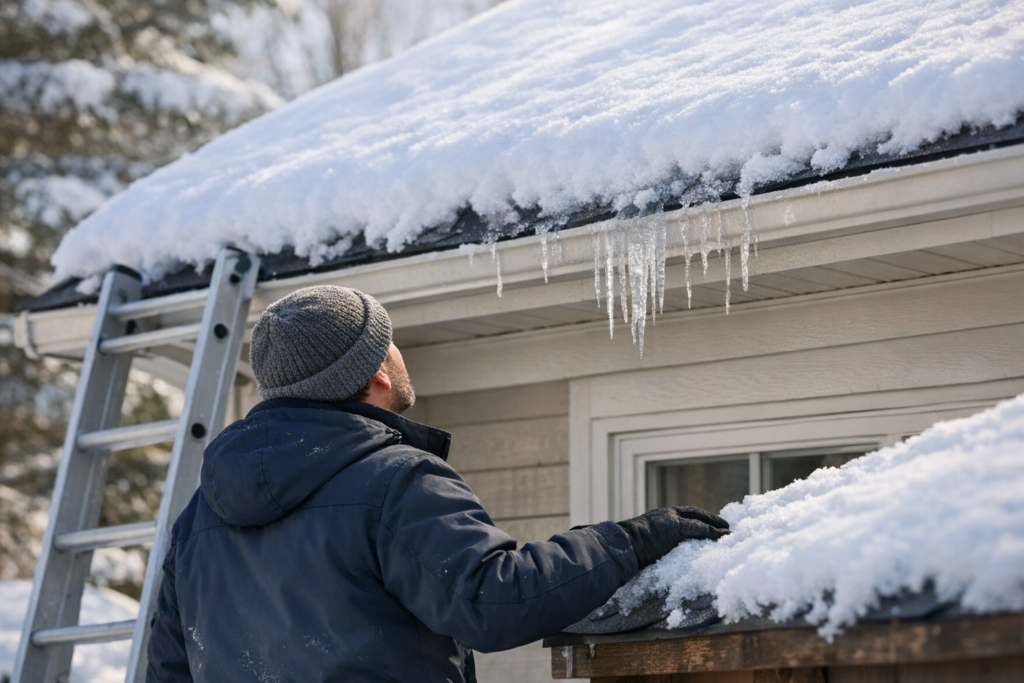
- Icicles along the gutter line. A few are normal. A thick, continuous row signals meltwater refreezing at the edge.
- Bare patches on the roof after snow. Melted stripes above warm rooms point to heat loss and air leaks.
- Frost on attic nails or rafters. Warm, moist air is hitting the cold deck. That moisture feeds both dams and mold.
- Water stains near exterior walls. Often the first visible proof that a dam already pushed water inside.
A roof that melted unevenly last winter will do it again. The spots that bared first are the ones to air-seal first.
Roof Leak Prevention Measures Worth the Money
Air sealing and insulation address the cause. The measures below add a backstop for homes that still dam in hard winters.
Ice-and-Water Shield Membrane
Ice-and-water shield is a self-adhering waterproof membrane installed under shingles along the eaves. It blocks water that backs up behind a dam from reaching the deck. Colorado roofing code requires it at eaves on new roofs in many jurisdictions.
If your roof predates this requirement, add the membrane during your next reroof. It is the strongest roof leak prevention layer you can build in.
Heated Cables as a Targeted Fix
Heat cables melt channels so trapped water can drain. They treat the symptom, not the cause, and they raise your electric bill. Use them only on a known problem eave after insulation and ventilation work falls short.
Metal Drip Edge and Clean Eaves
A metal drip edge directs runoff into the gutter instead of behind it. Pair it with clear gutters so meltwater keeps moving on warm afternoons.
Safe Snow Removal During Winter
Removing snow from the lower roof edge cuts off the dam’s fuel. A roof rake with a long handle lets you work from the ground.
- Rake the first three to four feet of roof edge after each heavy snow.
- Pull snow straight down, not sideways across the shingles.
- Keep the rake clear of power lines and plumbing vents.
- Never climb an icy roof or chip at ice with a hammer or shovel.
Chipping ice tears shingles and voids many roof warranties. If a dam has already formed, stop raking and call for help.

I cannot say enough about the professionalism. personal attention, caring, routine and way above the call of duty that Paul and his staff provided. As but one critical example, another national firm, at estimating, shared that carpets, etc. in two bedrooms were not impacted and needed no mitigation. Only four hours later, in more comprehensive and concerned evaluation, Paul noted the bedrooms were impacted. Imagine the consequences if I had not followed the time, attention, and concern Paul gave.
Paul and his team's full documentation of conditions in photos and records, and his follow-up interface with insurance companies, reflects his knowledge and professionalism, not to mention.concern on my behalf.
I am very grateful to Paul and his staff. We all know "a person's home is his/her castle". I am forever grateful to Paul and BOR for caring about mine. Any client will be glad they hire Paul and the personal service BOR team.
 Posted on Google
When Water Is Already Inside
Act fast once you see a ceiling stain or dripping. Water spreads along framing and insulation within hours.
- Move furniture and valuables away from the drip.
- Place a bucket and lay down towels.
- Poke a small hole in a bulging ceiling to let trapped water drain into the bucket.
- Photograph the damage for your insurance claim.
Hidden moisture behind walls causes mold within 24 to 48 hours. Drying the visible area is rarely enough, which is where a restoration crew with moisture meters matters.
Why Early Action Pays Off
Air sealing and insulation lower both your winter dam risk and your heating bill. Most homes recover the cost in energy savings over a few seasons. Waiting until January means paying for emergency repairs on top of the water damage.
The homes that stay dry are the ones whose owners did the attic work in October. That is the whole point of acting before the first storm.
Key Takeaways
To prevent ice dams, keep the roof deck cold by sealing attic air leaks, adding insulation, and clearing soffit vents. Add an ice-and-water membrane and keep gutters clean for roof leak prevention backup. Handle the fall projects now, and keep a roof rake ready for heavy snow.
If water has already found its way inside, Best Option Restoration responds fast to water damage from ice dams and roof leaks. Call or text 303-500-3187, email info@borlakewood.com, or visit https://borlakewood.com to get help drying out and repairing your home.
Sources
- U.S. Department of Energy – Insulation and Recommended R-Values
- University of Minnesota Extension – Dealing with and Preventing Ice Dams
- Insurance Information Institute – Protecting Your Property Against Ice Dams