

Water damage worsens by the hour, with mold beginning to colonize within 24 to 48 hours. A fast response can mean the difference between a few hundred dollars in drying costs and a $10,000 reconstruction job.
- A burst supply line can push 100 gallons into floors and cabinets in under an hour. Shutting off the water source and cutting power to affected areas should happen before anything else.
- Document all damage with photos and video before cleaning, then remove standing water using wet/dry vacuums or buckets. Start air movement with fans and dehumidifiers to slow moisture spread.
- Call professionals when water covers multiple rooms, involves gray or black water, has sat for more than 24 hours, or has soaked into subfloors and drywall. Hidden moisture behind walls is where most homeowners lose the battle.
Immediate action after water damage is the single biggest predictor of how much property you lose and how much you spend on repairs. Water spreads faster than most homeowners expect - a burst supply line under a kitchen sink can push 100 gallons into floors and cabinets in under an hour, causing extensive damage to structures and belongings.
Water spreads faster than most homeowners expect. A burst supply line under a kitchen sink can push 100 gallons into your floors and cabinets in under an hour. That is why immediate action water damage response is the single biggest predictor of how much you lose and how much you spend.
This post walks you step by step through what to do in the first minutes, hours, and days after water enters your home. You will learn what saves your property, what wastes your money, and when to call for help.
Why Immediate Action After Water Damage Changes Everything
Water damage worsens by the hour, not by the day. The difference between calling within 60 minutes and waiting two days is the difference between drying a room and gutting it.
Here is a rough timeline of how water damage progresses when left untreated:
- 0-24 hours: Water wicks into drywall, baseboards, and subfloor. Furniture finishes bleed onto carpet.
- 24-48 hours: Mold begins to colonize. Drywall swells and crumbles. Metal fixtures start to rust.
- 48-72 hours: Structural warping sets in. Mold spreads behind walls. Odors become embedded.
- Beyond 72 hours: Category classification worsens. Remediation costs climb sharply.
The Institute of Inspection, Cleaning and Restoration Certification (IICRC) sets 24 to 48 hours as the window before mold takes hold. Beating that clock is the entire point of fast water damage response.
What Slow Response Actually Costs
A clean-water leak caught in hour one might cost a few hundred dollars in drying equipment rental. The same leak ignored for three days can turn into a $10,000 mold and reconstruction job.
Insurance matters here too. Many policies reduce or deny claims when a homeowner fails to take reasonable steps to limit damage.
Step-by-Step Immediate Action Water Damage Plan
Follow these steps in order the moment you discover standing water or an active leak. Safety comes before property every time.
Step 1: Stop the Water Source
Shut off the water before touching anything else. For a burst pipe or appliance line, use the fixture’s local shutoff valve or the main shutoff, usually near the water meter or where the line enters the house.
If the water is coming from a storm or sewer backup, you cannot stop it at the source. Move straight to safety and containment steps.
Step 2: Cut the Power in Affected Areas
Water and electricity are a lethal combination. Switch off power at the breaker for any flooded room before you step into it.
Never enter standing water if outlets, cords, or appliances are submerged. If the breaker panel itself sits in a wet area, stay out and call an electrician.
Step 3: Document Everything for Your Claim
Photograph and video the damage before you move or clean anything. Capture standing water, soaked belongings, and the source of the leak.
- Wide shots of each affected room
- Close-ups of damaged items and serial numbers on appliances
- The failure point (cracked pipe, overflowed tub, backed-up drain)
This record protects your insurance claim and speeds up reimbursement.
Step 4: Remove Standing Water Fast
Get water out within the first hours to slow damage. Use a wet/dry vacuum, buckets, mops, and towels for smaller amounts.
For anything past a few inches, or water covering a large area, this becomes a job for extraction pumps that restoration crews carry.
Step 5: Protect and Move Your Belongings
Lift furniture off wet carpet and place aluminum foil or wood blocks under the legs. This stops finish stains and rust marks from transferring.
Move photos, documents, electronics, and valuables to a dry room. Wet leather and fabric items should be spread out, not stacked.
Step 6: Start Air Movement and Ventilation
Open windows if the outside air is dry, and run fans to push air across wet surfaces. Point box fans at walls and floors, not just the ceiling.
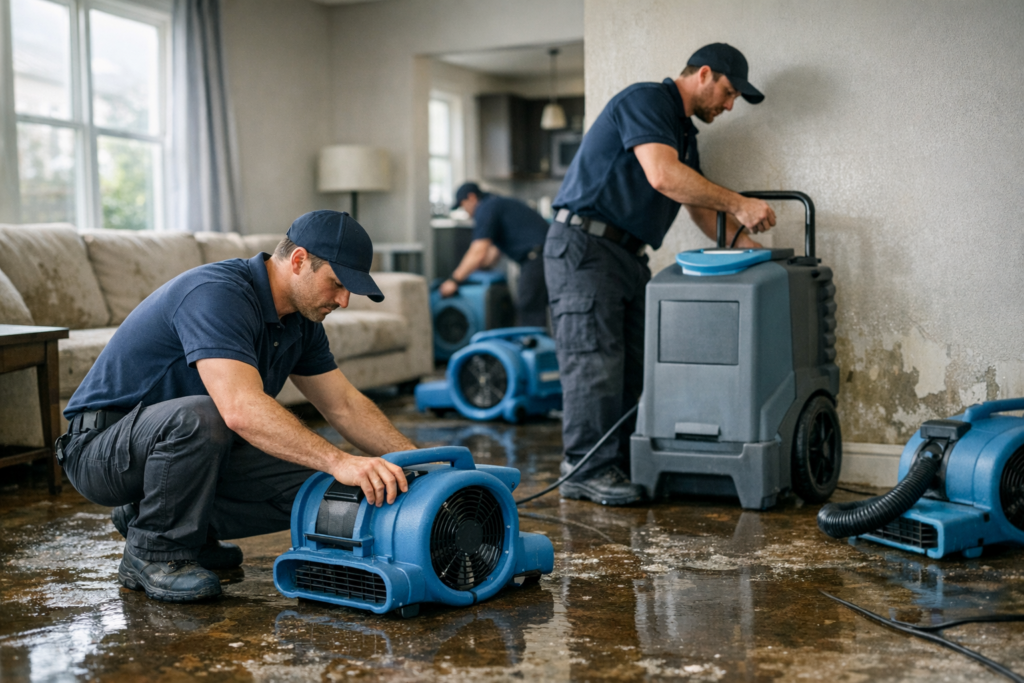
A dehumidifier pulls moisture out of the air and speeds drying. This early airflow buys you time before equipment-grade drying arrives.
Step 7: Call a Restoration Company
Call for help as soon as the immediate hazards are handled. Restoration crews use moisture meters and thermal cameras to find water you cannot see behind walls and under floors.
Best Option Restoration in Lakewood answers water emergencies and can mobilize drying equipment while damage is still contained. Reach the team at 303-500-3187.
What Not to Do After Water Damage
Some instincts make the situation worse. Avoid these common mistakes:
- Do not use a household vacuum to suck up water. It is not built for liquid and can shock you.
- Do not leave wet fabrics in place. Rugs and upholstery hold moisture against floors and breed mold.
- Do not assume drywall dried on its own. Surfaces feel dry while the cavity behind stays wet for days.
- Do not turn on ceiling fixtures if water may have reached the wiring above.
- Do not wait to call your insurer. Report the loss the same day you find it.
How Water Category Affects Your Response
Not all water is equal. The IICRC sorts water damage into three categories, and each changes how you should react.
- Category 1 (clean water): From supply lines or faucets. Safe to handle with basic protection, but it degrades to Category 2 within hours.
- Category 2 (gray water): From dishwashers, washing machines, or toilet overflow without solids. Contains contaminants. Limit contact.
- Category 3 (black water): From sewage, flooding, or standing water that has sat too long. Hazardous. Stay out and call a crew.
A Category 1 leak becomes Category 2 in 48 hours and Category 3 not long after. Speed keeps the water in the safer, cheaper category.

As a real estate broker my client needed a restoration company and found Paul Kang, He was immediate, followed through and relieved us of the burden for mitigating something we knew very little about. They are in my Rolodex!
 Posted on Google
When to Handle It Yourself vs. Call a Crew
You can manage small, clean-water spills caught within the first hour. A cup of water under a sink or a small overflow rarely needs a crew.
Call professionals when any of these apply:
- Water covers more than one room or seeps into walls
- The source is gray or black water
- Water sat for more than 24 hours
- You smell must or see any mold growth
- Hardwood, subfloor, or drywall is soaked
Hidden moisture is where most homeowners lose the battle. Restoration crews confirm dryness with meters instead of guessing by touch.
Key Takeaways
Fast immediate action water damage response protects your property, your health, and your insurance claim. Stop the water, cut the power, document the loss, extract the water, and call for help before the 24-hour mold window closes.
When water damage hits your home in Lakewood, Best Option Restoration responds fast with extraction and drying equipment. Call or text 303-500-3187, email info@borlakewood.com, or visit https://borlakewood.com.
Sources
- IICRC – ANSI/IICRC S500 Standard for Water Damage Restoration
- U.S. EPA – Mold Cleanup in Your Home
- CDC – Mold Cleanup and Remediation Guidance
- Ready.gov – Floods Preparedness and Response