
This guide explains how to maintain your home's drainage system before winter to prevent water damage. The post walks through checking, clearing, and protecting drainage components before freezing temperatures arrive.
- Clear gutters after most leaves have dropped and check for sagging sections that pool water. Downspouts should extend 4 to 6 feet from the foundation to prevent basement seepage.
- Inspect grading around the foundation to confirm soil slopes away from the home. Fill low spots before the ground freezes since regrading becomes impossible until spring.
- Test your sump pump by pouring water into the pit and confirming the float switch triggers properly. Insulate exposed discharge lines to prevent freezing.
Start by clearing leaves and debris from gutters and downspouts in late fall. Check that downspout extensions direct water at least four feet away from your foundation. Inspect yard drains and French drains for blockages, flush them with a garden hose, and repair any cracked or disconnected pipes before freezing temperatures arrive.
A clogged downspout in October can mean a flooded basement in January. Water that cannot drain freezes, expands, and forces its way into foundations, siding, and crawl spaces. Pre-winter drainage system maintenance stops that chain reaction before the first hard freeze.
This post walks you step by step through checking, clearing, and protecting your home’s drainage before cold weather arrives. You will learn what to inspect, how to spot early warning signs, and when freezing temperatures turn small problems into expensive repairs.
Why Drainage System Maintenance Matters More Before Winter
Drainage system maintenance is the work of keeping water moving away from your home’s foundation and roof. In warm months, a slow drain is a nuisance. In winter, trapped water freezes and expands by about 9 percent, turning minor blockages into cracked pipes and heaved concrete.
Ice dams form when melting snow refreezes at clogged gutters or roof edges. The backed-up water finds its way under shingles and into attics and walls. Most of the water damage our crews see in January traces back to drainage that was never cleared in fall.
The goal of winter preparation is simple: give water a clear, downhill path away from your home before it has a chance to freeze in place.
Step-by-Step Drainage System Maintenance Checklist
Work from the roof down to the ground. Each stage feeds into the next, and skipping one leaves a weak link in the chain.
1. Clear Your Gutters and Check for Sagging
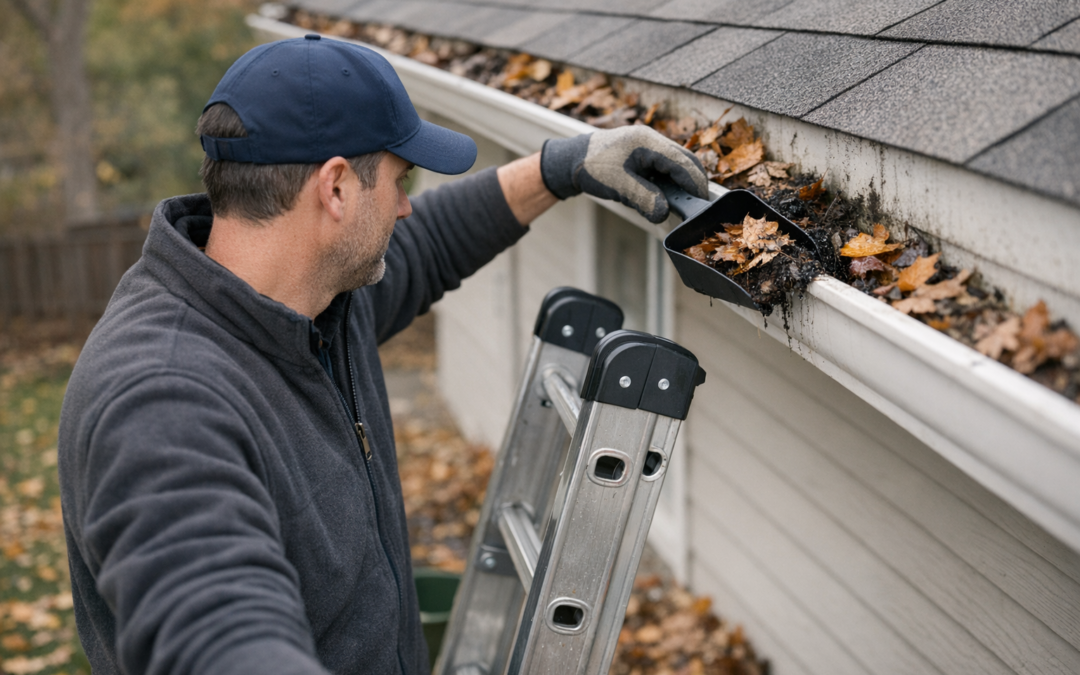
- Remove leaves, pine needles, and shingle grit by hand or with a scoop.
- Flush each gutter run with a garden hose to confirm water flows to the downspouts.
- Look for standing water after flushing — that signals a low spot or clog.
- Check that hangers and brackets hold the gutter tight against the fascia.
Sagging gutters pool water, and pooled water freezes first. A section that holds even an inch of water becomes a block of ice that pulls the gutter further from the house.
2. Test and Extend Your Downspouts
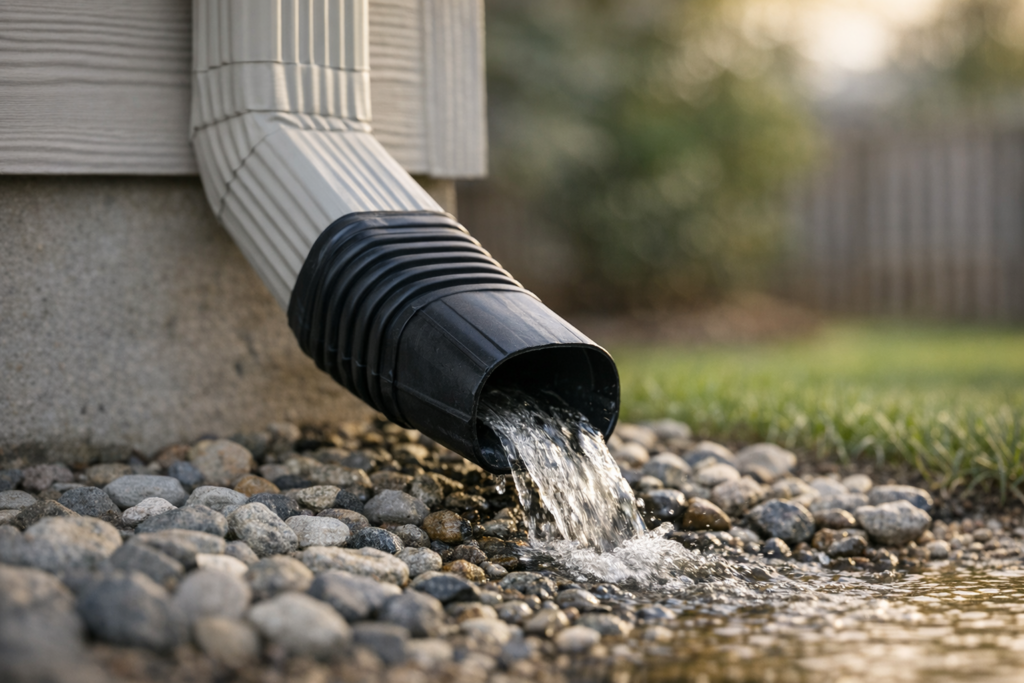
Downspouts should carry water at least 4 to 6 feet from the foundation. A downspout that dumps water right at the base is the top cause of winter basement seepage we encounter.
- Attach extensions or splash blocks if water pools near the foundation.
- Clear the elbow joints, where debris packs tightest.
- Point discharge downhill, never toward a walkway that will ice over.
3. Inspect the Grading Around Your Foundation
The soil around your home should slope away from the foundation. The standard is a drop of 6 inches over the first 10 feet. Flat or reverse-sloped ground sends snowmelt straight toward your basement wall.
Fill low spots with soil before the ground freezes solid. Once frost sets in, regrading becomes impossible until spring.
4. Check French Drains and Yard Drains
French drains and surface drains move groundwater away from the home. Flush them with a hose and watch for slow drainage or backups. A drain that struggles in October will seize completely under ice.
- Clear leaves and silt from drain grates.
- Confirm the outlet point is open and not buried under mulch or snow fencing.
- Mark drain locations so snow removal crews avoid packing them.
5. Service Your Sump Pump
A sump pump is your last defense against a flooded basement during a January thaw. Test it before winter by pouring a bucket of water into the pit.
- Confirm the float switch rises and triggers the pump.
- Listen for the pump cycling on and shutting off cleanly.
- Check that the discharge line is clear and does not freeze at the exit.
- Add a battery backup if power outages are common in your area.
A frozen discharge line defeats a working pump. Insulate the exposed section or use a freeze-resistant discharge fitting.
Warning Signs Your Drainage Needs Attention Now
Catch these before the freeze and you avoid an emergency call during a snowstorm.
- Water stains on basement walls or around window wells.
- Peeling paint or efflorescence (white mineral residue) on foundation walls.
- Soil erosion or mulch washed away near downspouts.
- Musty smells in the basement or crawl space.
- Gutters that overflow during a moderate rain.
Any one of these points to water sitting where it should not. In freezing weather, that water pushes against your foundation with real force.
Common Winter Drainage Failures We See
Ice Dams on the Roof Edge
Ice dams build when attic heat melts roof snow, which then refreezes at the cold eaves. Water pools behind the dam and leaks into the ceiling. Clean gutters and proper attic insulation both reduce the risk.
Frozen Downspouts and Splitting Seams
Water trapped in a downspout freezes, expands, and splits the seam. Come spring, that split dumps water against the wall instead of carrying it away. Clearing downspouts in fall prevents the trapped water that starts the cycle.
Foundation Cracks from Hydrostatic Pressure
Saturated soil that freezes around a foundation expands and presses inward. Over several freeze-thaw cycles, hairline cracks widen and begin to leak. Good grading and working drains keep the surrounding soil from staying saturated.

 Posted on Google
A Realistic Fall Timeline
Timing matters as much as the tasks themselves. Here is the sequence our team recommends across a typical fall.
- Early fall: Regrade low spots and extend downspouts while the ground is soft.
- Mid fall: Clear gutters after most leaves have dropped.
- Late fall: Flush French drains, test the sump pump, and insulate exposed lines.
- Before the first freeze: Do a final gutter check after the last leaf drop.
Clearing gutters too early means a second round of leaves clogs them again by November. Wait until the trees are mostly bare, then do one last pass.
When to Call a Restoration Team
Some drainage problems point to damage already underway. Call for help if you find standing water in the basement, visible foundation cracks leaking moisture, or a sump pump that fails its test.
Water that has already entered the home needs fast extraction to stop mold and structural damage. Our crews handle water removal, drying, and repair so a small leak does not become a gutted basement.
Key Takeaways
Pre-winter drainage system maintenance moves water away from your home before freezing locks problems in place. Clear your gutters, extend downspouts, check grading, flush yard drains, and test your sump pump in that order. Catching a slow drain in fall costs far less than repairing a flooded basement in January.
If you spot water damage or suspect your drainage has already failed, contact Best Option Restoration. Call or text 303-500-3187, email info@borlakewood.com, or visit https://borlakewood.com.
Sources
- FEMA – Protect Your Property from Flooding
- U.S. Department of Energy – Energy Saver: Ice Dams
- EPA – Soak Up the Rain