
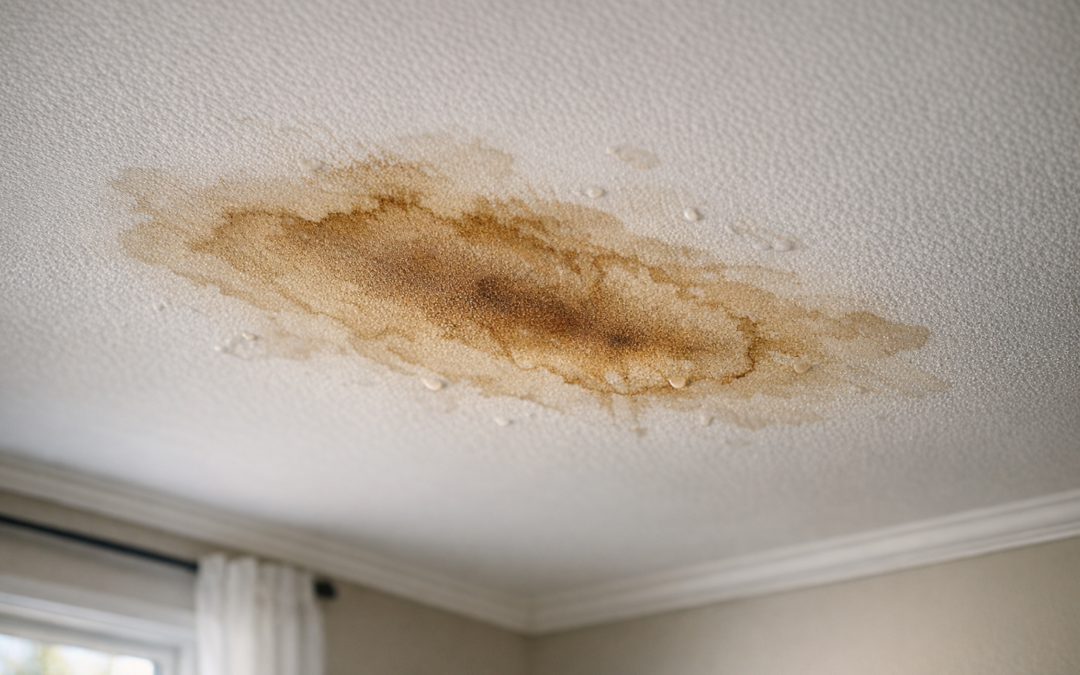
This guide explains the immediate steps homeowners should take when discovering a hidden leak, emphasizing that mold can begin growing on wet materials within 24 to 48 hours.
- Shut off the main water supply, cut power to affected areas, move belongings, contain water with buckets and towels, and photograph all damage for insurance claims within the first hour.
- Proper drying requires opening wall cavities when safe, running fans with dehumidifiers for several days, and removing wet carpet padding since surface drying alone will not prevent mold growth.
- Call a professional restoration team when you cannot locate the leak source, water has spread across multiple rooms, or you detect mold odors or visible growth.
When you find a hidden leak, act quickly within the first hour of spotting signs like growing water stains. Shut off your main water supply to stop further damage, then locate the source behind walls or ceilings. Time is critical because mold can begin growing on wet drywall within 24 to 48 hours of exposure to moisture.
A water stain on your ceiling that keeps growing usually means one thing: water has been moving behind your walls for days or weeks. Hidden leak detection matters most in the first hour after you spot the signs, because mold can start growing on wet drywall in as little as 24 to 48 hours.
This post walks you the exact steps to take the moment you find a hidden leak. You will learn how to stop the damage, protect your belongings, and decide when to call for help.
What a Hidden Leak Actually Looks Like
A hidden leak is water escaping from a pipe, appliance, or roof that you cannot see directly. It hides inside walls, under floors, above ceilings, or behind cabinets.
Most homeowners never see the water source. They see the symptoms instead.
Common warning signs include:
- Brown or yellow stains spreading across a ceiling or wall
- Paint or wallpaper that bubbles, peels, or feels soft
- A musty smell in one room that never clears
- Warped baseboards or buckling laminate flooring
- A water bill that jumped without any change in your habits
- The sound of running water when every faucet is off
A dripping toilet supply line inside a wall can waste hundreds of gallons before you notice a stain. That delay is why fast action beats perfect diagnosis.
The First 60 Minutes: Immediate Actions to Minimize Damage
The steps you take in the first hour decide whether you face a small repair or a full mold remediation. Move fast and work in order.
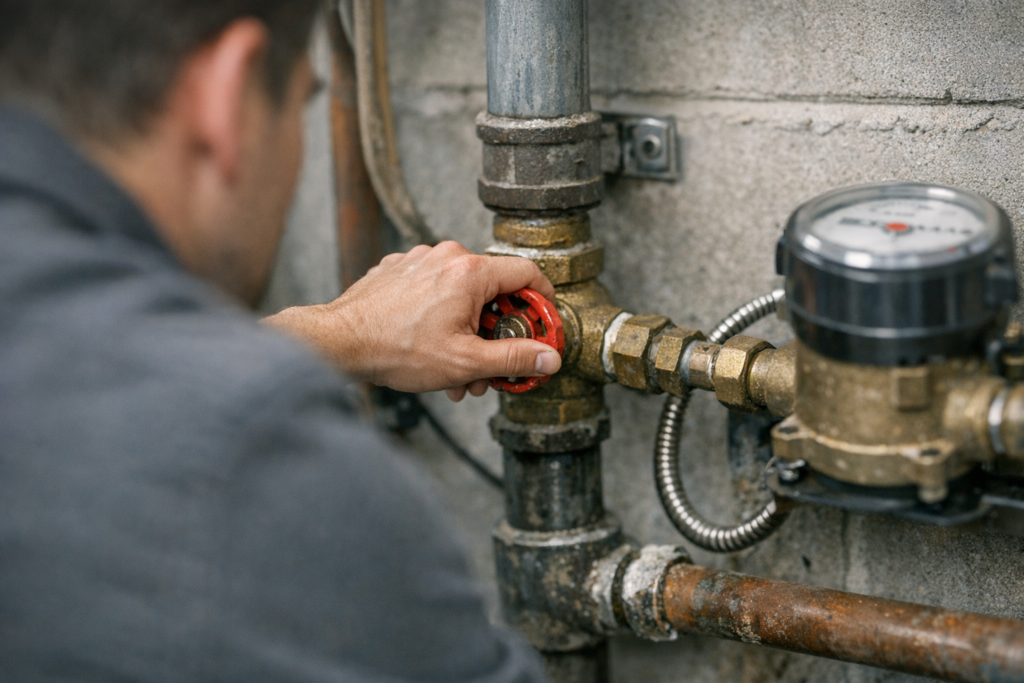
- Shut off the water supply. Find your main shutoff valve, usually near the water meter, in the basement, or in a utility closet. Turn it clockwise until it stops.
- Cut power to the affected area. If water is near outlets, light fixtures, or your electrical panel, switch off that circuit at the breaker. Do not touch wet electrical components.
- Move belongings out of the wet zone. Furniture, rugs, electronics, and boxes soak up water fast. Lift wood furniture onto blocks or foil to stop staining.
- Contain the water. Place buckets under active drips. Use towels and a wet vacuum to pull standing water off floors.
- Document everything. Photograph the leak, the stains, and every damaged item before you clean up. Your insurance claim depends on this record.
Do these five things before you research repairs. Stopping the source and clearing the water buys you time.
Where to Find Your Main Shutoff Valve
In Colorado homes, the main shutoff sits near the front foundation wall where the water line enters. Basements and crawl spaces are the most common spots.
If you cannot find it, shut off the valve under the leaking fixture instead. Toilets, sinks, and water heaters each have their own local valve.
Why Mold Growth Is the Real Threat
Water damage from a hidden leak is a race against mold. Mold spores need moisture, and wet drywall or wood gives them everything.
The Environmental Protection Agency reports that mold can begin colonizing damp materials within 24 to 48 hours. Once it spreads inside a wall cavity, cleanup gets far more involved.
Hidden leaks make this worse because the moisture stays trapped. A wall cavity holds humidity long after the visible surface looks dry.
Signs mold has started include:
- A sharp, earthy odor near the leak
- Black, green, or gray spotting on drywall or trim
- Increased allergy symptoms when you are home
Drying the surface is not enough. The material behind it must reach a safe moisture level, and that requires meters most homeowners do not own.
How to Dry the Area Correctly
Proper drying stops mold before it starts. Surface towels handle the water you can see, but trapped moisture needs airflow and dehumidification.
Follow this sequence after you stop the leak:
- Open the cavity if safe. Removing a small section of soaked drywall lets air reach the studs. Cut above the water line, not below it.
- Run fans and a dehumidifier together. Point fans at the wet materials and keep the dehumidifier running for several days.
- Pull up wet carpet and padding. Padding rarely dries in place and traps water against the subfloor.
- Check moisture daily. Materials that stay damp past 48 hours are candidates for removal.
Household fans move air, but they cannot pull moisture out of a sealed wall. That gap is where damage keeps spreading after you think the job is done.

 Posted on Google
When to Call for Professional Hidden Leak Detection
Call a restoration team when you can see damage but cannot find the source. Thermal cameras and acoustic sensors locate water inside walls without tearing them open.
Best Option Restoration uses infrared imaging and moisture meters to map the full spread of a leak. This finds wet material you would otherwise miss.
Reach out for help in any of these situations:
- Water has traveled across a ceiling to more than one room
- The leak sits behind a wall you cannot access
- Standing water sat for more than 24 hours
- You smell mold or see visible growth
- The damage involves category 2 or 3 water, such as sewage or gray water
Fast leak repair after detection keeps a wall patch from turning into a gutted room. The sooner the source is fixed, the less material has to come out.
What a Restoration Team Does That You Cannot
A trained crew reads moisture behind surfaces and dries the structure to a verified target. They document readings for your insurance claim.
They also handle the sequence correctly: detect, extract, dry, then confirm dryness before any rebuild. Skipping the verification step is how mold returns months later.
What to Avoid After Finding a Hidden Leak
Certain mistakes turn a manageable leak into a costly rebuild. Steer clear of these common errors:
- Painting over a stain without fixing the source. The water keeps coming.
- Assuming a dry surface means a dry wall. The cavity behind it may still be soaked.
- Waiting for the weekend to act. Mold does not keep business hours.
- Throwing away damaged items before photographing them for your claim.
The cost of acting fast is always lower than the cost of waiting.
Key Takeaways
Stop the water, cut nearby power, and clear the area within the first hour of finding a hidden leak. Dry the space with fans and a dehumidifier, and watch for mold, which can start in 24 to 48 hours. Call for professional hidden leak detection when the source stays hidden or damage spreads past one room.
Best Option Restoration responds to water damage and hidden leaks with moisture mapping, structural drying, and leak repair support for your insurance claim. Call or text 303-500-3187, email info@borlakewood.com, or visit https://borlakewood.com to get help fast.
Sources
- U.S. Environmental Protection Agency – Mold Cleanup in Your Home
- U.S. Environmental Protection Agency – A Brief Guide to Mold, Moisture and Your Home
- Centers for Disease Control and Prevention – About Mold and Your Health