A burst pipe at 2 a.m. does not wait for business hours, and neither does the damage it causes. Knowing when to call for professional water extraction can mean the difference between drying out a room and gutting a floor. This post breaks down the exact situations where handling water yourself falls short and a trained crew becomes the right call.
You will learn which water sources are unsafe to touch, why hidden moisture outlasts a shop vacuum, and how fast mold changes the math on a flooded home.
When Professional Water Extraction Is Necessary
Professional water extraction is the removal of standing water and trapped moisture using truck-mounted or portable equipment that a household vacuum cannot match. A crew measures moisture inside walls, subfloors, and framing, then dries what you cannot see.
Small, clean spills caught in minutes can be managed with towels and a fan. The scenarios below are the ones where waiting or improvising makes the damage worse.
1. The Water Came From a Contaminated Source
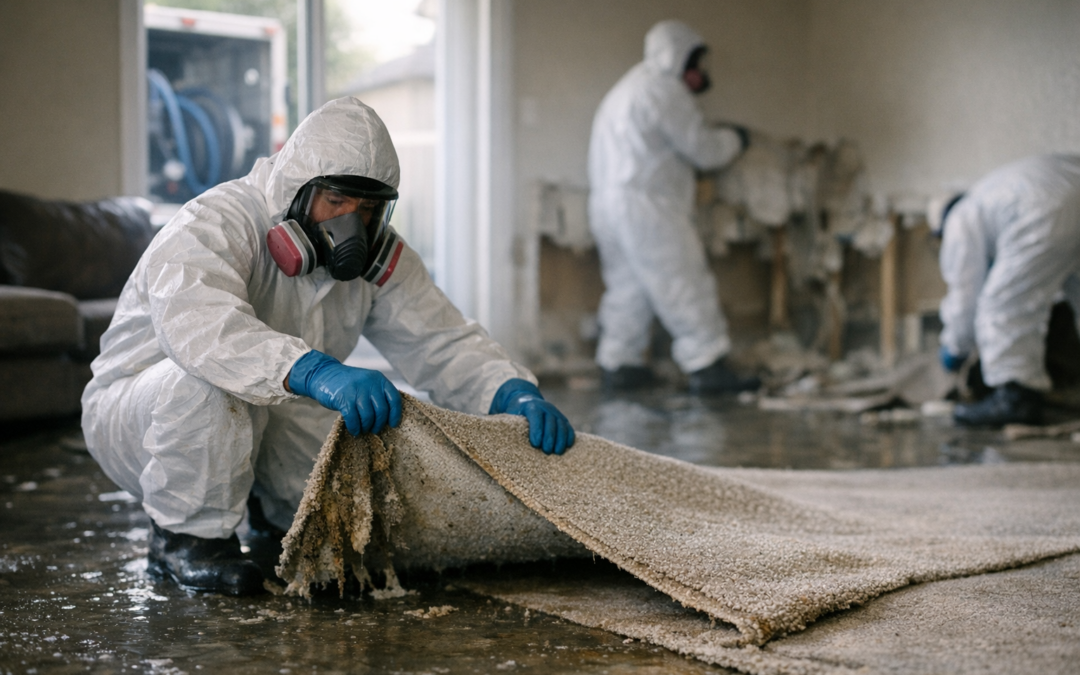
Sewage backups and floodwater fall under the most dangerous classification. Category 3 water is grossly contaminated and can carry pathogenic or toxigenic agents, which cause serious illness on contact or ingestion.
Under restoration standards, every porous material touched by black water gets removed—no exceptions. Carpet, pad, and lower drywall have to go. This work requires full protective equipment and containment, not a mop.
Gray water sits in the middle. Category 2 water carries significant contamination that can cause illness if contacted or consumed, from sources like dishwasher overflow, washing machine discharge, or a failed sump pump.
2. Clean Water Has Been Sitting for Hours
Even water from a sanitary source does not stay clean. Clean water degrades to gray and then black as it sits, warms, and soaks into materials that carry their own contaminants.
A supply-line break caught fast is Category 1. The same break discovered after a weekend away is a different problem. Treat even clean water as a race against time.
3. You Cannot Reach the Moisture
This is where most do-it-yourself jobs fail. The surface looks dry, but water has wicked into places a towel never reaches.
Moisture hides in predictable spots after a loss:
- Carpet and pad trap moisture underneath, where airflow is minimal and mold has a protected place to grow.
- Drywall made of gypsum board with paper facing is one of the fastest surfaces to support mold—the paper is food.
- OSB and plywood subfloor can begin showing growth within 48 to 72 hours of saturation.
- Wood framing absorbs water more slowly than drywall but holds it far longer.
A crew uses moisture meters and thermal imaging to find wet material behind walls and under floors. Without that step, you dry what you can see and leave the rest to rot.
4. The 24 to 48 Hour Mold Clock Is Running
Speed decides the outcome more than any other point on this list. Mold can begin growing within 24 to 48 hours after water damage, a benchmark backed by the EPA and FEMA.
The first two days are invisible. Spores land on a wet surface, absorb moisture, and start germinating. By the time you see a fuzzy patch or smell a musty odor, the colony has been growing for days.
Restoration standards point to a clear response timeline:
- Within 24 hours: dry and stabilize affected areas.
- Within 48 hours: cut off the window for mold to take hold.
- Within 72 hours: reduce the risk of widespread contamination.
Fast emergency water removal is what keeps a loss on the right side of that clock. Every hour of standing moisture is an hour mold has to colonize.
5. A Large Area or Multiple Rooms Are Affected
Scale changes the tools required. A single wet bathroom mat is one thing. Water spreading across a finished basement, soaking into framing and insulation, is another.
Large losses from overhead sources—a burst pipe in the ceiling, an overflowing second-floor tub—saturate materials top to bottom. Heavy drying and selective material removal become the only path to a dry, safe structure.
6. Hardwood, Plaster, or Concrete Got Wet
Dense materials hold water in ways that defeat ordinary fans. Hardwood floors cup and buckle. Plaster and concrete stay saturated long after the surface feels dry.
Drying bound materials like these calls for specialty equipment that pulls moisture out slowly and evenly. Rushing or skipping this step warps floors and traps moisture that feeds mold for months.
Situations You Can Often Handle Yourself
Not every spill needs a crew. A few cases are reasonable to manage on your own:
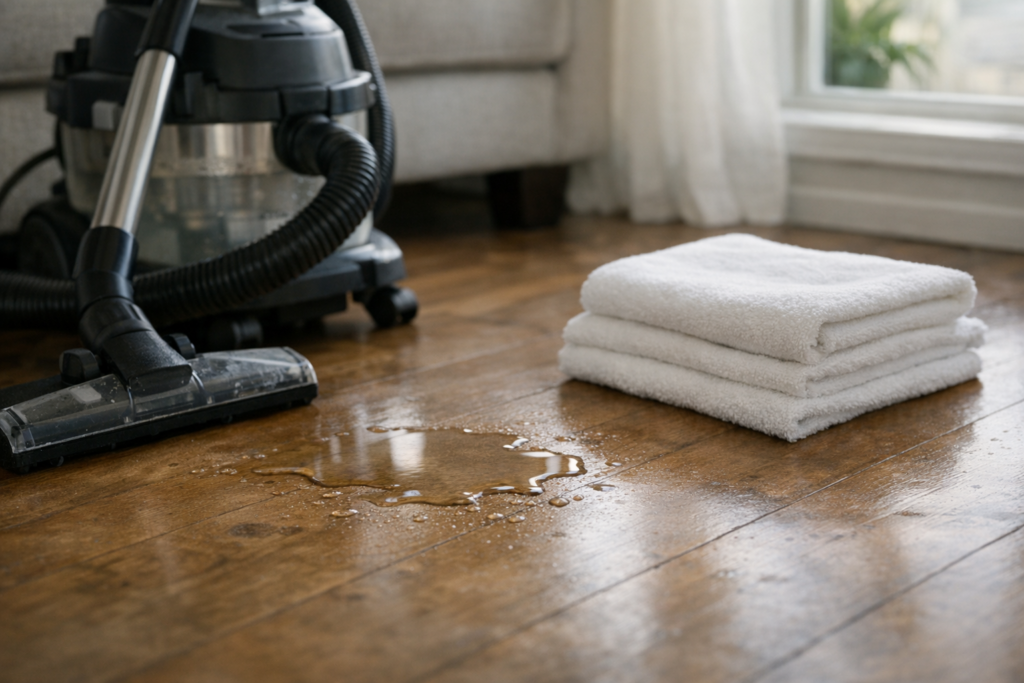
- A clean-water spill under a few square feet, dried within minutes.
- An overflowing sink caught immediately, wiped up before it spreads.
- Condensation or a minor appliance drip on a hard, non-porous floor.
The dividing line is simple. If the water is clean, small, caught fast, and sits only on a surface you can fully dry, handle it. If any of those conditions fail, the risk shifts toward a call.
Why Equipment and Timing Matter More Than Effort
A shop vacuum pulls surface water. It does nothing for the gallons soaked into subfloor and framing. That difference is why water losses reappear as warped boards and musty smells weeks later.
A trained crew pairs extraction with air movers and commercial dehumidifiers sized to the space. They monitor moisture readings over days until materials hit a dry standard—not until the carpet feels dry to the touch.
Keeping indoor humidity under roughly 60 percent is part of stopping mold, and that takes equipment most homeowners do not own. Effort alone does not dry a wall cavity.

 Posted on Google
Key Takeaways
Call for professional water extraction when the water is contaminated, has been sitting for hours, hides inside walls or floors, or covers a large area. The 24 to 48 hour mold window makes fast action the deciding factor in whether you face a cleanup or a rebuild.
Best Option Restoration of Lakewood responds to water emergencies and handles extraction, drying, and moisture monitoring from start to finish. Call or text 303-500-3187, email info@borlakewood.com, or visit https://borlakewood.com to get a crew moving before the clock runs out.
Sources
- PushLeads – How Quickly Does Mold Grow After Water Damage? The 24 to 48 Hour Prevention Window
- Flood Solutions Inc. – How Quickly Does Mold Grow After Water Damage?
- RestoreAdvisor – Water Damage Categories 1, 2 & 3 Explained (IICRC S500)
- flood.repair – The Categories of Water Damage (Clean, Gray & Black Water)