
Mold grows faster than most homeowners think, and bad advice makes it worse. A single roof leak in a Lakewood attic can seed visible growth in 24 to 48 hours. The mold myths people repeat at hardware stores and on social media lead to wasted money and repeat problems.
This post sorts fiction from fact using guidance from the CDC and EPA. You will learn which beliefs to drop and what the science says instead.
The Best Option Restoration of Lakewood crew sees the fallout from these mistakes weekly, from bleached drywall that regrows mold to homeowners who paid for tests they never needed.
The Most Common Mold Myths, Debunked
Below are the beliefs we hear most on Lakewood jobs, paired with the mold facts that correct them. Each one changes how you should respond to growth in your home.
Myth 1: Bleach removes mold for good
Bleach does not remove mold from most surfaces. The EPA does not recommend bleach as a routine part of mold cleanup.
The CDC advises that any mold present must be physically removed, not merely killed. Dead mold still triggers allergic reactions.
On porous materials, bleach fails outright. Bleach kills surface mold on tile and glass but cannot reach the roots inside drywall, wood, or grout. The water in bleach can soak deeper and feed growth you cannot see.
We have pulled off painted basement walls in Lakewood where bleach left a clean-looking surface hiding active colonies behind it. Scrubbing with detergent and water, then removing damaged material, works better.
Myth 2: You can get rid of all mold in your home
You cannot remove every mold spore from a house. Mold spores float in indoor and outdoor air at low levels everywhere.
The goal is not sterilization. It is controlling moisture so spores cannot settle and multiply. Any company promising a 100% mold-free home is selling something that does not exist.
Fix the water source first. Without that step, mold returns no matter how aggressively you clean.
Myth 3: Only black mold is dangerous
Black mold gets the headlines, but color does not determine risk. Stachybotrys chartarum, the greenish-black mold people fear, is one of many types that can affect health.
The CDC states that all molds should be treated the same regarding health risks and removal. You do not need to identify the species to know it has to go.
Common indoor molds like Cladosporium, Penicillium, and Aspergillus can cause reactions too. Treating only black-colored growth leaves other problems untouched.
Myth 4: You always need a mold test first
Most homeowners do not need a mold test. If you can see or smell mold, you already have your answer: remove it.
The CDC does not recommend mold testing for homes. Health effects vary so much between people that a sample cannot predict who will get sick.
Finding and fixing the moisture source does more than air sampling ever will. We skip costly pre-testing on obvious growth and put that money toward removal instead.
Myth 5: A little mold is no big deal
Small patches signal a moisture problem that rarely stays small. What looks like a coffee-cup stain under a sink can hide a saturated cabinet base.
Mold grows wherever moisture persists, including leaks around roofs, windows, and pipes. Constant dampness lets a minor spot spread across a wall cavity within days.
For sensitive people, even trace amounts matter. The CDC notes that mold can cause stuffy noses, coughing, wheezing, burning eyes, or skin rashes, and that people with asthma or allergies may react strongly.
Myth 6: Any size cleanup is a safe DIY job
Large areas are not safe to tackle alone. The EPA sets a planning line at about 10 square feet, roughly a 3-foot by 3-foot patch.
Here is how the size guideline breaks down:
- Under 10 square feet: Many homeowners can clean it after fixing the moisture, using an N-95 respirator, gloves, and eye protection.
- 10 to 100 square feet: Limited containment and better respiratory protection are needed to control spore spread.
- Over 100 square feet: Full containment and a remediation contractor are the right call.
Disturbing a big colony without containment sends spores across the whole house. That turns one moldy room into a problem in several.
Myth 7: Mold is only a summer or humid-climate issue
Mold grows year-round, including in dry Colorado. Indoor moisture from a burst pipe, ice dam, or leaking water heater creates the damp conditions mold needs regardless of outdoor humidity.
We respond to winter mold calls in Lakewood tied to frozen-pipe breaks and condensation in tight, newer homes. A low outdoor humidity reading does not protect a wall soaked by a hidden leak.
What Actually Works Against Mold
Correcting the myths points to a clear set of steps. Follow them in order for lasting results.
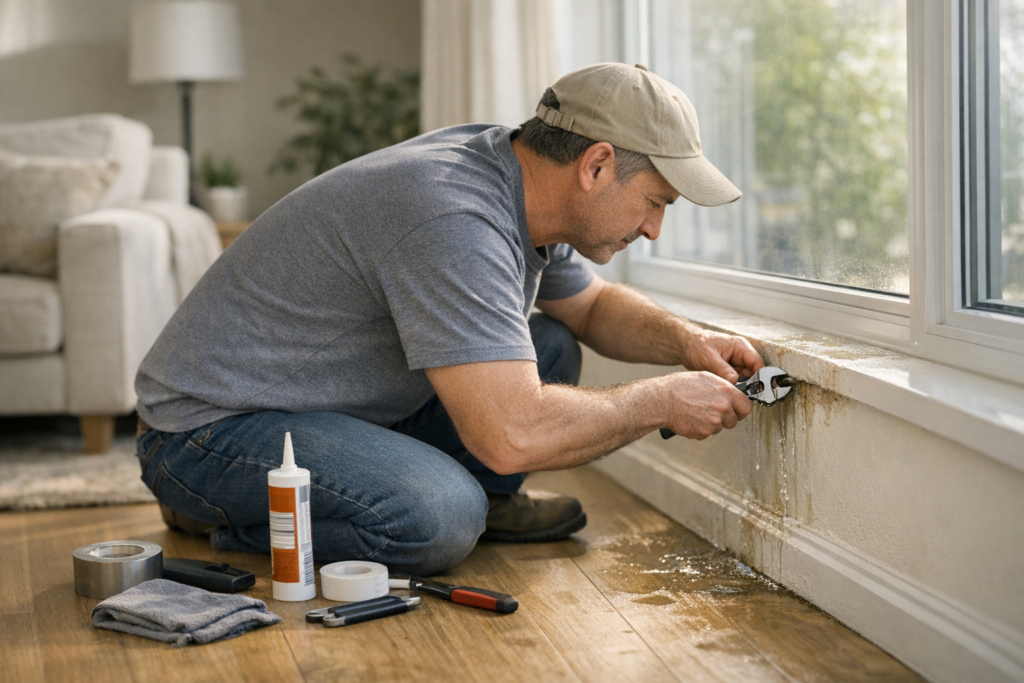
- Find and fix the moisture source. Stop the leak or condensation before anything else.
- Dry the area fully. Materials must reach a dry state to stop growth.
- Remove, do not just kill. Scrub non-porous surfaces; discard porous materials that are saturated.
- Match protection to size. Use proper respirators and containment based on the affected area.
- Call a contractor for large or hidden growth. Mold behind walls or over 10 square feet warrants trained help.
Skipping the moisture step is the single most common reason mold comes back after a DIY cleanup.

 Posted on Google
Key Takeaways on Mold Myths
Bleach does not remove mold, you cannot eliminate every spore, and color alone does not measure danger. Testing is rarely needed when you can already see or smell growth, and moisture control is the real fix. Knowing these mold facts saves Lakewood homeowners money and repeat headaches.
If mold has spread past a small patch or keeps returning, Best Option Restoration of Lakewood can inspect the moisture source and handle removal safely. Call or text 303-500-3187, email info@borlakewood.com, or visit https://borlakewood.com to schedule an assessment.