This guide explains the steps homeowners should take within 24 to 48 hours after smoke damage to save as much of their home as possible. It covers safety measures, cleaning techniques, hidden damage zones, and when to call a restoration company.
- Smoke damage spreads quickly as acidic soot corrodes metal, etches glass, and bonds odor particles to porous materials like carpet and insulation within hours.
- The correct response order is confirming safety, wearing protective gear, ventilating, shutting off HVAC, documenting damage with photos, and calling insurance and a restoration company.
- Dry soot must be removed first with a HEPA vacuum and chemical sponge before wet cleaning - using water or wiping with a dry cloth drives soot deeper into surfaces.
After a fire, act within 24 to 48 hours to limit damage. First, ventilate the space by opening windows and doors. Avoid touching walls or fabrics, as oils from skin can set stains. Document damage with photos for insurance, then contact a professional restoration company. Wipe hard surfaces with dry chemical sponges and remove textiles for cleaning before soot and odors become permanent.
Smoke damage keeps working long after the flames are out. Soot settles into drywall, acidic residue eats at metal, and the smell sinks into fabric within hours. Knowing the right smoke damage steps in the first 24 to 48 hours decides how much of your home can be saved.
This post walks you through what to do in order, what to avoid, and when to call for help. It is built for homeowners who want a clear plan, not vague advice.
Why Smoke Damage Spreads After the Fire Is Out
Smoke damage is the layered harm caused by soot, acidic residue, and odor particles that travel beyond the burn area. A small kitchen grease fire can coat an entire floor in oily film.
Soot is acidic. Left on surfaces, it corrodes metal, etches glass, and stains grout within 48 hours.
Three things make it worse every hour you wait:
- Acidic residue that pits chrome fixtures and appliance finishes
- Odor particles that bond with porous materials like carpet padding and insulation
- Humidity that turns dry soot into a smear that sets permanently
Different smoke types leave different residue. A protein fire from burnt food leaves a thin, greasy film that reeks but hides on surfaces. A synthetic fire from burning plastics leaves a black, smeary soot that spreads fast.
The Smoke Damage Steps to Take First
Follow this order. Skipping the safety stage to start cleaning puts you at risk and can grind soot deeper into surfaces.
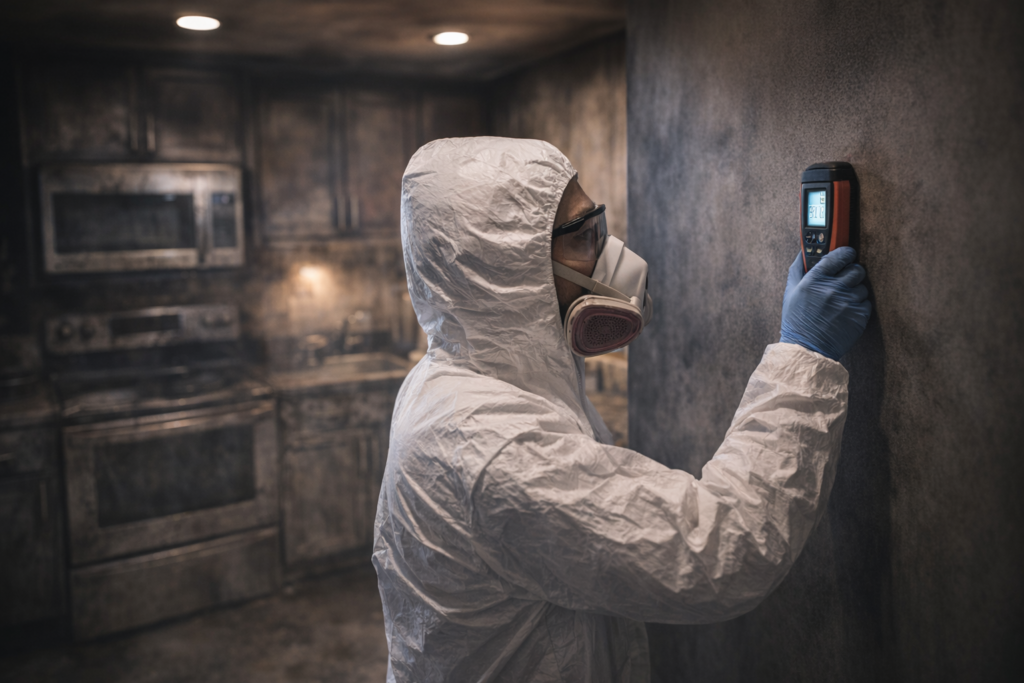
- Confirm the home is safe to enter. Wait for the fire department to clear structural and electrical hazards.
- Protect your lungs and skin. Wear an N95 mask, gloves, and long sleeves before going inside.
- Ventilate. Open windows and doors to move smoke particles out, but only if outdoor air is dry.
- Shut off the HVAC system. Running it pulls soot into ductwork and spreads it room to room.
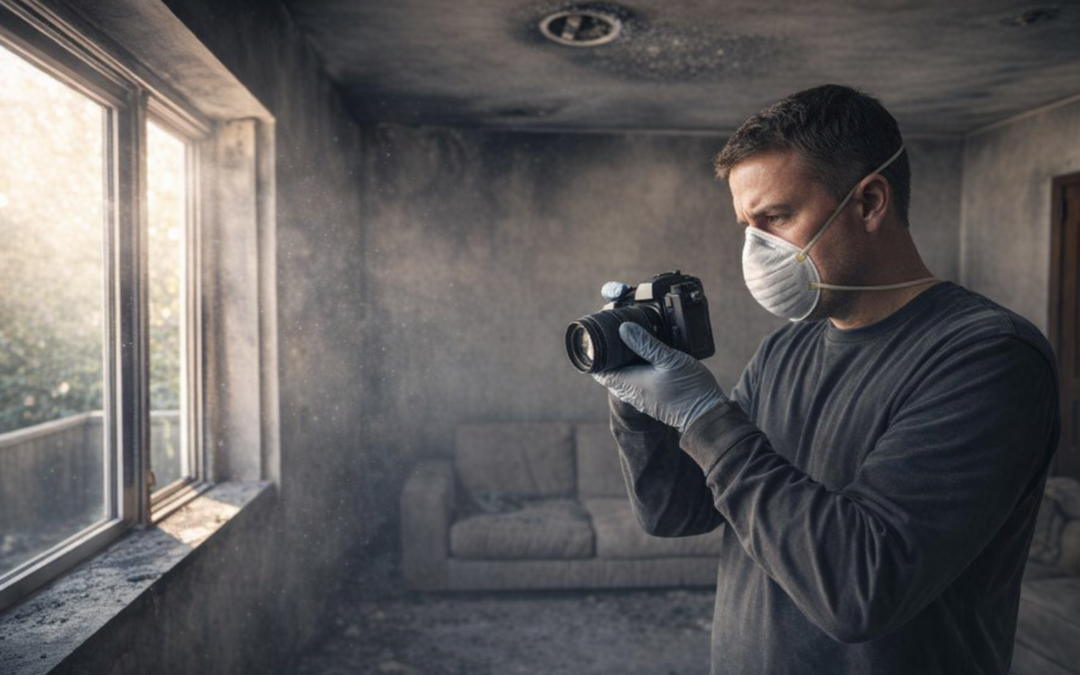
- Document everything. Photograph and video every room before you touch anything.
- Call your insurance carrier. Start the claim and ask what your policy covers for cleanup.
- Call a restoration company. Fast response limits permanent staining and odor bonding.
The documentation step matters more than people expect. Adjusters pay claims based on what you can prove, and soot hides damage that photos capture clearly.
What Not to Do in the First 24 Hours
Some instincts make smoke damage permanent. Avoid these mistakes:
- Do not wipe walls with a dry cloth. This drives soot into the paint and leaves streaks.
- Do not run the air conditioner or furnace. Contaminated ducts recirculate soot for weeks.
- Do not touch upholstery or carpet with bare hands. Skin oils set soot stains.
- Do not use household fans facing the wrong way. You can push soot into clean rooms.
- Do not eat food or drink anything exposed to smoke. Soot carries toxins from burned plastics.
How to Assess the Extent of the Damage
Smoke travels further than fire, and the real damage is usually where you did not expect it. Check these areas before assuming a room is fine.
Hidden Damage Zones
- Inside wall cavities near the fire origin, where smoke seeps behind drywall
- HVAC ductwork, which acts as a highway for soot to every room
- Attic insulation, which traps odor and is hard to clean
- Cabinet interiors and drawers, where greasy residue settles unseen
- Electronics and appliance vents, where acidic soot corrodes circuit boards
A living room that looks clean can still smell for months if the ductwork holds soot. Surface cleaning without addressing hidden zones gives temporary results.
Material-by-Material Checklist
Different materials respond differently to soot exposure:
- Drywall and plaster: Light soot cleans; heavy saturation needs replacement.
- Hardwood floors: Salvageable if cleaned fast before soot etches the finish.
- Carpet and padding: Padding usually gets replaced; carpet may be cleanable.
- Clothing and fabric: Specialized ozone or ultrasonic cleaning removes most odor.
- Electronics: Do not power on; corrosion starts fast and causes shorts.
Cleaning Smoke Damage the Right Way
Home smoke remediation works in stages, and order matters. Cleaning a surface before removing dry soot pushes residue into pores.
The Correct Cleaning Sequence
- Dry soot removal. Use a HEPA vacuum and chemical sponge, never water first.
- Wet cleaning. Apply degreasing agents matched to the soot type.
- Odor treatment. Use thermal fogging or hydroxyl generators to neutralize particles.
- Sealing. Seal porous surfaces that still hold trace odor after cleaning.
A chemical sponge, also called a dry-cleaning sponge, lifts soot without smearing. It is the one tool homeowners get wrong most, reaching for a wet rag instead.
Matching the Cleaner to the Soot
Grease fires need a degreaser, not a general cleaner. Dry, powdery soot from paper or wood responds to dry methods first.
Using the wrong agent sets stains. This is why guesswork costs more than calling for help early.
Why Odor Returns and How to Stop It
Smoke odor returns because particles embed in porous materials that surface cleaning cannot reach. The smell spikes again on humid days when trapped particles reactivate.
Lasting odor removal requires equipment most homeowners do not own:
- Thermal foggers that recreate how smoke penetrated to reach the same spots
- Hydroxyl generators that break down odor molecules without harming contents
- Ozone treatment for sealed, unoccupied spaces
Masking the smell with air fresheners only hides the source temporarily. Removing bonded particles is the only method that holds.

 Posted on Google
Working With Your Insurance Company
Most homeowner policies cover smoke and fire damage, but documentation drives the payout. Build your claim with evidence from the first hour.
- Take photos and video of every damaged room and item before cleanup.
- Make a list of damaged belongings with approximate values.
- Keep receipts for any temporary lodging or emergency supplies.
- Do not throw items away until the adjuster has reviewed them.
- Ask your restoration company for a written damage assessment.
A restoration company that bills insurance directly reduces your out-of-pocket stress. Keep every estimate and report in one folder.
When to Call a Restoration Company
Call for help when soot covers more than one room, reaches ductwork, or the odor lingers after cleaning. Protein fires and synthetic smoke almost always need specialized treatment.
Best Option Restoration of Lakewood responds to smoke and fire damage across the Lakewood area. The team handles soot removal, odor neutralization, duct cleaning, and home smoke remediation from start to finish.
Fast action saves materials that time would otherwise ruin. Calling within the first day often means the difference between cleaning and replacing.
Key Takeaways
The right smoke damage steps start with safety, documentation, and shutting down your HVAC before any cleaning. Removing dry soot first, matching cleaners to soot type, and treating hidden zones stop odor from returning. Acting within 24 to 48 hours protects the most material and the biggest part of your claim.
If your home has smoke damage, call Best Option Restoration of Lakewood at 303-500-3187, text 303-500-3187, or email info@borlakewood.com. Visit https://borlakewood.com to request help.
Sources
- U.S. Fire Administration (FEMA) – Fire Safety and Recovery Resources
- U.S. Environmental Protection Agency – Indoor Air Quality
- American Red Cross – Recovering From a Home Fire