

This guide explains how Colorado homeowners can protect their property from fall wind damage, which poses unique risks due to brittle trees, weakened roofing, and clogged gutters after summer heat.
- Inspect and repair roof edges, shingles, and flashing before October storms since wind lifts and peels materials at weak points. Tighten soffits and fascia to prevent wind from getting under the roof deck.
- Trim dead and overhanging tree limbs at least 10 feet from the roof and thin dense canopies. Cottonwoods and silver maples are common problem trees along the Front Range.
- Clean gutters twice during autumn, secure outdoor furniture and trampolines, and reinforce garage doors. Document your property with dated photos to speed up insurance claims if damage occurs.
Protect your home from fall wind damage by inspecting and repairing loose or damaged shingles before storm season arrives. Trim dead or brittle tree branches that could snap and strike your roof during high gusts. Secure outdoor furniture, clean gutters to prevent debris buildup, and check that windows and doors seal tightly against strong winds.
Autumn storms in Colorado arrive fast, with gusts that peel shingles and snap tree limbs in minutes. Fall is the season when wind damage prevention matters most, because dry summer heat leaves branches brittle and roofing materials weakened.
Protecting your home before the first October cold front saves thousands in repairs. This post walks you step by step through fall-specific strategies to keep wind from wrecking your property.
Why Fall Wind Damage Is Different
Fall wind damage behaves differently than summer or winter storm damage. Colorado’s autumn brings chinook winds and sharp pressure changes that produce sudden, high-speed gusts.
Three fall conditions make homes more vulnerable:
- Brittle trees: Summer drought dries out limbs, making them snap in moderate wind.
- Loosened roofing: Months of heat and UV exposure weaken shingle adhesive.
- Leaf-clogged drainage: Falling leaves block gutters, adding weight and wind resistance.
Front Range homes see gusts above 60 mph during late-season downslope wind events. A single weak spot on your roof becomes an entry point for lifting shingles.
Wind Damage Prevention Starts With Your Roof
Your roof takes the first hit in any wind event. Most fall roof failures start at the edges, where wind pressure lifts and peels shingles backward.
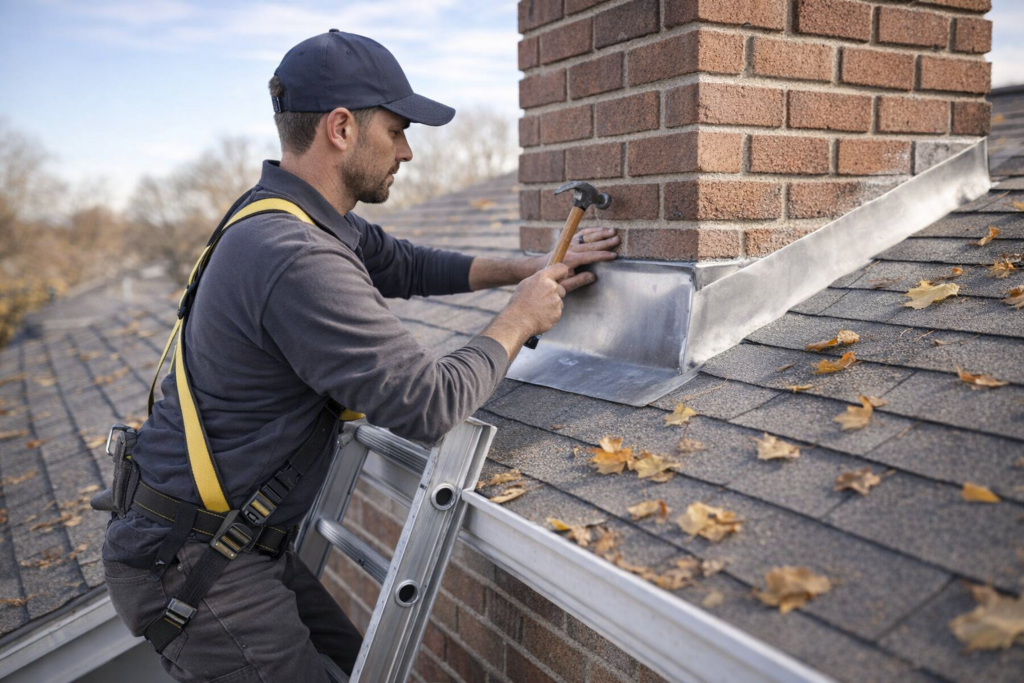
Inspect and Secure Shingles
Walk the perimeter of your home and look up at the roofline. Curled, cracked, or missing shingles signal a weak edge that wind will exploit.
- Check the roof edges and ridgeline for lifted or loose shingles.
- Press down on any shingle that looks raised to test the adhesive seal.
- Replace missing or cracked shingles before the first storm.
- Have a roofer re-nail loose flashing around chimneys and vents.
Flashing failures cause more leaks than broken shingles. Wind drives rain sideways under lifted flashing and into your attic.
Check Soffits and Fascia
Soffits and fascia hold the roof edge together under wind load. Loose panels catch gusts like a sail and tear away the roofline.
Tighten any rattling soffit panels and reseal gaps where fascia meets the wall. These small fixes stop wind from getting under the roof deck.
Trim Trees Before Autumn Storms
Tree limbs cause the most expensive wind damage to Colorado homes. A single large branch can crush a roof section or sever a power line.
Fall tree care focuses on removing weight and reducing wind resistance before leaves and storms pile on.
- Remove dead limbs: Brittle, leafless branches fail first in high wind.
- Cut back overhanging branches: Keep limbs at least 10 feet from the roof.
- Thin dense canopies: Thinned trees let wind pass instead of catching it.
- Watch for leaning trunks: Soil loosened by fall rain gives way under pressure.
Cottonwoods and silver maples along the Front Range are the usual culprits. Their fast growth produces weak wood that breaks in moderate gusts.
Clear Gutters and Downspouts
Clogged gutters make wind damage worse during fall storms. Wet leaves add weight that pulls gutters loose, and overflowing water rots the fascia behind them.
Clean gutters twice during autumn: once after early leaf drop and again in late November. Secure any sagging sections with new brackets so wind cannot rip them off.
Point downspout extensions away from your foundation. Wind-driven rain that pools against the house finds its way into basements and crawl spaces.
Secure Outdoor Items and Structures
Loose yard items become projectiles in a 50 mph gust. Patio furniture, trampolines, and grills break windows and dent siding when wind picks them up.
Fall Yard Checklist
- Store or anchor patio furniture and umbrellas.
- Stake down or disassemble trampolines before storm season.
- Tighten fence posts loosened by summer soil shrinkage.
- Secure shed doors and detached garage panels.
Check your fence line closely. Dry fall soil pulls back from posts, leaving panels that catch wind and topple in one strong gust.

 Posted on Google
Reinforce Windows, Doors, and Garage
Garage doors are the weakest large opening on most homes. When wind breaches a garage door, internal pressure can lift the entire roof.
- Add a bracing kit to older or lightweight garage doors.
- Reseal weatherstripping around exterior doors to block wind-driven rain.
- Check window seals and replace cracked caulk before temperatures drop.
Caulk cures slowly in cold weather, so seal gaps during mild October days. A tight seal keeps wind pressure and moisture outside where they belong.
Build a Home Protection Fall Routine
A short seasonal checklist keeps wind damage prevention from slipping your mind. Run this home protection fall routine every September before storms arrive.
- Inspect and repair the roof and flashing.
- Trim and thin trees near the house.
- Clean gutters and extend downspouts.
- Secure outdoor furniture and structures.
- Reinforce the garage door and reseal openings.
- Photograph your property for insurance records.
Dated photos matter after a storm. They prove pre-existing condition and speed up claims when a tree limb or shingle fails.
What to Do After Wind Damage Hits
Act fast when wind damages your home. Water enters within hours of a roof breach and spreads into walls, insulation, and ceilings.
- Stay clear of downed power lines and unstable trees.
- Cover roof breaches with a tarp if it is safe to reach.
- Move belongings away from any active leak.
- Photograph all damage before cleanup.
- Call a restoration crew for water and structural response.
Best Option Restoration responds to storm and water emergencies across the Lakewood area. Our crews handle tarping, water extraction, drying, and full structural repair.
Key Takeaways
Fall wind damage prevention comes down to a secured roof, trimmed trees, clear gutters, and anchored outdoor items. Run a seasonal checklist every September and document your property for faster claims.
If a storm catches you off guard, Best Option Restoration is ready to respond. Call or text 303-500-3187, email info@borlakewood.com, or visit https://borlakewood.com for emergency help.
Sources
- Ready.gov – Windstorms and Extreme Wind
- FEMA – High Wind Building Science
- National Weather Service – Wind Safety