
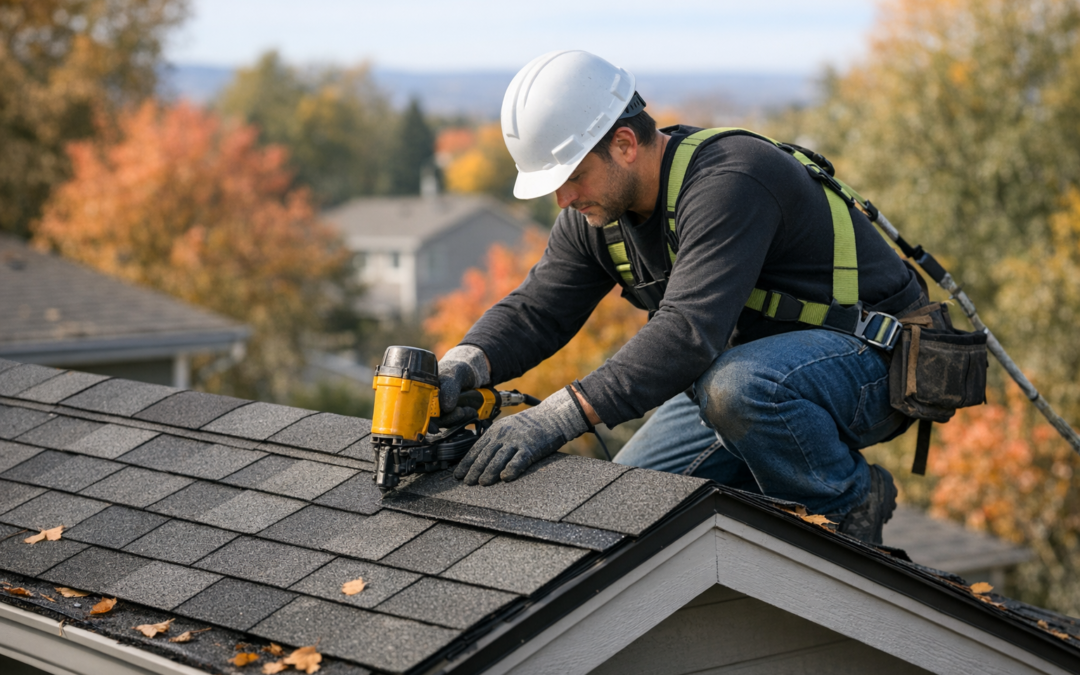
Colorado hail can fall as late as October, long after most homeowners stop watching the sky. Hail damage prevention in fall matters because the risk drops but never disappears along the Front Range. Lakewood sits inside “Hail Alley,” the zone where damaging hail hits more than almost anywhere in North America.
This post covers what fall hail does to a roof, the steps that stop it, and how to spot damage before it turns into a leak. The focus is the autumn months, when attention fades but the threat is real.
Why Fall Hail Catches Lakewood Homeowners Off Guard
Most people treat hail as a summer problem, and the data mostly agrees. June accounts for about 48% of confirmed hail days, May about 25%, July about 14%, August about 10%, and September and October the remainder, roughly 2% combined.
That 2% is the trap. The season officially winds down, but June is the most common month for hail in Colorado, but it can fall as early as March and as late as October.
Fall storms tend to arrive after a long summer of wear. Your roof has already taken UV exposure, wind, and smaller spring hits. A single October storm can finish off shingles that were already weakened.
The Front Range Hits Harder Than Most Regions
Elevation changes the math here. Hail falls faster and hits harder in Colorado compared to lower elevations, which can potentially lead to greater damage in the Mile High City.
Size matters too. The I-25 corridor between Denver and Pueblo averages more damaging hail than anywhere in the U.S., and hail 1 inch or larger typically damages roofs. One inch is roughly a quarter — small enough to underestimate, large enough to strip granules.
Hail Damage Prevention: Steps to Take Before Fall Storms
The strongest defense is a roof built to take the hit. The best way to protect your roof from hail damage is to install roofing materials with a UL Class 4 impact rating.
You do not need a full replacement to improve your odds. Here is an ordered list of fall storm protection moves, from biggest to smallest commitment:
- Upgrade to Class 4 impact-resistant shingles if you are already due for a new roof. They protect against large hail impacts and are resistant to winds as fast as 110 mph.
- Schedule an inspection before the first fall storm. One of the biggest risk factors for hail damage is existing roof damage.
- Clear roof valleys and gutters of summer debris. Fall leaves pile fast and block drainage when hail melts.
- Trim overhanging branches. During hailstorms, it’s likely the storm will damage the trees, which can then fall onto your roof.
- Replace missing or lifted shingles right away. Once they’re loose, hail can knock them off much more easily, leaving your roof open to further damage while the free shingles become projectiles.
Protect Windows, Siding, and Vehicles
Your roof is the priority, but hail hits more than shingles. Hail can damage roofs, siding, windows, and vehicles.
A few low-cost moves cover the rest of the property:
- Window film or storm shutters cut the risk of shattered glass during a direct hit.
- Covered parking keeps a car body dent-free when a fall storm rolls in fast.
- Secure patio furniture before storms, since loose items become flying debris in hail-driven wind.
Seal the Roof Deck for a Second Layer
Even when shingles take damage, a sealed deck buys you time against water. A protective layer installed beneath roofing materials adds durability and prevents water infiltration from hail damage. Ask about this during any fall roof work — it costs little when a roof is already open.
How to Spot Fall Hail Damage After a Storm
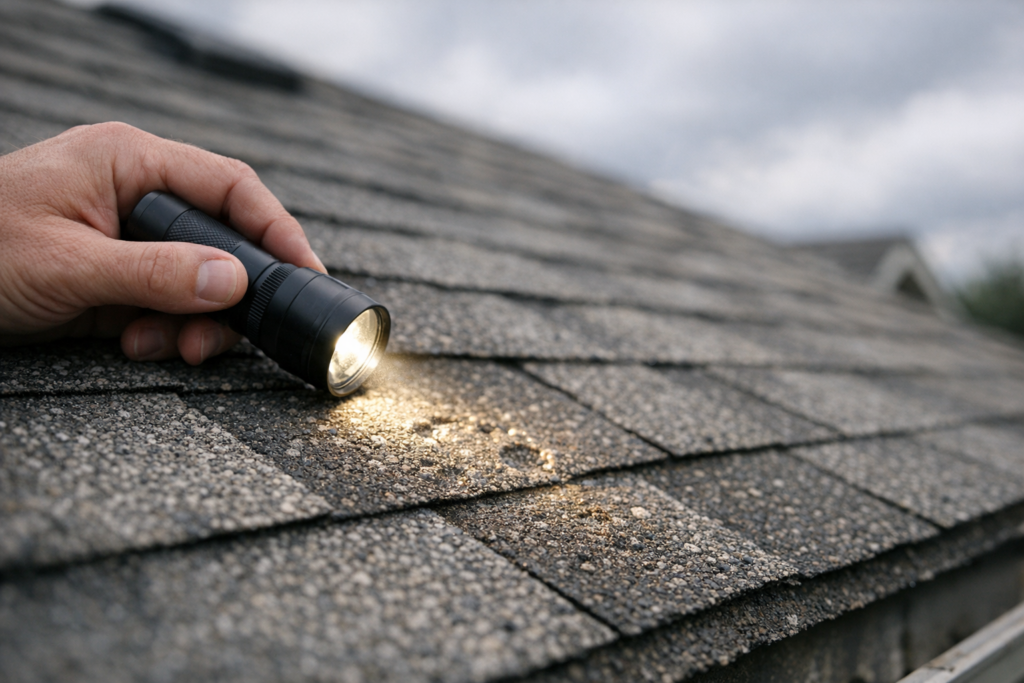
Fall hail damage rarely looks dramatic from the ground. Hail damage doesn’t always look like a big, obvious hole in your roof, and if the granules on the outside of your shingle are knocked loose by hail, that exposes them to UV damage that will weaken them over time.
Stay off the roof during inspection. When checking roof damage, stay at ground level or safe vantage points, and never climb onto the roof.
From the ground, look for these clues:
- Dented metal on vents, gutters, or patio covers — a reliable sign hail was large enough to harm shingles.
- Granules in gutters or downspout runoff, which look like coarse black sand.
- Interior water stains on ceilings, since water damage can indicate something less obvious with the roof.
Why Timing Your Claim Matters in Fall
Fall damage left unreported can blur into winter weather. Reporting early prevents disputes with insurers over when the damage occurred.
Document everything with dated photos right after a storm. A small crack ignored in October can become a leak behind drywall by January.

 Posted on Google
Don’t Wait for Spring to Fix Fall Damage
Untreated hail damage gets worse over winter. Small cracks can lead to leaks and structural problems if left unaddressed. Snow, ice, and freeze-thaw cycles push water into every gap hail opens.
If a fall storm leaves a hole or broken window, cover it fast. Cover any broken windows and holes in your roof to prevent water intrusion. Emergency tarping is a short-term step until repairs happen.
Key Takeaways for Fall Hail Protection
Fall hail is rare along the Front Range but still real into October, and it lands on roofs already worn by summer. Hail damage prevention comes down to a stronger roof, clear gutters, trimmed trees, and a fast inspection after every storm. Catching damage early keeps a small fall problem from becoming a flooded ceiling by winter.
If a fall hailstorm hits Lakewood and you suspect roof or water damage, Best Option Restoration of Lakewood can inspect, tarp, and restore your home. Call or text 303-500-3187, email info@borlakewood.com, or visit https://borlakewood.com.