

Best Option Restoration explains the hidden warning signs of storm roof damage that homeowners often miss, drawing from their experience inspecting hundreds of Colorado roofs after storms.
- Granule buildup in gutters, bruised shingles that feel soft, and lifted flashing are common signs of damage that can lead to leaks and rot if left untreated.
- Interior signs include attic stains, daylight visible through the roof deck, ceiling discoloration, and nail pops on upper floors.
- Small damage worsens quickly due to Colorado's freeze-thaw cycles, and most insurance policies require filing hail damage claims within one year of the storm.
After a storm, watch for missing or cracked shingles, granule loss in gutters, dented flashing or vents, and water stains on ceilings. Check for lifted shingle edges, exposed nail heads, and damaged soffit or fascia. Many serious issues hide in hard-to-see areas, so inspect attic spaces for daylight or moisture that signals hidden leaks.
A missing shingle is easy to spot. The damage that drains your bank account usually hides in places you never check. After a hailstorm or high winds roll across Lakewood, the most expensive problems start small and silent.
This post breaks down the compromised roof signs homeowners miss during a quick glance from the driveway. You will learn what to inspect, where water sneaks in, and when a storm roof damage claim is worth filing.
Best Option Restoration has walked hundreds of Colorado roofs after storms. The patterns below come from what we find on real jobs, not a generic checklist.
Compromised Roof Signs Homeowners Usually Miss
The obvious damage gets attention. The quiet damage causes rot, mold, and interior collapse months later. Below are the clues people skip.
1. Granule Loss in Your Gutters
Asphalt shingles shed tiny mineral granules when hail strikes them. These granules wash into gutters and collect at downspout exits. A pile that looks like coarse black sand means your shingle surface took a beating.
Granules protect the asphalt layer from UV rays. Once they are gone, that spot ages years in a single summer. Check your downspout splash blocks after any hailstorm.
2. Shingles That Look Bruised, Not Broken
Hail rarely punches a clean hole. It leaves a soft, dark dimple where the mat underneath is fractured. Press the spot gently with your thumb.
A bruised shingle feels soft, like the center of a ripe peach. That soft core will crack and leak within a season. Insurance adjusters count these bruises as hail hits during a claim.
3. Bent or Lifted Flashing
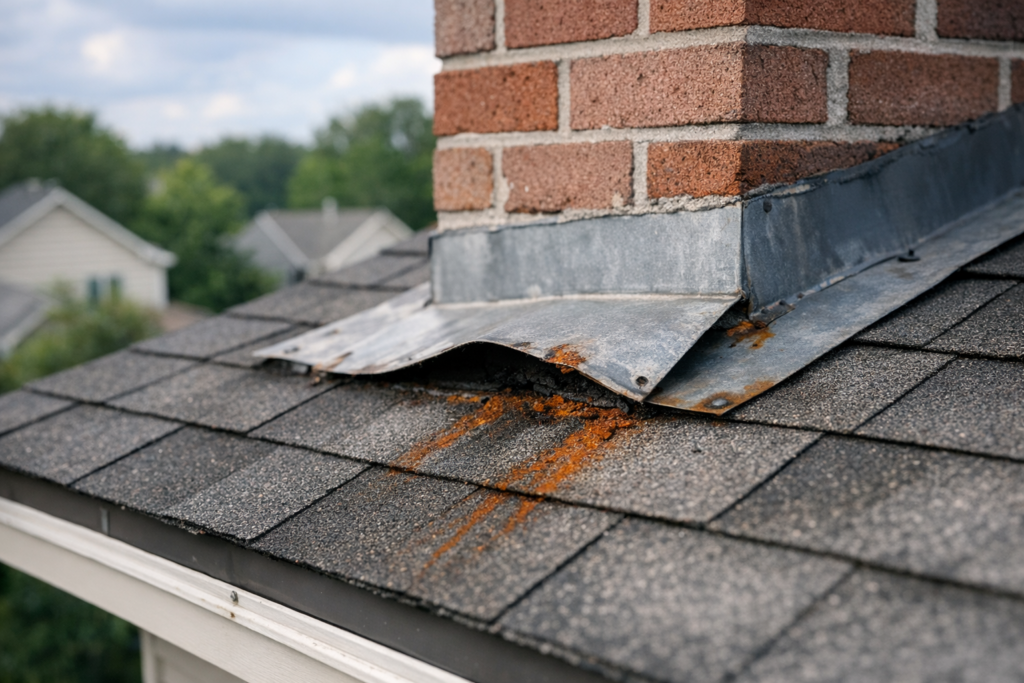
Flashing is the metal sealing seams around chimneys, vents, and valleys. Wind lifts flashing edges even when shingles stay put. A lifted edge the width of a coin lets water track straight into the roof deck.
Look at every chimney base and skylight border. Rust streaks below flashing signal water has been moving behind it for a while.
4. Dented Vents, Caps, and Gutters
Metal shows hail impact clearly when shingles hide it. Soft aluminum gutters, downspouts, and roof vents record every strike as a dimple. Dents on these surfaces confirm the hail was large enough to damage shingles too.
Walk your yard and check the air conditioner fins as well. Flattened AC fins tell you the storm carried serious force.
Interior Warning Signs of Storm Roof Damage
Some of the clearest compromised roof signs appear inside the house. Water that breaches the deck shows up in your attic and ceilings first.
Attic Stains and Daylight
Climb into your attic with a flashlight during daytime. Turn off the light and look up. Any pinpoint of daylight means a hole in the deck or a lifted shingle.
Dark streaks on rafters or decking point to active leaks. Damp insulation that smells musty confirms water has been entering for days.
Ceiling Discoloration and Nail Pops
Yellow or brown rings on a ceiling mean water sat above it. A ring that grows after each rain means the leak is still open. Catch it early before drywall sags and falls.
Nail pops in upstairs ceilings can signal shifting decking from wind pressure. One or two may be settling. A cluster after a storm points to structural movement.
Exterior Clues You Can Check From the Ground
You do not need to climb a ladder to catch early warning signs. A slow walk around the house reveals plenty.
- Shingle debris in the yard — whole or torn shingle pieces mean wind peeled your roof.
- Dark patches on the roofline — these mark areas where granules stripped away.
- Sagging rooflines — a dip in the ridge or eave suggests waterlogged decking.
- Loose or hanging gutters — pulled fasteners show wind load stressed the fascia.
- Cracked or missing pipe boots — the rubber collar around plumbing vents splits and leaks fast.
Pipe boots are one of the most overlooked failure points. The rubber dries out and cracks, and hail finishes the job. A failed boot drips directly into a bathroom or kitchen wall.
How to Inspect Your Roof Safely After a Storm
Follow this order to catch damage without climbing on the roof yourself. Steep or wet roofs are dangerous, and a fall costs far more than an inspection.
- Check the gutters and downspout exits for granule buildup.
- Walk the perimeter and scan for shingle debris and dark patches.
- Inspect metal surfaces — gutters, vents, AC unit, and mailbox for dents.
- Go into the attic with a flashlight and look for daylight and stains.
- Scan interior ceilings on the top floor for rings and nail pops.
- Photograph everything with timestamps for your insurance file.
Take photos even if damage looks minor. Adjusters work faster with clear before-and-after records. A date-stamped photo links the damage to a specific storm.

 Posted on Google
Why Small Signs Turn Into Big Repairs
A single cracked shingle seems harmless. Water that enters it never evaporates the way rainwater runs off. It soaks the decking, feeds mold, and rots the wood frame below.
In Colorado, freeze-thaw cycles widen every small crack each winter. Trapped moisture freezes, expands, and splits the material further. A $400 repair in spring becomes a $12,000 deck replacement by the next fall.
Hail damage carries a claim deadline in most policies. Many insurers require filing within one year of the storm date. Waiting past that window can leave you paying out of pocket.
When to Call a Restoration Team
Call for an inspection if you spot granule piles, bruised shingles, lifted flashing, or any attic daylight. These point to damage that worsens with every rain. A trained crew confirms whether the roof is repairable or needs replacement.
Best Option Restoration documents storm roof damage in a format insurers accept. We identify the overlooked failure points adjusters sometimes miss. Fast documentation protects both your home and your claim.
Key Takeaways
The most costly roof damage hides in granule loss, bruised shingles, lifted flashing, and attic stains. Check both the inside and outside of your home after every major storm. Photograph what you find and act before freeze-thaw cycles widen the damage.
If you spotted any of the compromised roof signs above, reach out to Best Option Restoration for a storm damage inspection. Call or text 303-500-3187, email info@borlakewood.com, or visit https://borlakewood.com.
Sources
- NOAA National Severe Storms Laboratory – Severe Weather 101: Hail
- FEMA – Wind Mitigation and Building Science
- Insurance Information Institute – How to File a Homeowners Claim