

A single clogged gutter can direct hundreds of gallons of rainwater into your foundation during summer storms, turning a $150 cleaning into a five-figure repair. Best Option Restoration explains how to inspect and maintain gutters before storm season hits.
- Clogged gutters cause damage to foundations, basements, fascia boards, and siding. Water pooling against foundations can lead to mold growth behind basement drywall after just two or three overflow events.
- Homeowners should clear troughs, flush with a hose, check downspout drainage, verify proper pitch, tighten hangers, seal seams, and extend downspouts four to six feet from the foundation.
- Warning signs include peeling paint on gutters, mud lines on siding, erosion near foundations, and damp basement spots. If water has already entered the home with visible mold or standing water, call a restoration company rather than handling it yourself.
To prepare your gutters for summer storms, start by removing all leaves, twigs, and debris from the channels and downspouts. Check for sagging sections, loose brackets, and any holes or cracks that need sealing. Make sure downspouts direct water at least three feet away from your foundation to prevent costly water damage to your home.
A single clogged gutter can send hundreds of gallons of rainwater straight into your foundation during one summer downpour. Most homeowners don’t notice the problem until water stains appear on a ceiling or a basement wall starts weeping. By then, the repair bill has grown from a 0 cleaning into a five-figure restoration project.
Good gutter maintenance before storm season prevents that chain of events. This article covers what to inspect, how to test your system, and the warning signs that mean water is already finding its way inside.
Why Gutters Fail During Summer Storms
Summer storms drop water fast. A heavy Colorado thunderstorm can produce over an inch of rain in under an hour. Your gutters have to move that volume off the roof and away from the house in minutes.
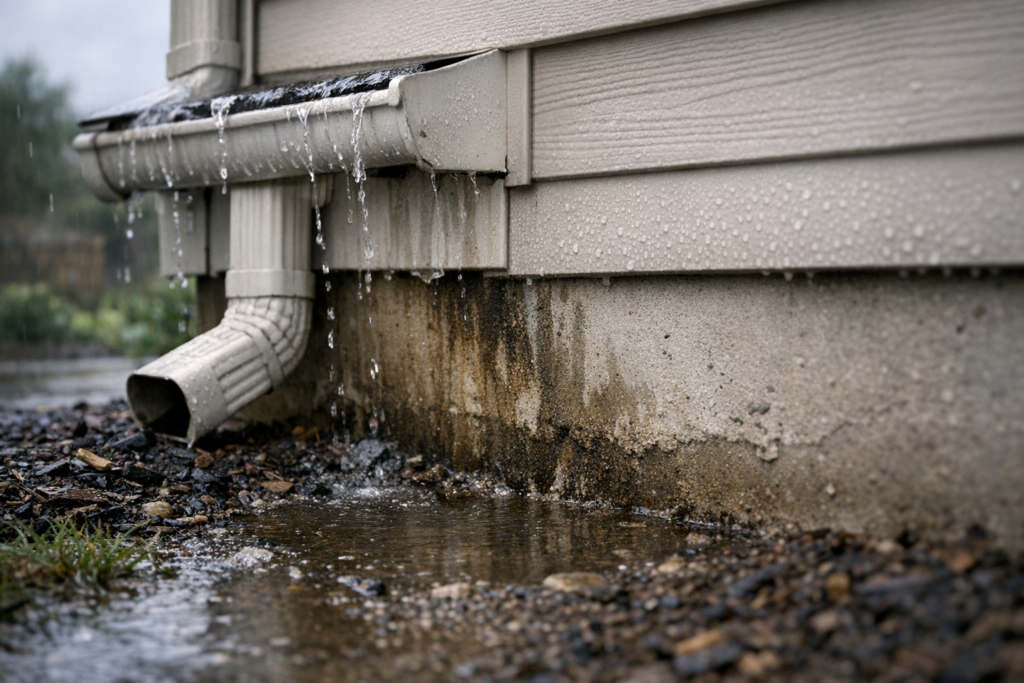
When a gutter clogs or pulls loose, water pours over the edge in sheets. It lands right next to the foundation, the exact spot you want to keep dry.
The most common failures we see after storm calls fall into a short list:
- Clogged troughs packed with leaves, seed pods, and roof grit
- Downspouts blocked at the elbow where debris collects
- Sagging sections where spikes or hangers have pulled from the fascia
- Separated seams that leak at every joint
- Short or missing extensions that dump water inches from the wall
The Real Cost of Skipping Gutter Maintenance
Overflowing gutters cause damage in three predictable places. Knowing where the water goes explains why summer storm preparation matters so much.
Foundation and Basement
Water pooling against the foundation seeps through hairline cracks and porous concrete. Over a few storms, it saturates the soil and raises hydrostatic pressure against the wall. That pressure pushes moisture into finished basements and crawl spaces.
We regularly find mold blooming behind basement drywall after just two or three overflow events. The homeowner had no idea until the musty smell appeared.
Fascia, Soffit, and Roof Edge
When a gutter backs up, water wicks under the roof edge and into the fascia board. Wood rot spreads quietly behind the gutter where nobody looks. A rotted fascia loses its grip on the hangers, and the whole section eventually tears away.
Siding and Landscaping
Sheeting water splashes soil and mulch against siding, staining it and rotting the lower boards. It also erodes flower beds and washes out the grade you paid to establish.
How to Prepare Your Gutters for Summer Storms
Gutter maintenance is a set of checks you can run in an afternoon. Follow these steps in order before the first big storm hits.
- Clear the troughs. Scoop out leaves, needles, and grit by hand or with a scoop. Bag the debris rather than dropping it into flower beds.
- Flush with a hose. Run water from the far end toward each downspout. Watch how fast it drains and where it backs up.
- Clear the downspouts. If water pools, tap the downspout to find the clog. Feed the hose in from the bottom to push it out.
- Check the pitch. Gutters should slope about a quarter inch per 10 feet toward each downspout. Standing water after flushing means the pitch is off.
- Tighten the hangers. Push up on sagging sections and reset loose spikes or screws into solid fascia.
- Seal the seams. Dry any leaking joints and apply gutter sealant on the inside seam.
- Extend the downspouts. Add extensions so water discharges at least four to six feet from the foundation.
Test Under Real Conditions
A hose test is good. Watching your gutters during the first moderate rain is better. Step outside during a steady shower and look for water spilling over any edge.
Note the spots that overflow and mark them for a closer look once the rain stops. Those are the sections most likely to fail in a heavy storm.
Warning Signs Water Is Already Getting In
Some damage starts before storm season, hidden from view. Catch it early and the fix stays small. Watch for these signals around your home:
- Peeling paint or rust streaks on the gutter’s outside face
- Vertical mud lines on siding below the gutter
- Erosion trenches or splashed soil at the foundation
- Damp spots on basement walls after rain
- Soft or discolored fascia behind the gutter
- Pooling water that lingers near the house hours after a storm
Any one of these means water is moving where it shouldn’t. Two or more usually points to an active leak path into the structure.
Gutter Guards: Helpful, But Not a Set-and-Forget Fix
Gutter guards reduce how much debris enters the trough. They cut down on cleaning frequency, which matters if your roof sits under heavy tree cover.
Guards are not maintenance-free, though. Fine grit and pine needles still collect on top and inside mesh screens. Plan on a yearly check even with guards installed.
Foam vs. Mesh vs. Reverse-Curve
- Foam inserts are cheap and easy but break down and hold moisture over time
- Micro-mesh screens block the most debris and handle heavy rain when kept clean
- Reverse-curve covers shed leaves but can overshoot in intense downpours

 Posted on Google
When to Call a Restoration Company Instead of a Handyman
Gutter cleaning is a homeowner task. Water that has already reached the interior is not. If you find any of the following, the damage has moved past routine maintenance:
- Standing water or dampness in a finished basement
- A musty smell that returns after every rain
- Visible mold on drywall, framing, or insulation
- Buckled flooring or swollen baseboards near an exterior wall
At that point, drying and repairs need proper equipment and moisture testing. Best Option Restoration handles water extraction, structural drying, and mold remediation after storm-driven water intrusion. We find the moisture behind walls that a visual check misses.
A Simple Pre-Storm Schedule That Works
The homeowners who avoid water damage run the same short routine every year. Put these dates on your calendar:
- Late spring: Full clean, flush, and hardware check before storm season
- Mid-summer: Quick visual scan after the first heavy storms
- Early fall: Second clean once leaves begin dropping
Three touchpoints keep your system moving water where it belongs. The cost of your time is nothing next to a soaked basement.
Conclusion
Proactive gutter maintenance stops summer storm water damage before it reaches your foundation, fascia, or basement. Clear the troughs, test the flow, extend the downspouts, and watch for early warning signs during the first rains. Small checks now prevent the expensive repairs that follow an overflow.
If storm water has already found its way inside, act quickly to limit the damage. Call or text Best Option Restoration at 303-500-3187, email info@borlakewood.com, or visit https://borlakewood.com for storm water damage response.
Sources
- FEMA – Protect Your Property From Flooding
- CDC – About Mold
- National Weather Service – Flood Safety