
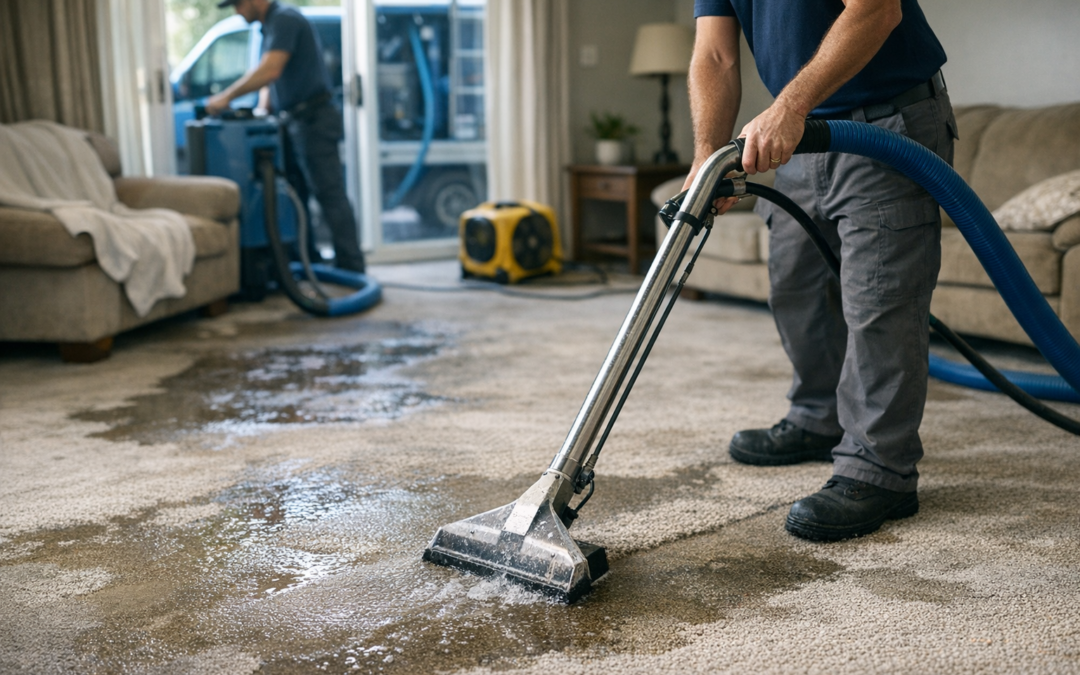
Professional carpet cleaning after water damage is necessary because DIY methods cannot remove moisture from padding and subfloors, leading to mold growth within 24 to 48 hours.
- Water soaks through carpet fibers, backing, and padding within minutes. Rental machines only extract surface water, leaving hidden moisture that causes mold, odor, and structural damage.
- Restoration crews use truck-mounted extractors, air movers, dehumidifiers, and moisture meters to dry the full carpet system. They also apply antimicrobial treatments for contaminated water.
- Water is categorized as clean, gray, or black - each requiring different treatment. Acting within 48 hours gives the best chance of saving carpet and padding.
Professional carpet cleaning is necessary after water damage because water-soaked carpet holds hidden dangers even after the surface feels dry. Rented machines and store-bought products cannot extract moisture from the padding or subfloor beneath your carpet. Professionals have specialized equipment to remove deep moisture, preventing mold growth, structural damage, and lingering odors that DIY methods miss.
Water-soaked carpet holds hidden dangers long after the surface feels dry. A rented machine and store-bought shampoo cannot pull moisture from the padding or subfloor beneath your carpet. That gap is exactly why professional carpet cleaning matters after any flood, pipe burst, or appliance leak.
This post covers what happens to wet carpet, why DIY drying falls short, and how expert work protects your home. You will learn the specific risks of trapped moisture and the steps trained crews take that a home vacuum never can.
What Happens to Carpet After Water Damage
Carpet acts like a sponge with three layers: the face fibers, the backing, and the padding underneath. Water reaches all three within minutes. The padding is the biggest problem because it stores water and stays wet for days.
Below the padding sits your subfloor. Wooden subfloors swell and warp. Concrete slabs trap moisture against the carpet backing, feeding mold growth.
The 48-Hour Mold Window
Mold begins growing on wet carpet within 24 to 48 hours. Once it takes hold in the padding, surface cleaning does nothing to stop it. This is the single reason speed and correct method matter more than effort.
A homeowner who shampoos the visible carpet may feel confident. Meanwhile, spores multiply in the layer they never touched.
Why DIY Carpet Cleaning Fails After Water Damage
DIY carpet cleaning treats a water event like a routine stain. The two situations are not the same. A spilled glass of juice affects the fibers. A flooded room affects everything under the carpet.
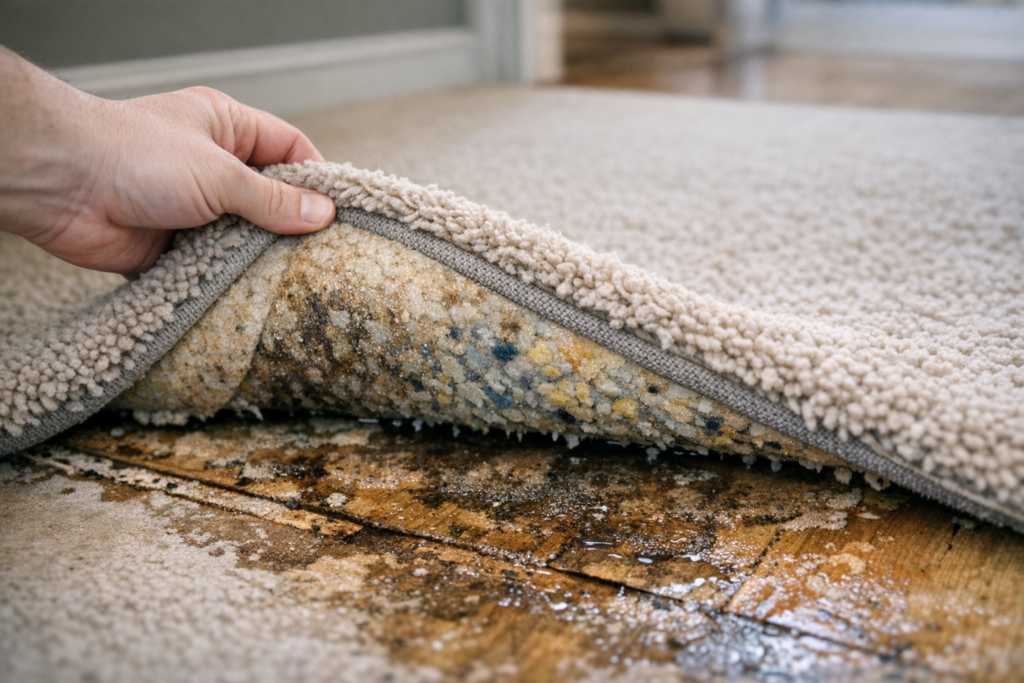
Rental machines and wet vacuums have three limits that undercut real water damage recovery:
- Weak extraction: Consumer machines remove a fraction of the water a truck-mounted unit pulls out.
- No sub-surface drying: Home equipment dries the top, not the padding or subfloor.
- No moisture reading: You cannot see trapped water without a moisture meter.
The result is carpet that feels dry but hides pockets of standing water. Those pockets create odor, staining, and mold within a week.
The Contamination Problem DIY Ignores
Not all water is the same. Restoration crews sort water into three categories, and each demands a different response.
- Category 1 (clean): Supply line breaks or overflowing sinks with clean water.
- Category 2 (gray): Washing machine or dishwasher discharge containing detergents and bacteria.
- Category 3 (black): Sewage backups or flood water carrying pathogens.
Gray and black water contaminate carpet with bacteria that a rented shampooer spreads rather than removes. Category 3 padding almost always needs removal, not cleaning. A homeowner rarely knows which category they are dealing with.
The Benefits of Professional Carpet Cleaning After a Flood
Trained restoration work does more than clean fibers. It dries the full carpet system and confirms the result with instruments. Here is what that protection looks like.
1. Full Moisture Extraction
Truck-mounted extractors pull water from the backing and padding, not just the surface. This removes gallons a wet vacuum leaves behind. Less trapped water means less warping and faster drying.
2. Structural Drying With Air Movers
Crews place air movers and dehumidifiers to dry the subfloor beneath the carpet. This step is what actually stops mold. A home fan pushes air across the top and never reaches the layer that matters.
3. Antimicrobial Treatment
After extraction, technicians apply antimicrobial agents to kill bacteria and block mold spores. This matters most with gray and black water events. Store shampoo has no equivalent effect on contamination.
4. Documented Moisture Readings
Moisture meters confirm when carpet, padding, and subfloor reach dry standard. This documentation supports insurance claims. It also proves the job is finished rather than guessed.
5. Odor Elimination at the Source
Musty smell after water damage comes from bacteria and mold, not dirty fibers. Surface fragrance masks it for a day. Restoration removes the source, so the odor does not return.
DIY vs. Professional Carpet Cleaning: Side by Side
The gap between the two approaches shows up in method, not effort. A homeowner can work hard and still miss the failure points.
- Water removed: DIY pulls surface water only. Restoration pulls water from padding and backing.
- Sub-floor drying: DIY has none. Restoration uses air movers and dehumidifiers.
- Contamination handling: DIY spreads bacteria. Restoration applies antimicrobial treatment.
- Verification: DIY relies on touch. Restoration uses moisture meters.
- Mold prevention: DIY leaves the padding wet. Restoration dries the full system.
When Carpet Can Be Saved and When It Cannot
A common question after a flood: can this carpet be cleaned or must it go? The answer depends on water category and how long it sat.
- Clean water, dried within 48 hours: Carpet and padding usually stay.
- Gray water: Carpet may be saved with treatment; padding often replaced.
- Black water: Carpet and padding removed for health reasons.
- Any water sitting more than 72 hours: Padding replacement is likely.
A trained technician makes this call with meters and inspection. Guessing wrong means either wasted money or a hidden mold problem later.
The Hidden Cost of Waiting
Every hour wet carpet sits raises the odds the padding and subfloor cannot be saved. A same-day extraction can save the carpet that a next-week cleaning cannot. Speed changes the math on repair cost.

 Posted on Google
What to Do Before the Crew Arrives
Your actions in the first hours affect the final result. A few steps protect your home and limit the damage.
- Stop the water source if you can reach the shutoff safely.
- Lift furniture legs off wet carpet or place foil under them to prevent stains.
- Pull up small rugs and area rugs to dry separately.
- Keep foot traffic off the wet area to avoid pushing water deeper.
- Do not run a home vacuum over standing water; it is an electrical risk.
Then call for restoration help. The sooner extraction starts, the more of your carpet survives.
Why Homeowners Call Best Option Restoration
Best Option Restoration handles carpet after water damage from start to finish. Crews arrive with truck-mounted extraction, air movers, dehumidifiers, and moisture meters. They read the water category, dry the full carpet system, and document the result for your insurer.
That combination is what a rental machine cannot match. It is the difference between carpet that looks dry and carpet that is truly dry down to the subfloor.
Conclusion
Water damage soaks every layer of your carpet, and surface cleaning leaves the worst of it behind. Expert extraction, structural drying, and antimicrobial treatment stop mold and save carpet that DIY methods lose. Acting within the first 48 hours makes the biggest difference in the result.
Contact Best Option Restoration for carpet cleaning after water damage. Call or text 303-500-3187, email info@borlakewood.com, or visit https://borlakewood.com.
Sources
- EPA – Mold Cleanup in Your Home
- CDC – Mold Cleanup After a Flood
- Ready.gov – Floods