

A single frozen pipe can release up to 250 gallons of water daily into a home. This guide walks through fall winterization tasks to prevent water damage before the first hard freeze hits.
- Drain and shut off exterior water sources, disconnect hoses, and add insulated faucet covers. Pipes in crawl spaces, attics, and garages should be wrapped with foam insulation since they freeze first.
- Clean gutters after leaves drop to prevent ice dams that push water under shingles. Seal gaps around windows and doors while caulk can still cure in warm conditions.
- Inspect the roof for damaged shingles, service the heating system, and flush the water heater. For winter trips, keep the thermostat at 55°F minimum and consider installing smart leak detectors.
To winterize your home and prevent water damage, start by insulating exposed pipes in unheated areas like basements, attics, and garages. Disconnect and drain outdoor hoses, then shut off exterior faucet valves. Seal gaps around windows and doors, clean gutters to prevent ice dams, and set your thermostat no lower than 55 degrees when away.
A single frozen pipe can release up to 250 gallons of water a day into your home. Fall is the window when you can stop that from happening. The cold weeks ahead will expose every weak spot you ignore now.
This post walks you through how to winterize home systems before the first hard freeze hits Lakewood and the Front Range. You will learn the exact fall tasks that prevent water damage once temperatures drop. Each step targets a specific failure point we see every winter.
Why Fall Is the Only Smart Time to Winterize Your Home
Fall preparation beats winter repair because materials behave differently in cold. Caulk will not cure below 40°F. Pipe insulation foam cracks when handled in freezing weather.
Doing the work in October and early November means warmer surfaces and dry conditions. Water damage calls spike in Colorado during the first week of sustained sub-freezing nights. The homes that flood share one trait: nobody prepared in the fall.
The goal is to finish every task on this list before the first overnight freeze. In the Denver metro, that date lands around mid-October most years.
Step 1: Drain and Shut Off Exterior Water Sources
Outdoor faucets are the most common source of winter pipe bursts in homes we service. Water trapped in the spigot or the pipe behind it freezes and splits the line. The leak stays hidden inside the wall until spring thaw.
How to Protect Outdoor Faucets
- Disconnect every garden hose and drain it fully before storing.
- Find the interior shut-off valve for each exterior faucet.
- Close that valve, then open the outdoor spigot to drain standing water.
- Leave the spigot open all winter so expanding ice has room.
- Add an insulated faucet cover over each exterior tap.
If your home has a sprinkler system, schedule a blowout. Compressed air clears water from underground lines before it freezes and cracks them. A cracked sprinkler line can flood a basement when the system restarts.
Step 2: Insulate Pipes in Unheated Areas
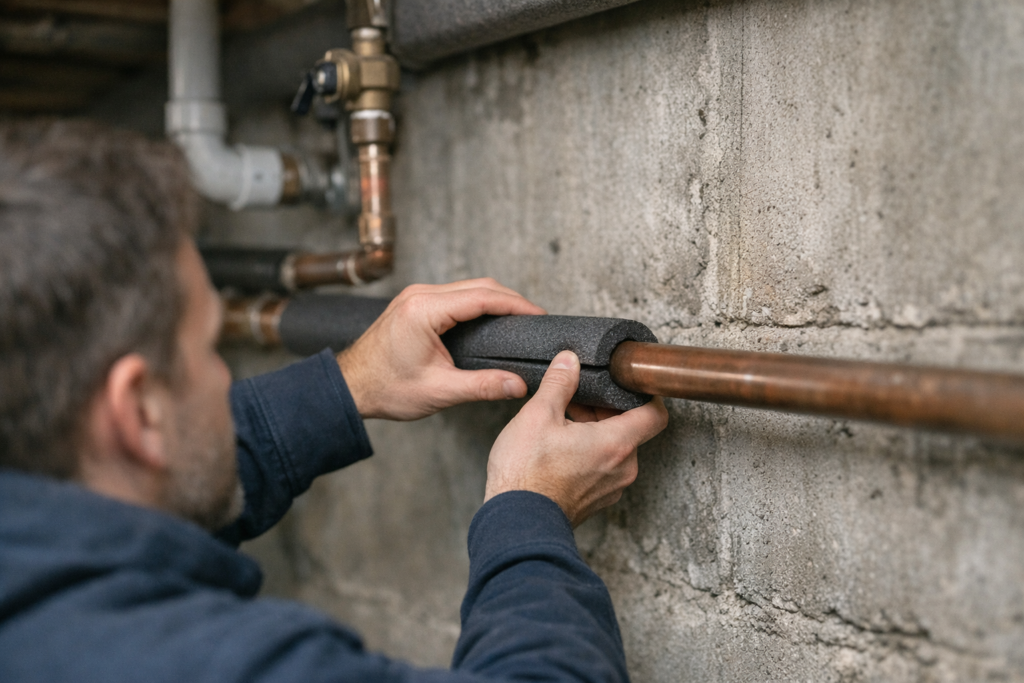
Pipes in crawl spaces, attics, and garages freeze first. Insulate any pipe in a space that drops below 55°F. Foam sleeve insulation costs a few dollars per length and installs in minutes.
Pay attention to pipes running along exterior walls. These lines sit closest to the cold and burst most frequently. Wrap any section within a few inches of an outside wall.
Target These Spots First
- Water lines under kitchen and bathroom sinks on exterior walls
- Pipes in the garage near the water heater
- Any exposed line in a crawl space or unfinished basement
- The main supply line where it enters the house
During a deep freeze, open cabinet doors under sinks on exterior walls. Warm room air reaches the pipes and keeps them above freezing.
Step 3: Clear Gutters and Check Downspouts
Clogged gutters cause ice dams, and ice dams push water under your shingles. We trace a large share of winter ceiling leaks back to gutters full of fall leaves. The water has nowhere to go but into the roof deck.
Clean every gutter run after the last leaves drop, usually early November here. Flush the system with a hose to confirm water flows freely. Each downspout should carry water at least four feet from the foundation.
What an Ice Dam Does
An ice dam is a ridge of ice that forms at the roof edge and traps melting snow. The pooled water backs up under shingles and drips into the attic and walls. Clean gutters and attic insulation both reduce the risk.
Step 4: Seal Gaps in the Building Envelope
Cold air entering around windows and doors chills nearby pipes and walls. Seal those gaps in fall when caulk can cure in warm, dry conditions. A tube of exterior caulk closes dozens of small leaks for a few dollars.
- Caulk around window and door frames on the exterior
- Add weatherstripping to doors with visible daylight at the edges
- Seal openings where cables, pipes, and vents pass through walls
- Check the rim joist in the basement for air leaks
Pay attention to the garage. An uninsulated garage door lets cold air reach any plumbing on a shared wall.
Step 5: Inspect the Roof Before Snow Arrives
A missing or cracked shingle becomes a leak the moment snow melts on it. Inspect the roof from the ground with binoculars, or hire a roofer in fall. Repairs are faster and cheaper on a dry, warm day than after a leak starts.
Look for these warning signs:
- Missing, curled, or cracked shingles
- Damaged flashing around chimneys and vents
- Loose or rusted gutter fasteners
- Granules collecting in gutters, a sign of worn shingles
Attic insulation matters as much as the roof surface. Even insulation keeps the roof deck cold and stops the melt-freeze cycle that builds ice dams.

 Posted on Google
Step 6: Service the Water Heater and Heating System
A failed furnace during a freeze lets your whole house drop to the danger zone for pipes. Have the heating system inspected in fall before you depend on it. Replace the furnace filter so the system runs efficiently all winter.
Drain a few gallons from the water heater tank to clear sediment. Sediment buildup makes the tank work harder and shortens its life. Check the area around the tank for any sign of a slow leak.
Step 7: Plan for Vacant Periods
Leaving town during winter adds risk because no one catches a problem early. A pipe can burst on day one and flood for a week unnoticed. Fall is when to set up safeguards for any winter trips.
- Keep the thermostat no lower than 55°F while away.
- Shut off the main water supply for trips longer than a few days.
- Install a water leak sensor near the water heater and washing machine.
- Ask a neighbor to check the house every few days.
A smart leak detector that texts your phone can save you from a five-figure repair. Many models shut off the water automatically when they sense a leak.
What to Do If Water Damage Happens Anyway
Even a well-winterized home can face a surprise freeze or an aging pipe. Fast action limits how far the water spreads and how much it ruins. Shut off the main water valve the moment you spot standing water.
Move belongings off wet floors and start documenting damage with photos. Then call a restoration team to extract water and dry the structure. Mold can begin growing within 24 to 48 hours of water exposure.
Best Option Restoration in Lakewood responds to water damage emergencies across the Front Range. Our crews handle extraction, structural drying, and full repair.
Fall Winterizing Checklist at a Glance
- Exterior faucets: drained, shut off, covered
- Sprinklers: professionally blown out
- Pipes: insulated in all unheated areas
- Gutters: cleaned and flowing freely
- Envelope: gaps caulked and weatherstripped
- Roof: inspected and repaired
- Heating: serviced with a fresh filter
- Water heater: flushed and checked for leaks
- Vacancy plan: thermostat set, leak sensors installed
Finish Your Fall Prep Before the First Freeze
Winterizing your home in fall closes the gaps that cause winter floods, from frozen spigots to ice dams. The steps above cost little and take a weekend, yet they prevent water damage that runs into thousands of dollars. Start now, before the first hard freeze locks the weak spots in place.
If a freeze catches you off guard, Best Option Restoration is ready to help. Call or text 303-500-3187, email info@borlakewood.com, or visit https://borlakewood.com.
Sources
- Insurance Information Institute – Preparing Your Home for Winter
- Ready.gov – Winter Weather Preparedness
- U.S. Department of Energy – Weatherize Your Home