

Vacation home water damage is more severe than in primary residences because no one is present to catch leaks early, with mold forming within 24 to 48 hours of water exposure. Best Option Restoration of Lakewood provides guidance on prevention, monitoring, and fast response for seasonal property owners.
- Shut off the main water valve before leaving, drain pipes, keep the thermostat at 55°F or higher, and add antifreeze to drain traps to prevent frozen or burst pipes.
- Install smart water leak sensors and shut-off systems that alert your phone to temperature drops or abnormal water flow while you are away.
- Document all maintenance and property checks for insurance purposes since many policies limit coverage for water damage in vacant homes that sat unmonitored.
Address vacation home water damage by acting quickly once discovered. Shut off the main water supply immediately, then document all damage with photos for insurance purposes. Remove standing water using pumps or wet vacuums, and set up fans and dehumidifiers to dry the space. Contact your insurance company and a professional restoration service within 24 to 48 hours to prevent mold growth and structural issues.
A frozen pipe can dump 250 gallons of water into your Colorado mountain cabin before you drive up for the weekend. Vacation home water damage grows worse than damage in a primary residence because no one is there to catch it early.
This post covers how seasonal property owners spot risks, prevent leaks during long vacancies, and respond fast when water gets in. The advice reflects what our crews see across empty second homes near Lakewood and the foothills.
Why Vacation Home Water Damage Gets Worse Than Home Damage
Water damage in an empty house compounds every hour it goes unnoticed. A dishwasher supply line that fails in your main home gets mopped up in minutes. The same failure in a vacation property can run for weeks.
Time is the difference. Mold begins forming within 24 to 48 hours of water exposure. In a home you visit twice a season, that window passes long before you arrive.
Common sources we find in seasonal homes:
- Frozen and burst pipes during unheated winter months
- Failed water heaters that leak slowly for weeks
- Ice dams forcing melt under shingles and into ceilings
- Toilet supply lines that crack and run continuously
- Roof leaks from wind-damaged flashing after storms
How to Prevent Vacation Home Water Damage During Vacancy
The best defense is shutting off water at the source before you leave. Most vacation home water damage traces back to plumbing that ran unchecked while the house sat empty.
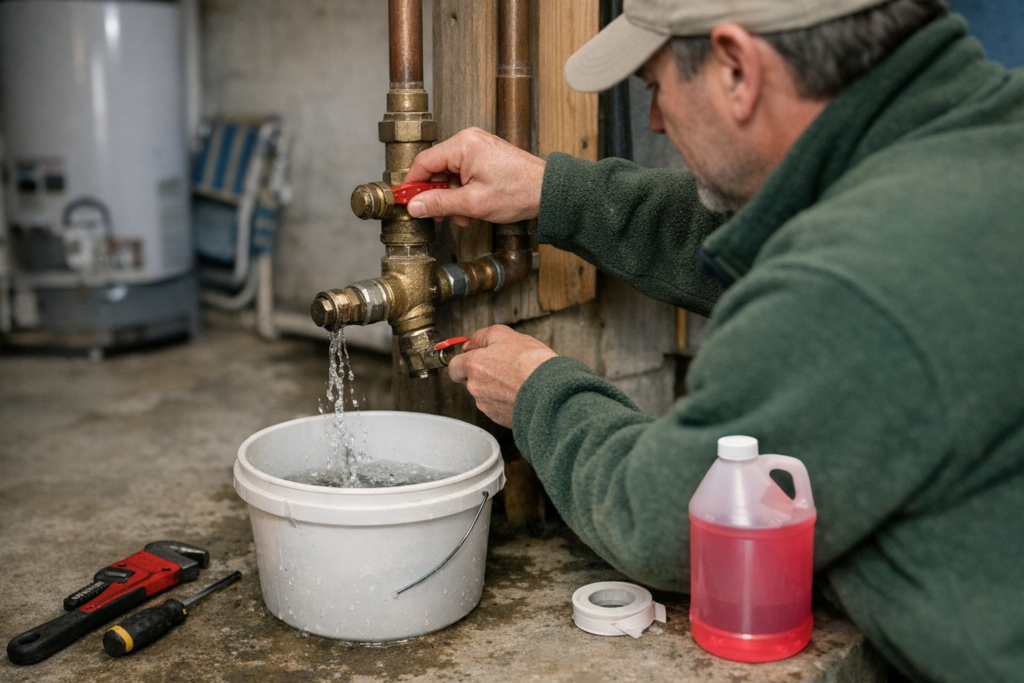
Steps Before You Leave for the Season
- Shut off the main water valve. Locate it near where the supply line enters the home.
- Drain the pipes. Open faucets on the lowest and highest levels to clear standing water.
- Set the thermostat no lower than 55°F. This keeps pipes above freezing in cold weather.
- Add antifreeze to drain traps in toilets, sinks, and floor drains to stop them cracking.
- Turn off the water heater or set it to vacation mode.
- Disconnect washing machine hoses if the home sits idle for months.
For homes closed all winter, full winterization by a plumber costs far less than one flood cleanup.
Seasonal Property Maintenance That Prevents Leaks
Regular seasonal property maintenance catches small failures before they flood a room. Inspect these items at the start and end of each season:
- Water heater base and connections for rust or drips
- Under-sink supply lines for stiffness or bulging
- Roof flashing, gutters, and downspouts for clogs and gaps
- Attic insulation levels to reduce ice dam risk
- Sump pump function if your property has a basement
Braided steel supply lines outlast rubber ones and cost only a few dollars more.
Smart Monitoring for Homes You Rarely Visit
Water leak sensors give you eyes on the property when you’re hours away. A basic smart water shut-off system detects flow anomalies and closes the valve automatically.
Devices worth installing in a seasonal home:
- Whole-home leak detectors that shut off water on abnormal flow
- Freeze sensors that alert your phone when indoor temps drop
- Spot sensors near water heaters, washers, and under sinks
Pair any sensor with a caretaker or neighbor who can check the home within an hour of an alert.
What to Do When You Find Water Damage at Your Vacation Home
Stop the water source first, then document everything before cleanup begins. Fast action limits mold growth and lowers your repair cost.
First Steps on Arrival
- Shut off the main water valve if the leak is still active.
- Cut power to affected areas at the breaker if water is near outlets.
- Photograph and video the damage for your insurance claim.
- Remove valuables and furniture from wet zones.
- Call a restoration company for extraction and drying.
Do not assume a dry-looking floor is fine. Water wicks into subfloors, wall cavities, and insulation where you cannot see it.
Why DIY Drying Falls Short
A shop vac and box fan cannot pull moisture from behind drywall or under hardwood. Restoration crews use moisture meters and industrial air movers to dry hidden cavities.
Standing water left in a wall for days breeds mold that spreads across framing. In a vacation home, that hidden growth goes unnoticed until the smell hits you on your next visit.

 Posted on Google
Insurance Notes for Seasonal Property Owners
Many policies limit or deny coverage for water damage in vacant homes. Insurers may argue the loss was preventable if the home sat unmonitored for weeks.
Protect your claim with these habits:
- Keep records of winterization and maintenance dates
- Document each property check you or a caretaker makes
- Ask your insurer about vacancy clauses before you leave for the season
- Save photos showing the home’s condition when you close it up
A dated maintenance log often makes the difference between an approved and a denied claim.
Handling Water Damage From a Distance
You may learn of a leak while hundreds of miles away. Line up help before that call comes.
Keep a short list ready:
- A local plumber’s number for the shut-off
- A restoration company that responds 24/7
- A neighbor or property manager with a key
- Your insurance agent and policy number
Best Option Restoration responds around the clock, so a leak found at 2 a.m. gets crews on site fast even when you cannot be there.
Key Takeaways
Vacation home water damage grows unchecked because no one is there to catch it, making prevention and fast response the two things that matter most. Shut off water during vacancy, install leak sensors, and keep a dated maintenance log for insurance. When water gets in, stop the source, document the damage, and call a restoration crew before mold takes hold.
If your seasonal property near Lakewood or the foothills has water damage, contact Best Option Restoration for 24/7 emergency response. Call or text 303-500-3187, email info@borlakewood.com, or visit https://borlakewood.com.
Sources
- FEMA – Protect Your Property from Flooding
- EPA – Mold Cleanup in Your Home
- Insurance Information Institute – Protecting Your Home from Water Damage