
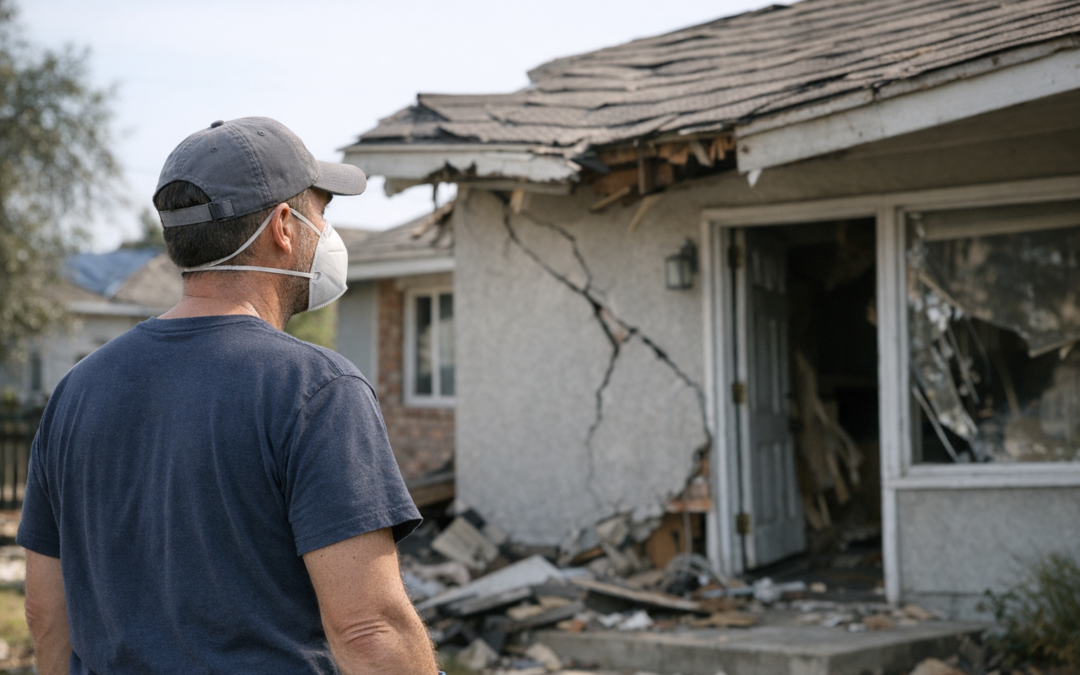
The first 24 to 48 hours after a flood, fire, or storm determine how much of a home can be saved. This guide provides homeowners with a step-by-step post-disaster cleanup checklist covering safety, documentation, water removal, drying, and when to call professionals.
- Check for hazards like gas leaks and damaged wiring before entering, shut off utilities if needed, and wear protective gear including rubber boots, gloves, and an N95 mask.
- Document all damage with photos and video before moving anything, call your insurance company the same day, and keep receipts for all emergency expenses.
- Remove standing water within 24 hours to prevent mold, run dehumidifiers for three to five days, and call a restoration team if water reached electrical systems or mold covers more than 10 square feet.
A post-disaster cleanup checklist is a step-by-step guide that helps homeowners respond quickly after floods, fires, or storms. It outlines safety precautions, damage documentation for insurance claims, water removal, debris clearing, and mold prevention tasks. Acting within the first 24 to 48 hours is critical since standing water can spread mold and smoke residue continues damaging surfaces until properly cleaned.
The first 24 hours after a flood, fire, or storm decide how much of your home you can save. Standing water spreads mold within 48 hours. Smoke residue keeps eating into surfaces until it is removed. A clear post-disaster cleanup checklist keeps you from missing the steps that protect both your safety and your insurance claim.
This article gives you the exact order homeowners should follow after damage strikes. Each section covers what to do, what to avoid, and when to call for help.
Start With Safety Before Cleanup
Do not enter a damaged home until you confirm it is safe. Structural damage, live wires, and gas leaks cause more injuries after a disaster than the event itself.
Check for Hazards First
Run through this list before you touch anything:
- Shut off utilities if you smell gas or see damaged wiring. Turn off power at the breaker only if the panel is dry.
- Inspect the structure for sagging ceilings, cracked foundations, or bowed walls.
- Watch for standing water near outlets. Never wade into flooded rooms with active electricity.
- Wear protection. Use rubber boots, gloves, and an N95 mask around floodwater or soot.
Floodwater from storms or sewage backups is Category 3 water. It carries bacteria and should be treated as contaminated. Keep children and pets away until cleanup finishes.
Your Post-Disaster Cleanup Checklist, Step by Step
A post-disaster cleanup checklist works best when you follow it in order. Skipping documentation or rushing to demolition costs homeowners money later.
Step 1: Document Everything for Insurance
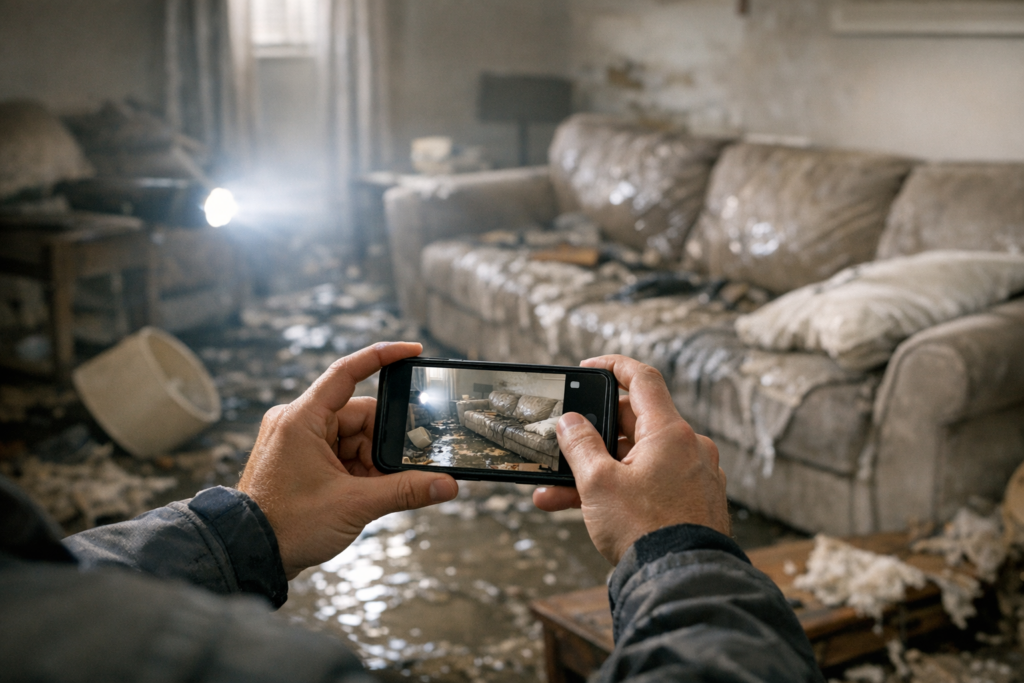
Photograph and video all damage before you move or discard anything. Adjusters need proof of loss to approve claims.
- Take wide shots of each room, then close-ups of damaged items.
- Record serial numbers on appliances and electronics.
- Keep receipts for tarps, pumps, and emergency lodging.
- Write down the date and time the damage occurred.
Call your insurance company the same day. Ask what your policy covers for water extraction, mold, and temporary housing.
Step 2: Stop the Source of Damage
Water and fire damage grow worse by the hour. Stop the source before you start cleaning.
- Shut off the main water valve for burst pipes.
- Cover roof breaches or broken windows with tarps.
- Move salvageable furniture to a dry, ventilated space.
Step 3: Remove Standing Water Fast
Mold begins growing within 24 to 48 hours of water exposure. Speed matters more than anything else at this stage.
Use a wet/dry vacuum or submersible pump for standing water. Open windows and run fans to move air. Pull up soaked carpet and padding, since padding rarely dries in time to save it.
Drywall that stayed wet for more than 24 hours often needs removal. Cut it a few inches above the waterline to check for hidden moisture behind the surface.
Step 4: Dry Out the Structure
Drying is where homeowners lose the most ground. A room can feel dry to the touch while framing and subfloor stay saturated.
- Run dehumidifiers in every affected room.
- Keep fans pointed at walls and floors, not just open air.
- Check moisture with a meter, not by feel.
- Open closets, cabinets, and wall cavities to release trapped moisture.
Full structural drying takes three to five days with the right equipment. Rushing this step invites mold behind walls you cannot see.
Step 5: Clean and Disinfect Surfaces
Category 3 water leaves bacteria on every surface it touches. Clean hard surfaces with a disinfectant rated for the contamination level.
Discard porous items that soaked in contaminated water. Mattresses, upholstered furniture, and particleboard rarely come clean. Wash salvageable textiles in hot water separately from your normal laundry.
Step 6: Address Mold Before It Spreads
Mold on more than 10 square feet of surface calls for specialized handling. Smaller spots can be scrubbed with detergent and dried fully.
Bag moldy materials in plastic before carrying them outside. This keeps spores from spreading to clean rooms during removal.
Fire and Smoke Damage Needs a Different Order
Fire cleanup follows its own sequence. Smoke residue is acidic and etches metal, glass, and finishes within days.
What to Do After a Fire
- Wait for the fire department’s clearance before entering.
- Ventilate to clear smoke and lingering fumes.
- Cover intact surfaces to protect them from soot fallout.
- Avoid touching soot, which smears and sets deeper into porous materials.
- Discard food exposed to heat, smoke, or firefighting water.
Soot cleanup requires dry sponges and specialized cleaners, not water. Wiping soot with a wet cloth pushes it into paint and drywall permanently.
What Homeowners Should Leave to a Restoration Team
Some cleanup steps require equipment and training most homeowners lack. Knowing when to stop protects your health and your home’s value.
Call for Help When You See These Signs
- Water reached electrical systems or HVAC ducts.
- Sewage backed up into living spaces.
- Mold covers more than a small patch or spreads inside walls.
- Smoke odor lingers after surface cleaning.
- Drywall, insulation, or subfloor stayed wet for over 48 hours.
Best Option Restoration uses commercial dehumidifiers and moisture meters to dry structures your household fans cannot reach. A trained crew documents the damage in a format insurance adjusters accept, which speeds your claim.

Homeowner Disaster Recovery: Protecting Your Claim
Homeowner disaster recovery depends as much on paperwork as on cleanup. Keep a running log of every action, expense, and phone call related to the damage.
- Save all damaged-item photos in a separate folder.
- Log conversations with your adjuster, including names and dates.
- Keep receipts for every repair and rental item.
- Do not throw away large damaged items until the adjuster approves.
Homeowner disaster recovery moves faster when your documentation is organized from day one. A restoration company that works with insurers can handle much of this reporting for you.
A Quick Reference Checklist
Print this and keep it where you can find it after damage strikes:
- Confirm the home is safe to enter.
- Shut off utilities if hazards exist.
- Photograph and video all damage.
- Call your insurance company.
- Stop the water or secure fire-damaged areas.
- Extract standing water within 24 hours.
- Dry the structure with fans and dehumidifiers.
- Clean and disinfect hard surfaces.
- Remove and bag moldy materials.
- Call a restoration team for anything beyond surface cleaning.
Conclusion
Acting fast in the first 48 hours saves flooring, drywall, and personal belongings that would otherwise be lost. A written post-disaster cleanup checklist keeps your safety, documentation, and drying steps in the right order. Knowing when to call for help protects both your health and your insurance claim.
Best Option Restoration responds to water, fire, and storm damage for homeowners who need fast, documented cleanup. Call or text 303-500-3187, email info@borlakewood.com, or visit https://borlakewood.com to reach a crew.
Sources
- FEMA – How to Clean Your Flooded Home
- EPA – Mold Cleanup in Your Home
- CDC – Cleanup After a Flood
- Ready.gov – Floods