
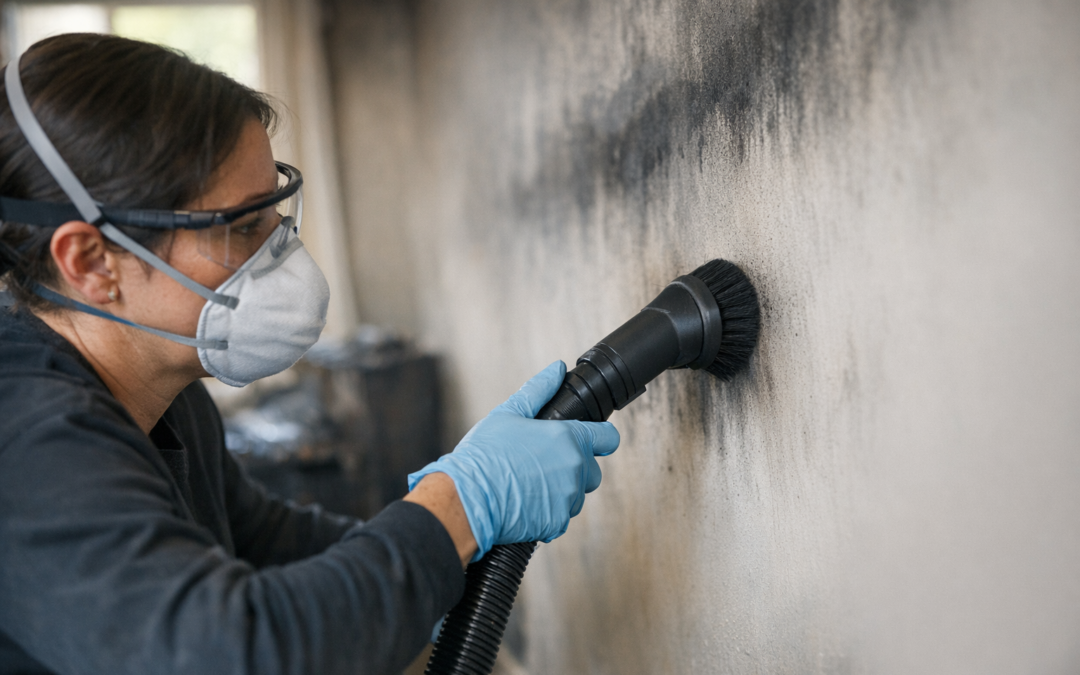
Soot removal after a fire requires dry-cleaning surfaces before using any liquid to prevent permanent staining. This guide explains the proper techniques, supplies needed, and when to call professional restoration services.
- Soot is acidic and oily, bonding to surfaces and etching paint within days. Different fire types produce different soot - dry from wood fires, sticky from plastics or grease, and nearly invisible protein residue from kitchen fires.
- Always vacuum loose soot first, then use a chemical dry sponge in one direction before washing with TSP solution. Working top to bottom in small sections prevents streaking and smearing.
- Call a restoration crew when soot covers multiple rooms, involves HVAC ducts, or remains after cleaning. Best Option Restoration uses HEPA filtration and thermal fogging for damage beyond household cleaning.
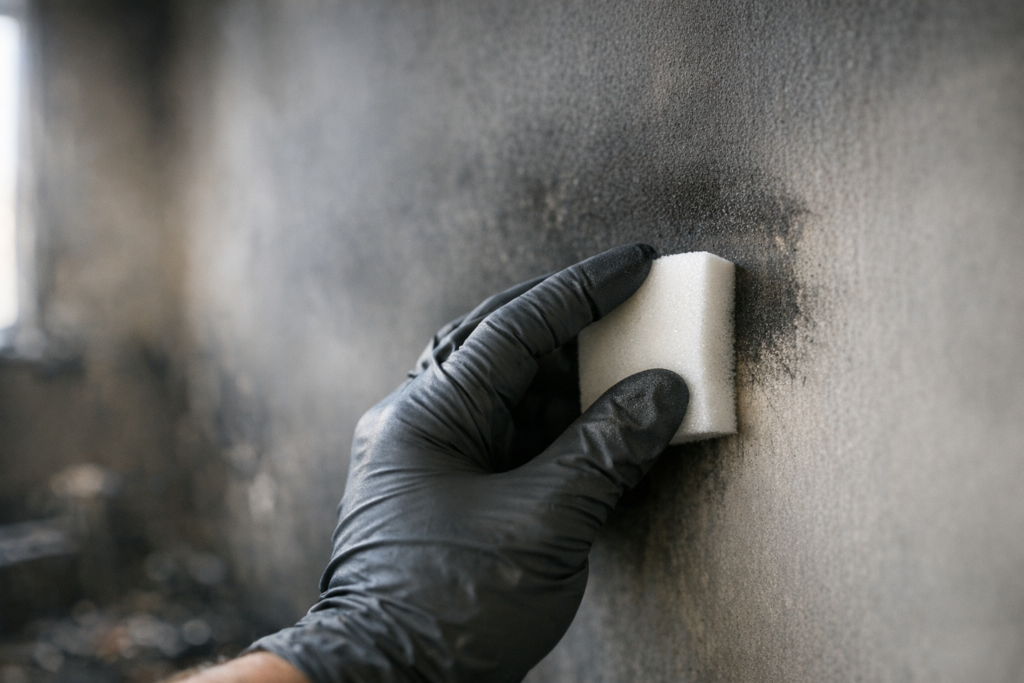
Start by dry cleaning the surface using a chemical sponge or dry cleaning sponge to lift loose soot without smearing. Work from top to bottom in straight lines, folding the sponge to expose clean surfaces. Avoid using water initially, as moisture can push the oily residue deeper into paint and drywall, creating permanent stains that become much harder to remove.
Soot removal is one of the first tasks homeowners face after a fire, and doing it wrong can drive stains deeper into your walls. Soot is fine, oily carbon residue that clings to paint, drywall, and porous ceiling surfaces. Wipe it with water too soon, and you can smear it into a permanent gray shadow.
This post walks you step by step through cleaning soot from walls and ceilings safely. You will learn which supplies work, which mistakes to avoid, and when the damage calls for a restoration crew.
Why Soot Removal Is Harder Than It Looks
Soot is not ordinary dirt. It is an acidic, oily film that bonds to surfaces and etches paint and finishes within days. The longer it sits, the more it stains and corrodes.
Different fires leave different soot. A grease or protein fire leaves a sticky, near-invisible film that smears badly. A wood or paper fire leaves dry, powdery black residue that lifts more easily.
Matching your cleaning method to the soot type is the difference between a clean wall and a smeared mess. Test a small hidden patch before treating a full surface.
Types of Soot You May Encounter
- Dry soot — from fast-burning wood or paper. Powdery and easier to vacuum away.
- Wet or oily soot — from smoldering plastics or grease. Sticky and prone to smearing.
- Protein residue — from kitchen fires. Nearly invisible but leaves a strong odor and yellowing film.
Safety Precautions Before You Start
Soot particles are small enough to enter your lungs and bloodstream. Fire residue can contain carbon, heavy metals, and chemical byproducts from burned materials. Protect yourself before touching a single wall.
Take these precautions first:
- Wear an N95 or P100 respirator — a paper dust mask does not filter fine soot.
- Put on nitrile gloves and safety goggles to keep residue off skin and eyes.
- Wear long sleeves and closed shoes you can wash or discard afterward.
- Ventilate the room by opening windows and running a fan pointed outward.
- Confirm the power is off to any fire-affected outlets or fixtures.
Do not let children or pets in the room until cleaning is finished and surfaces are dry. Soot settles into carpet and fabric where small hands and paws pick it up.
Supplies You Need for Soot Removal
The right tools prevent smearing and reduce your scrubbing time. Gather everything before you begin so you are not touching contaminated items midway.
- Chemical dry sponges (also called soot sponges) — rubber sponges that lift soot without water
- HEPA vacuum with a brush attachment
- Trisodium phosphate (TSP) or a degreasing cleaner for oily soot
- Warm water and clean buckets — two buckets, one rinse and one wash
- Clean white cloths or microfiber towels
- Drop cloths or plastic sheeting for the floor
Skip the water-and-rag approach until you have dry-cleaned the surface first. Water spreads oily soot and forces it into porous drywall.
Step-by-Step: How to Remove Soot from Walls
Work from the top of the wall downward so falling residue lands on uncleaned areas. Clean in small sections of about three feet square. Rushing across a whole wall at once causes streaking.
Step 1: Vacuum Loose Soot
Run a HEPA vacuum over the wall without touching the surface with the nozzle. Hold the brush attachment a half-inch away. This lifts dry particles before they smear.
Step 2: Use a Dry Chemical Sponge
Wipe the wall in one direction with a chemical dry sponge. Do not scrub back and forth. When the sponge face turns black, rotate to a clean side or slice off the dirty layer with a knife.
This dry step removes most soot on painted walls before any liquid touches the surface.
Step 3: Wash Remaining Residue
Mix TSP with warm water following the label ratio. Dampen a cloth, wring it nearly dry, and wipe a small section. Rinse with a second clean cloth and clear water immediately.
Change your rinse water as soon as it turns gray. Dirty water re-deposits soot onto the wall.
Step 4: Dry the Surface
Blot each section dry with a clean towel before moving on. Trapped moisture in drywall invites mold within 48 hours. Keep a fan running to speed drying.
How to Remove Soot from Ceilings
Ceilings hold more soot because heat and smoke rise. Textured or popcorn ceilings trap residue in every ridge, which makes them the hardest surface to clean.
Flat Painted Ceilings
Follow the same dry-sponge-first method used on walls. Support your neck and take breaks to avoid strain from working overhead. Cover furniture and floors, since ceiling debris falls straight down.
Textured and Popcorn Ceilings
Vacuum only. Wiping a popcorn ceiling with a wet cloth pulls the texture loose and leaves gouges. If dry vacuuming does not clear the stain, the ceiling likely needs repainting or replacement.
Sealing with a stain-blocking primer is the standard fix for soot-stained textured ceilings that will not clean. An oil-based primer locks in odor and prevents bleed-through.

I had a vendor come in after the demo, and unprompted the vendor said that the cleanup job was a really good job.
Paul and his team are 5 Stars.
Highly recommended.
 Posted on Google
Fire Cleanup Tips That Prevent Permanent Damage
Small choices during cleanup decide whether stains lift or set. These fire cleanup tips come from restoration jobs where a homeowner’s first attempt made things worse.
- Never use a wet rag first — dry-clean before you introduce any liquid.
- Replace cloths frequently — a soot-loaded rag smears more than it lifts.
- Do not run your HVAC system until ducts are cleaned, or you spread soot everywhere.
- Address odor at the source — masking sprays fade, but sealing and cleaning remove it.
- Photograph everything before cleaning for your insurance claim.
Acidic soot etches painted surfaces within days, so speed matters more than perfection. Get residue off fast, then refine.
When to Call a Restoration Crew
Some fire damage moves past what household cleaning can fix. Call a restoration team when any of the following apply to your home.
- Soot covers more than one room or an entire ceiling
- The fire involved plastics, grease, or synthetic materials with heavy odor
- Smoke reached your HVAC ducts or wall cavities
- Staining remains after dry-cleaning and washing
- You notice soot inside outlets, vents, or behind fixtures
Best Option Restoration uses HEPA filtration, thermal fogging, and sealed containment that household tools cannot match. Our crews treat hidden residue in wall cavities and duct runs that surface cleaning leaves behind.
Conclusion
Soot removal works best when you dry-clean first, wash second, and match your method to the soot type. Protect your lungs and skin, work top to bottom, and stop before wet-wiping textured ceilings. Fast action keeps acidic residue from etching your walls for good.
When soot spreads past a single room or resists your cleaning, reach Best Option Restoration at 303-500-3187 by call or text, email info@borlakewood.com, or visit https://borlakewood.com.
Sources
- U.S. Environmental Protection Agency – Wildfires and Indoor Air Quality
- Centers for Disease Control and Prevention – Wildfire Safety
- American Red Cross – Recovering After a Home Fire