
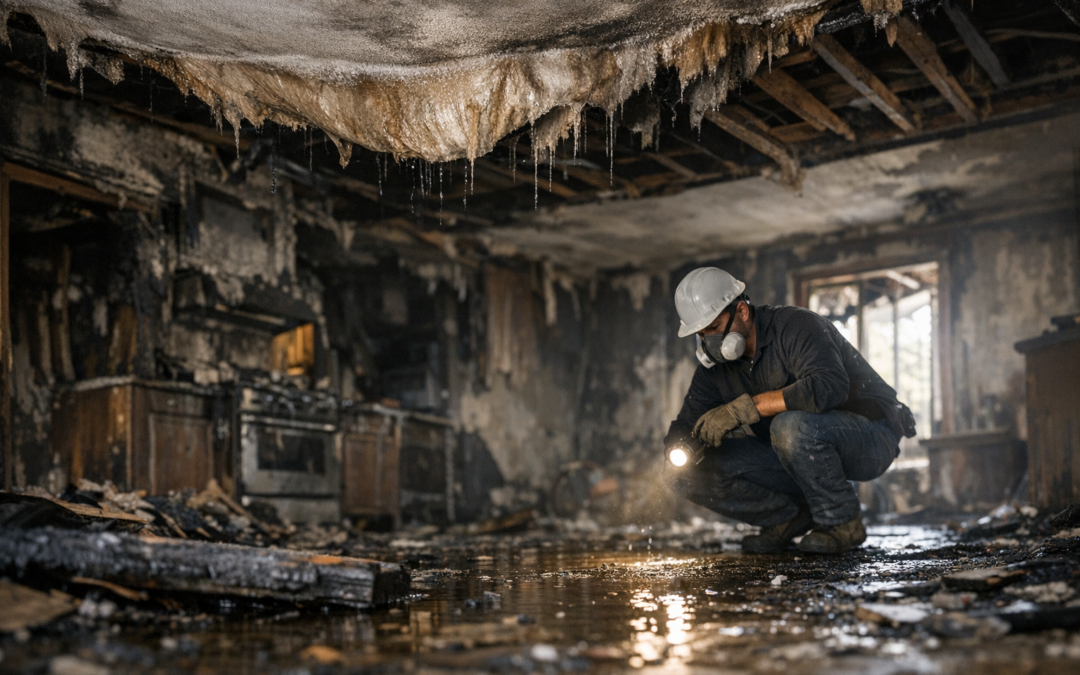
The first 24 hours after a fire determine how much of a home survives, as soot corrodes surfaces, smoke odor sets in, and water from firefighting can trigger mold growth within 48 hours.
- Wait for fire department clearance before entering, then photograph all damage before moving anything for insurance purposes.
- Open windows and use fans pointed outward to ventilate - do not run the HVAC system as it spreads soot to unaffected rooms.
- Remove standing water quickly and call a restoration team within 24 hours since soot becomes harder to clean as it sets into surfaces.
To minimize damage after a fire, act within the first 24 hours before soot permanently stains surfaces and smoke odor penetrates deeper into materials. Open windows for ventilation, wipe soot from hard surfaces using dry methods, remove water-soaked items to prevent mold growth, and document all damage with photos before a professional restoration crew arrives to begin repairs.
The first 24 hours after a fire decide how much of your home survives. Soot keeps eating into surfaces, smoke odor sinks deeper, and water from firefighting starts feeding mold. Minimizing fire damage depends on the moves you make before a restoration crew arrives.
This post walks you the exact steps to take right after a fire. You will learn what to touch, what to leave alone, and how to stop secondary damage from spreading.
Why the First Hours Matter for Minimizing Fire Damage
Fire damage does not stop when the flames go out. Acidic soot keeps corroding metal, plastic, and grout within hours. Smoke residue yellows walls and bonds to porous materials the longer it sits.
Water used to put out the fire creates a second problem. Drywall, carpet, and wood absorb it fast. Mold can start growing within 24 to 48 hours in those wet materials.
The goal in the first hours is containment, not cleanup. Acting early limits what needs replacing later.
Step One: Confirm the Home Is Safe to Enter
Do not enter a fire-damaged home until the fire department clears it. Structural beams, floors, and stairs may be weakened even when they look intact.
Watch for warning signs before stepping inside:
- Sagging ceilings or floors that signal water-soaked or burned framing
- Lingering smoke or gas smell that points to active hazards
- Exposed or charred wiring near outlets and panels
- Standing water near electrical sources
Keep the main power and gas off until an electrician or your restoration team checks them. A small spark in a soot-coated panel can restart a fire.
Step Two: Document Everything Before You Move Anything
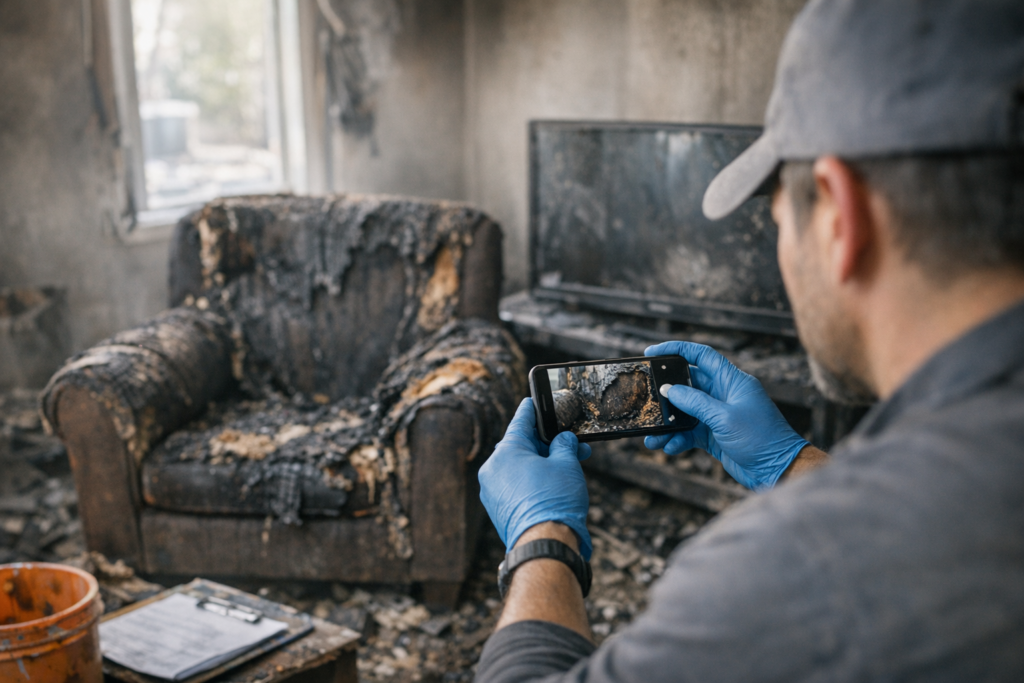
Photograph the damage before you clean or discard anything. Insurance adjusters need proof of the condition right after the fire.
Capture each room from multiple angles. Include close-ups of damaged furniture, electronics, and personal items. Record video walkthroughs if you can.
Keep damaged items until the adjuster sees them. Throwing out a scorched couch too early can reduce your claim payout.
What to Record for Your Claim
- Wide shots of every affected room
- Close-ups of high-value items like appliances and electronics
- Serial numbers and model details where readable
- Receipts or proof of purchase you still have
Step Three: Ventilate and Control Soot Spread
Open windows and doors to start moving smoke odor out, weather permitting. Stale, smoke-filled air settles into fabric and drywall the longer it stays trapped.
Avoid running your HVAC system. The blower pulls soot into ducts and spreads it to rooms the fire never touched. One Aurora kitchen fire we handled left soot in a bedroom 40 feet away because the furnace ran overnight.
Place box fans in windows to push air outward, not inward. This pulls contaminated air out instead of stirring soot across surfaces.
Step Four: Protect Surfaces You Can Still Save
Cover upholstery and carpet in unaffected rooms with old sheets or plastic. Foot traffic grinds soot into fibers and turns a cleanable item into a replacement.
Soot is greasy and smears easily. Wiping walls with a dry cloth can push residue deeper into paint and grout.
Take these protective actions instead:
- Lay clean towels on high-traffic flooring and carpeted paths
- Remove undamaged textiles like bedding and clothing to a clean space
- Cover countertops with plastic to block settling soot
- Leave walls and ceilings alone until a crew brings proper cleaning agents
Step Five: Address Water Before Mold Starts
Standing water from firefighting needs removal fast. Mold colonies form in wet drywall and carpet within two days.
If it is safe and the power is off, take these moves:
- Mop or blot standing water with towels
- Lift wet rugs off hardwood to stop staining
- Prop wet cushions upright to air out
- Open closet and cabinet doors to release trapped moisture
Do not use a household vacuum on wet carpet. Standard vacuums are not built for water and create a shock risk.

 Posted on Google
Step Six: Handle Food and Medicine Safely
Discard any food exposed to heat, smoke, or firefighting chemicals. Soot and toxins seep into packaging and sealed containers more than people expect.
Throw out items in this category:
- Refrigerated and frozen food if power was off for hours
- Canned goods exposed to high heat, which can spoil contents
- Medications and cosmetics near the fire or heat source
- Open packages in pantries near smoke
Step Seven: Call a Fire Restoration Team Early
Bring in a restoration crew within the first day for the best results. Soot becomes harder to remove with each passing hour as it sets into surfaces.
A trained crew brings equipment a homeowner cannot match. Air scrubbers pull smoke particles from the air. Thermal foggers neutralize odor that has bonded to walls and insulation.
At Best Option Restoration, our crews start with containment to stop soot from migrating. We then clean, dry, and deodorize based on the type of smoke residue present.
Why Smoke Type Changes the Approach
Not all smoke damage cleans the same way. The material that burned determines the residue and the method.
- Dry smoke from fast, high-heat fires leaves powdery residue that wipes off more easily
- Wet smoke from slow, smoldering fires leaves sticky, smeary soot that needs solvents
- Protein residue from kitchen fires is nearly invisible but carries strong odor
- Fuel or oil soot from heating systems stains fast and spreads wide
Using the wrong method sets stains permanently. A crew that identifies the smoke type avoids that mistake.
Quick Reference: Do and Do Not After a Fire
Keep this short list handy in the first hours.
Do:
- Wait for fire department clearance before entering
- Photograph damage before moving items
- Ventilate with fans pointed outward
- Cover and protect salvageable surfaces
- Call a restoration team within 24 hours
Do not:
- Run the HVAC system
- Wipe soot off walls with a dry cloth
- Use a household vacuum on wet carpet
- Eat food exposed to smoke or heat
- Discard damaged items before the adjuster sees them
How These Steps Limit Long-Term Cost
Early containment keeps damage from spreading to clean rooms. A fire confined to one kitchen should not cost you the whole main floor.
Stopping soot migration and water spread protects items that would otherwise need full replacement. These fire restoration tips lower both the repair bill and the time out of your home.
Speed is the single biggest variable in fire recovery. The faster you contain and call for help, the more survives.
Conclusion
Minimizing fire damage comes down to fast, careful action in the first 24 hours. Confirm safety, document the scene, ventilate correctly, protect clean surfaces, and remove water before mold starts. Each step keeps repairable items out of the replacement pile.
Best Option Restoration responds quickly to limit soot, smoke, and water damage in your home. Call or text 303-500-3187, email info@borlakewood.com, or visit https://borlakewood.com to get a crew on site.
Sources
- American Red Cross – Recovering Emotionally and Physically From Fire
- U.S. Fire Administration – After a Home Fire
- U.S. Environmental Protection Agency – Mold Cleanup in Your Home