

This guide explains how to select and maintain the right fire extinguisher for different areas of your home, covering extinguisher classes, placement strategies, and when to evacuate instead of fighting a fire.
- Fire extinguishers are rated by letter classes - A for ordinary combustibles, B for flammable liquids, C for electrical fires, and K for cooking oils. Using the wrong class can spread flames and cause injury.
- ABC-rated extinguishers handle most household hazards with one canister, though the dry chemical residue can damage electronics and metal surfaces. Place units on each level near exits, not directly above hazards.
- Check pressure gauges monthly, mount units on brackets, and replace disposable extinguishers after 10 to 12 years. Only fight small contained fires - evacuate immediately if flames reach the ceiling or spread beyond the starting point.
Select a home fire extinguisher based on the types of fires most likely to occur in each area. For kitchens, choose a Class K or ABC extinguisher to handle grease and cooking fires. For living spaces and garages, an ABC multipurpose extinguisher covers ordinary combustibles, flammable liquids, and electrical fires. Check the size rating to match your space and confirm you can lift and operate it easily.
A grease fire in a skillet and a spark from an overloaded outlet call for two different responses. Grabbing the wrong home fire extinguisher can spread flames instead of stopping them. Knowing which type sits under your kitchen sink matters more than most homeowners realize.
This post breaks down extinguisher classes, room-by-room placement, and sizing. You will learn what the letters and numbers on the label mean. You will also learn when an extinguisher is not enough.
What the Fire Classes Mean for a Home Fire Extinguisher
Fire extinguishers are rated by the type of fire they put out. A letter class tells you what fuel the extinguisher fights. Using the wrong class can cause injury or make a fire worse.
Here are the classes that show up in residential settings:
- Class A — ordinary combustibles like wood, paper, cloth, and upholstery.
- Class B — flammable liquids such as gasoline, cooking oil, paint thinner, and propane.
- Class C — energized electrical equipment, including outlets, appliances, and wiring.
- Class K — cooking oils and fats in kitchens, mostly a commercial rating.
A pan of burning vegetable oil is a Class B or K fire. Water or a Class A unit will scatter the oil and grow the flames. That single mistake causes many kitchen burns each year.
Why ABC Is the Default Home Fire Extinguisher
An ABC-rated extinguisher handles Class A, B, and C fires with one canister. It uses a monoammonium phosphate dry chemical that smothers most household fires. For a single-purchase house unit, ABC covers the widest set of hazards.
One caveat: the dry chemical residue is corrosive and messy. On electronics and metal surfaces, it can cause damage after the fire is out. That cleanup is part of what our teams handle after a kitchen or garage fire.
Which Extinguisher Belongs in Each Room
Match the extinguisher to the hazards in the space. A kitchen faces grease and electrical fires. A garage faces gasoline and solvent fires. One size does not fit every corner of the house.
Kitchen
The kitchen is the highest-risk room for a home fire. A Class B and K-capable unit handles cooking oil, the most common ignition source. Mount it near an exit, not directly above the stove.
Placing an extinguisher behind the range is a common error. Reaching over active flames to grab it defeats the purpose. Keep it within a few steps of the cooking area but out of the fire’s path.
Garage and Workshop
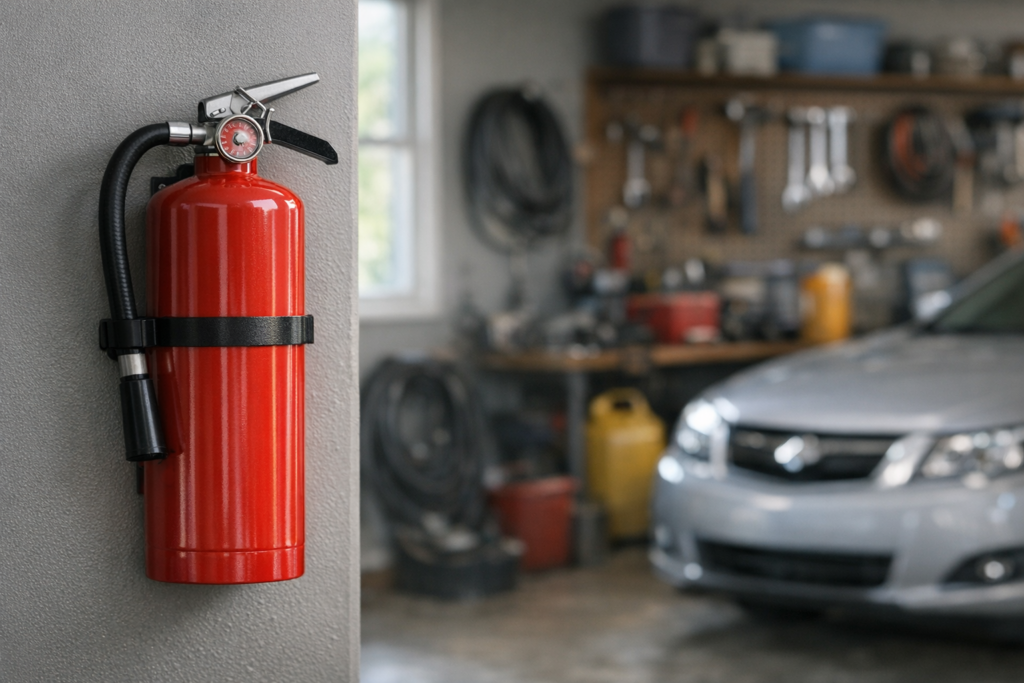
Garages store gasoline, motor oil, paint, and power tools. A larger ABC unit covers the mix of flammable liquids and electrical risk here. A 5-pound canister gives more discharge time than a small kitchen model.
Bedrooms and Hallways
Fires in sleeping areas start from space heaters, cords, and lamps. A compact ABC extinguisher on each level covers upstairs bedrooms. Store one within reach of the hallway leading to your escape route.
Furnace, Laundry, and Utility Rooms
Dryers cause thousands of house fires a year from lint buildup. Electrical panels and water heaters add ignition sources. A single ABC unit near the utility area covers this zone.
How to Read the Size and Rating Numbers
The numbers on the label tell you how much fire the unit fights. A rating like 3-A:40-B:C lists capacity for each class. Higher numbers mean more fire-fighting power.
Use this breakdown when comparing models:
- The A number reflects water-equivalent volume. A 2-A unit fights roughly twice the Class A fire of a 1-A unit.
- The B number shows square footage of flammable liquid fire coverage. A 40-B rating covers about 40 square feet.
- The C rating has no number. It confirms the agent is safe on live electrical fires.
- The pound weight is the amount of chemical inside, not the total canister weight.
For most homes, a 2.5 to 5-pound ABC unit works per level. Anything smaller empties in seconds. A 10-second discharge leaves little room for hesitation.
Placement and Maintenance Fire Safety Tips
An extinguisher only helps if it works when you reach for it. Pressure leaks, blocked access, and expired units cause failures during real emergencies. A few habits keep your equipment ready.
Follow these fire safety tips for every extinguisher in the home:
- Check the pressure gauge monthly. The needle should sit in the green zone.
- Mount units on brackets, not on the floor. Floor placement leads to corrosion and clutter.
- Keep the nozzle and pin free of dust. A clogged nozzle can fail under pressure.
- Replace disposable units after 10 to 12 years. Even unused canisters lose charge over time.
- Teach every adult the PASS method. Pull, Aim, Squeeze, Sweep.
The PASS Method in Practice
PASS is the standard technique for operating a portable extinguisher. Pull the pin, aim at the base of the fire, squeeze the handle, and sweep side to side. Aiming at the flames instead of the fuel wastes the charge.
Stand six to eight feet back when you start. Move closer as the fire shrinks. Keep an exit behind you at all times.

 Posted on Google
When an Extinguisher Is Not Enough
A portable extinguisher fights small, contained fires only. If flames reach the ceiling or spread past one object, leave immediately. The unit is meant to clear an escape path, not to fight a growing blaze.
Get everyone out and call 911 when any of these happen:
- The fire has spread beyond its starting point.
- Smoke fills the room and limits visibility.
- You have already emptied one extinguisher without control.
- The fire blocks your only exit.
After the flames are out, damage rarely ends. Smoke stains walls, soot coats surfaces, and dry chemical residue corrodes metal. Water from the fire department soaks drywall and flooring.
Our crews handle the aftermath of residential fires across the Lakewood area. We remove soot, treat smoke odor, and repair structural and water damage. Fast cleanup limits the corrosive damage that extinguisher chemicals leave behind.
Key Takeaways
An ABC-rated home fire extinguisher covers most household hazards, with a Class K-capable unit for the kitchen. Place one per level, mount it on a bracket, and check the gauge monthly. Fight only small fires, and get out the moment flames spread.
If a fire has left smoke, soot, or water damage in your home, Best Option Restoration can restore it. Call or text 303-500-3187, email info@borlakewood.com, or visit https://borlakewood.com.
Sources
- National Fire Protection Association – Fire Extinguishers
- U.S. Fire Administration – Fire Extinguishers
- U.S. Fire Administration – Home Fires