
Every minute counts after a fire because secondary damage from soot, smoke, and water can exceed the original fire damage. Rapid response within 24 hours can prevent permanent harm and significantly reduce restoration costs.
- Soot acids begin corroding metal surfaces within hours while smoke penetrates deeper into materials. Water from firefighting creates conditions for mold growth within 48 to 72 hours.
- Content salvage rates drop from 80 to 90 percent in the first 24 hours to below 40 percent after 48 hours. Delayed response often doubles restoration costs due to mold remediation requirements.
- Professional teams arriving quickly can stabilize properties through emergency board-up, water extraction, and soot removal before damage becomes permanent. Early documentation also helps with insurance claims.
Rapid response in fire damage restoration is critical because secondary damage begins immediately after flames are extinguished. Soot and smoke residue can permanently stain surfaces within hours, water from firefighting efforts promotes mold growth, and acidic byproducts corrode metals and electronics. Acting quickly minimizes these effects and significantly reduces overall repair costs.
Every minute counts after a fire strikes your property. The clock starts ticking the moment flames are extinguished, beginning a cascade of secondary damage that can cost more than the original fire itself.
Rapid fire damage response becomes the difference between salvaging your property and watching it deteriorate beyond repair. Within the first 24 hours, soot acids begin eating away at metal surfaces, smoke odors penetrate deeper into materials, and water from firefighting efforts creates ideal conditions for mold growth.
This guide explains exactly why immediate action matters and what happens when restoration teams arrive quickly versus days later.
The First 24 Hours: When Secondary Damage Accelerates
Fire restoration urgency stems from the rapid progression of damage that occurs after the flames die down. The first day sets the trajectory for your entire restoration project.
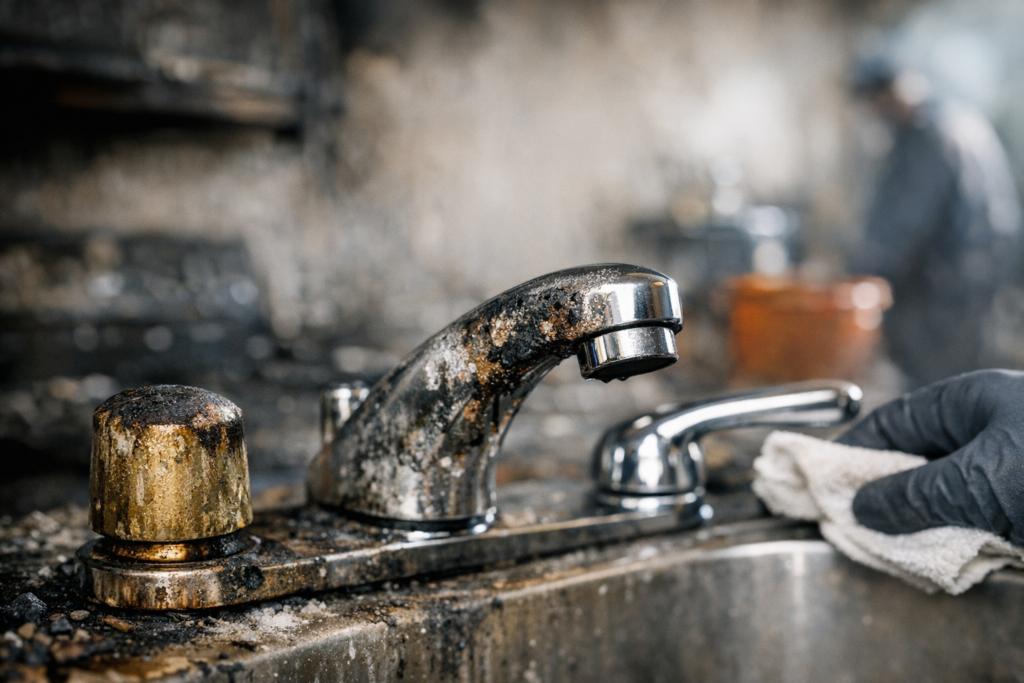
Soot and smoke damage intensifies exponentially during this critical window. Hot surfaces from the fire create thermal currents that drive smoke particles deep into porous materials like drywall, insulation, and fabric.
Within hours of a fire, these changes begin:
- Metal corrosion: Acidic soot compounds attack chrome, brass, and aluminum fixtures
- Fabric discoloration: Synthetic fabrics begin yellowing permanently from heat and chemical exposure
- Wood warping: Water absorption from firefighting efforts causes structural lumber to swell
- Electronic damage: Microscopic soot particles infiltrate circuit boards and hard drives
Water Damage Compounds the Problem
Fire departments use thousands of gallons of water to extinguish structure fires. This water doesn’t simply evaporate – it soaks into subflooring, wall cavities, and insulation where mold spores can multiply within 48-72 hours.
Standing water also dissolves fire residues, creating contaminated solutions that spread damage to previously unaffected areas. Without immediate extraction, clean areas of your property become part of the damage zone.
How Rapid Fire Damage Response Prevents Escalation
Professional restoration teams arriving within hours of a fire can stop secondary damage before it becomes permanent. Speed matters because many fire-related problems are reversible if addressed quickly.
Immediate stabilization focuses on three critical areas that determine the success of your entire restoration project.
Emergency Board-Up and Roof Tarping
Fire often compromises windows, doors, and roofing materials. Open access points allow weather, debris, and unauthorized entry to cause additional damage.
Professional board-up teams secure these openings within hours, preventing rain damage that can add $10,000-$30,000 to restoration costs. Roof tarping stops water intrusion that would otherwise saturate insulation and create extensive mold problems.
Water Extraction and Dehumidification
Industrial water extraction equipment removes standing water before it penetrates deeper into structural materials. High-powered dehumidifiers then pull moisture from the air and building materials.
This process must begin within 24 hours to prevent mold growth. Once mold establishes itself, restoration costs typically double due to remediation requirements and health safety protocols.
Soot and Smoke Residue Removal
Different types of fires create distinct residue patterns that require specific cleaning approaches:
- Protein fires (cooking incidents) leave nearly invisible residues that smell terrible and discolor surfaces
- Synthetic material fires create sticky, black residues that smear when cleaned improperly
- Natural material fires produce dry, powdery soot that becomes airborne easily
Professional teams identify residue types and apply appropriate cleaning methods before these substances permanently bond to surfaces.
The Cost of Delayed Response
Property owners who wait several days before calling restoration teams face significantly higher costs and longer recovery times.
Secondary damage often exceeds primary fire damage when response is delayed beyond 48 hours. Insurance adjusters regularly see claims where smoke and water damage costs surpass the actual fire repair expenses.
Salvage Rates Drop Dramatically
Content salvage rates tell the story of timing impact:
- 0-24 hours: 80-90% of fire-damaged contents can be restored
- 24-48 hours: 60-70% salvage rate for most materials
- 48+ hours: Below 40% salvage rate, especially for electronics and fabrics
These percentages represent real monetary losses. A $50,000 content loss with immediate response might cost $5,000-$10,000 to restore. The same loss addressed after three days could require $30,000-$40,000 in replacement costs.
Mold Remediation Adds Weeks to Recovery
Mold growth forces restoration projects into containment protocols that extend timelines by 2-4 weeks. Affected materials must be removed and disposed of as contaminated waste, increasing both labor and disposal costs.
Properties with mold contamination require air quality testing before occupancy, adding another layer of complexity and expense to the restoration process.

No one ever wants to be in this situation, but BOR Immediately stepped into the role of specialist/ consultant/ fixer/problem solver.
Paul (owner?) walked us through the process and set expectations from the very beginning. Paul is well-versed in the serious nature of these contaminants , which is priceless. We are so grateful for his knowledge, experience and patience. In a very stressful time, he described what we could expect, the full spectrum of potential outcomes, and potential timing and cost.
The mitigation team was at our house the next day, assessing the problem, making sure everyone was safe, and that the potential culprit was contained. They set down floor coverings everywhere to protect our hardwood and carpet, as well as containments in the suspect areas, and got to work. They take pics of everything along the way to document the process—before, during, after.
The cleanup team was amazing. Diligent, hard-working, respectful, patient, kind. These guys were the hardest working folk we have seen in years.
 Posted on Google
What Immediate Response Teams Accomplish
Professional fire restoration crews arriving within hours of an incident can accomplish critical stabilization work that prevents weeks of additional problems.
The first site visit focuses on damage assessment and emergency stabilization rather than full restoration. This approach stops ongoing damage while creating a detailed plan for complete recovery.
Damage Documentation and Insurance Coordination
Restoration teams photograph and document all damage while conditions are fresh. This documentation becomes important for insurance claims and helps prevent disputes over damage causes.
Early documentation captures the true scope of fire damage before secondary issues complicate the loss. Insurance adjusters can distinguish between fire damage and subsequent water or mold problems when restoration teams arrive quickly.
Air Quality Improvement
Smoke particles and combustion gases create immediate health hazards for occupants. Professional air scrubbers and hydroxyl generators begin improving air quality within hours of deployment.
These systems prevent smoke odors from penetrating deeper into materials and reduce health risks for anyone entering the property during restoration.
Structural Stabilization
Fire can compromise structural integrity through heat damage and water saturation. Early assessment identifies safety hazards and prevents collapse risks.
Temporary support systems installed quickly can save structural elements that might otherwise require complete replacement if allowed to fail.
Best Option Restoration’s Rapid Response Protocol
Best Option Restoration maintains 24/7 emergency response capabilities specifically because fire damage waits for no one. Their teams can be on-site within hours of your call, beginning immediate stabilization work.
Their rapid response includes emergency board-up, water extraction, and initial damage assessment to prevent secondary damage from escalating your loss. Every hour counts in fire restoration, and immediate action saves both money and recovery time.
If fire has damaged your property, call Best Option Restoration at 303-500-3187 immediately. Their emergency response teams are standing by to protect your property and begin the restoration process right away.
Sources
- Ready.gov – Fire Safety and Preparedness
- EPA – Brief Guide to Mold, Moisture, and Your Home
- National Fire Protection Association – Fire Protection Research Foundation