

This guide explains how to restore fire-damaged fabrics, covering time-sensitive cleaning methods for different materials and when professional help is needed. Best Option Restoration provides these techniques based on real fire recovery work in the Lakewood area.
- Smoke residue is acidic and bonds with fibers within 48 to 72 hours, making fast action critical. Dry soot from high-heat fires should be brushed off before wet cleaning, while greasy wet soot needs degreasing agents.
- Cotton tolerates hot water and alkaline detergents, wool requires cold water and pH-neutral cleaners, silk should go to a specialist, and scorched synthetics cannot be saved.
- Large upholstered items trap odor in stuffing that surface cleaning cannot reach. Professional restoration using ultrasonic cleaning, thermal fogging, and ozone chambers handles damage beyond home methods.
Start by shaking off loose soot outdoors, then vacuum using a brush attachment without rubbing. Pre-treat stains with a mixture of dish soap and white vinegar, then wash in cold water with heavy-duty detergent. For stubborn smoke odors, soak fabrics in a baking soda solution overnight before a final wash. Air dry to prevent heat from setting any remaining residue.
Smoke residue keeps eating at fabric long after the flames are out. Acidic soot bonds with fibers, yellows white cotton, and etches synthetic weaves within days. Fast action decides whether a garment survives.
This post walks you room-closet by room-closet through fire-damaged fabric restoration for different materials. You will learn which fabrics respond to home methods, which demand specialized equipment, and how to avoid the mistakes that set stains permanently.
Best Option Restoration handles fire and smoke recovery in the Lakewood area. The techniques below come from real cleanup work on homes hit by kitchen fires, chimney backdrafts, and electrical burns.
Why Fire-Damaged Fabric Restoration Is Time-Sensitive
Smoke residue is acidic. It reacts with fibers and metals, and that reaction speeds up in the first 48 to 72 hours. Waiting turns a cleanable stain into a permanent one.
Three damage types affect fabric at once:
- Soot: Fine carbon particles that grind into weaves and stain on contact.
- Smoke odor: Volatile compounds that lodge deep in fibers and stuffing.
- Water and heat: Firefighting water plus scorch marks that warp and shrink material.
Different fires leave different residue. A grease fire in the kitchen leaves oily, sticky soot. A smoldering couch fire leaves dry, powdery soot. The type dictates your cleaning method.
Dry Soot vs. Wet Soot
Dry soot comes from fast, high-heat fires burning paper or wood. It brushes and vacuums off before wet cleaning. Attack it with water too soon and you smear it into the weave.
Wet soot comes from low-heat, smoldering fires burning plastic or oil. It is greasy and needs degreasing agents. Dry brushing alone spreads it.
First Steps Before You Clean Any Fabric
Do not throw wet or sooty items in a standard washer right away. Heat and agitation lock soot into fibers. Follow this order instead.
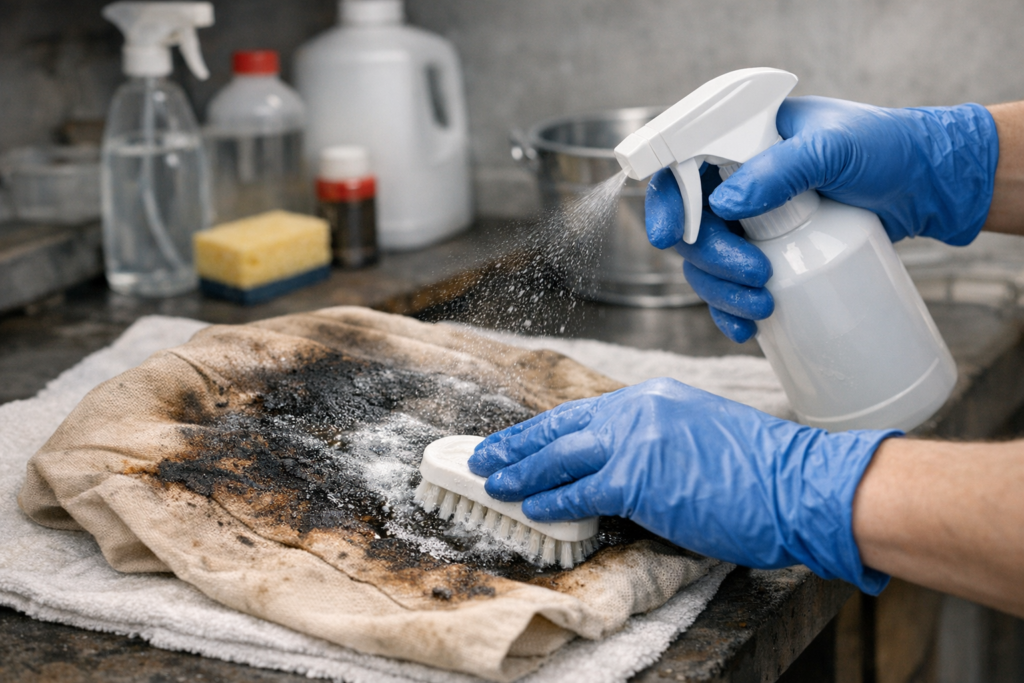
- Ventilate first. Open windows and run fans to pull smoke odor out of the space.
- Wear gloves and a mask. Soot contains carcinogens you should not breathe or touch.
- Shake and brush outdoors. Remove loose dry soot away from clean surfaces.
- Vacuum with an upholstery attachment. Hold it slightly above the fabric to lift particles without pressing them in.
- Sort by fabric type. Group cotton, wool, silk, and synthetics separately.
Test any cleaning agent on a hidden seam first. Fire-weakened fibers tear and bleed dye more easily than undamaged ones.
Cleaning Techniques by Fabric Type
Each fiber reacts differently to soot, heat, and cleaning agents. Matching method to material is what saves the piece.
Cotton and Linen
Cotton and linen tolerate hot water and stronger detergents. Both handle repeated washing, which helps with heavy soot.
- Pre-soak in cold water first to loosen dry soot without setting it.
- Wash in the hottest water the label allows with an alkaline detergent.
- Add a half cup of trisodium phosphate to a wash load for greasy kitchen-fire residue.
- Air dry and inspect before machine drying. Heat sets any remaining stain.
White cotton yellowed by smoke sometimes responds to an oxygen bleach soak overnight. Skip chlorine bleach, which reacts with soot and creates permanent brown marks.
Wool and Cashmere
Wool shrinks and felts in hot water. Treat it cold and gentle, or you trade smoke damage for shrinkage damage.
- Never use hot water or high-alkaline detergent on wool.
- Hand wash in cool water with a wool-safe, pH-neutral cleaner.
- Do not wring. Press water out and lay flat to dry.
- Heavy soot on wool suits or coats belongs at a dry cleaner, not a home washer.
Smoke odor clings hard to wool. Airing the garment outdoors for several days between cleanings pulls out lingering smell.
Silk and Delicate Fabrics
Silk is protein-based and reacts badly to alkaline cleaners and heat. One wrong wash ruins the sheen for good.
- Do not machine wash sooty silk. Take it to a specialist.
- For light residue, dab with distilled water and a drop of gentle soap on a white cloth.
- Blot, never rub. Rubbing frays fire-weakened silk threads.
- Keep silk out of direct sun while drying to avoid fading.
Synthetics: Polyester, Nylon, and Acrylic
Synthetics resist water damage but melt and warp under heat. Scorched synthetic fibers cannot be restored, only replaced.
- Check for heat glazing or stiffness. Warped fibers mean the piece is beyond cleaning.
- Wash intact synthetics in warm water with a degreasing detergent for wet soot.
- Avoid high dryer heat, which can further deform the weave.
Cleaning Smoke Damage From Upholstery and Large Items
Sofas, mattresses, and curtains hold smoke odor in their stuffing, not just the surface. Cleaning smoke damage from these items means treating the fill, not only the cover.
Surface cleaning alone leaves odor trapped inside foam and batting. That smell returns on humid days for months.
- Vacuum thoroughly before applying any liquid cleaner.
- Test upholstery cleaner on a hidden panel for colorfastness.
- Work in small sections so foam does not oversaturate.
- Use an ozone or hydroxyl treatment for odor locked deep in cushions.
Home methods rarely reach odor buried in a mattress core. This is where restoration equipment earns its place.

 Posted on Google
When to Call a Restoration Team
Some fire-damaged fabric restoration jobs exceed what a washer and hand cleaning can handle. Call a team when you see these signs.
- Heavy, oily soot across large upholstered pieces.
- Smoke odor that returns after multiple cleanings.
- Water damage from firefighting that risks mold within 48 hours.
- Valuable garments, antiques, or textiles you cannot risk on a home attempt.
Best Option Restoration uses ultrasonic cleaning, thermal fogging, and ozone chambers that home tools cannot match. Ultrasonic cleaning shakes soot loose with sound waves in a cleaning bath. It reaches fiber layers no washer touches.
Mistakes That Ruin Fire-Damaged Fabrics
Good intentions cause much of the permanent damage we see. Avoid these common errors.
- Washing before dry-brushing soot. This smears carbon deep into weaves.
- Using hot water on greasy soot. Heat bonds oily residue to fiber.
- Applying chlorine bleach. It reacts with soot into brown stains.
- Machine drying before stains clear. Dryer heat sets marks permanently.
- Ignoring stuffing and fill. Surface-only cleaning lets odor return.
Conclusion
Fire-damaged fabric restoration comes down to acting fast, matching method to material, and treating soot before touching water. Cotton takes heat, wool needs cold care, silk demands a specialist, and scorched synthetics cannot be saved. Odor buried in stuffing calls for equipment beyond home reach.
When smoke damage covers large items or valuable pieces, Best Option Restoration can recover what home methods cannot. Call or text 303-500-3187, email info@borlakewood.com, or visit https://borlakewood.com to start your recovery.
Sources
- U.S. Environmental Protection Agency – Smoke-Ready Toolbox for Wildfires
- National Institute of Standards and Technology – Fire Research Division
- National Fire Protection Association – After a Home Fire