
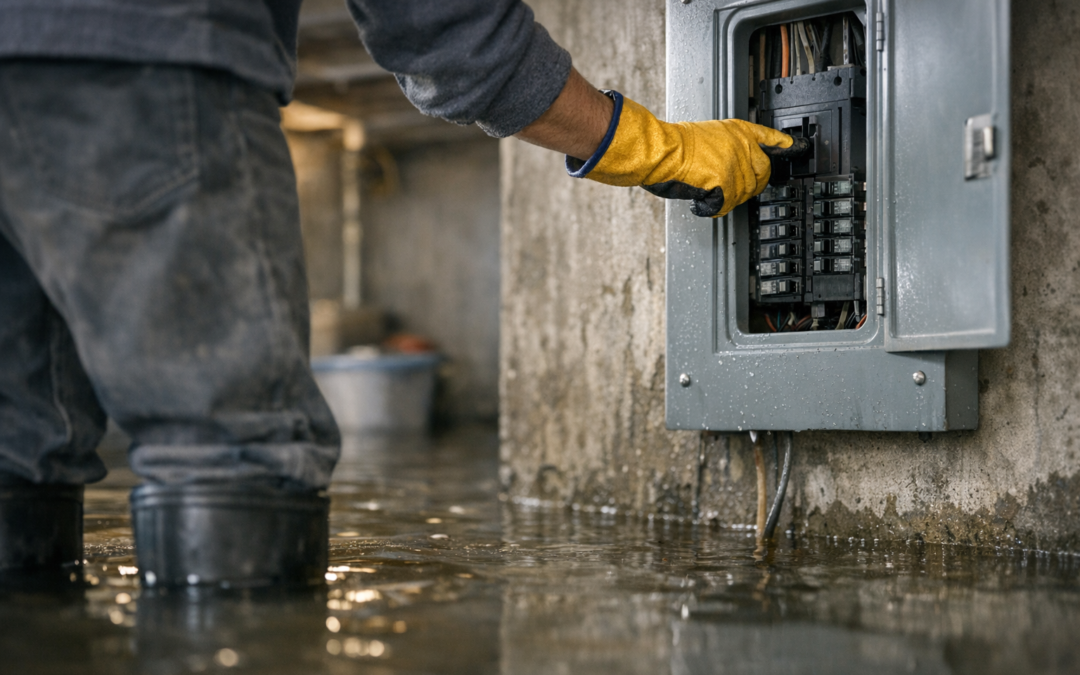
Standing water and live electricity create fatal risks, with most flood-related electrocutions occurring after water recedes. This guide from Best Option Restoration covers how to safely cut power, inspect damaged electrical systems, and coordinate proper drying and repairs.
- Cut power at the main breaker only if you can reach it without stepping in water. If the panel is wet or submerged, call your utility company to disconnect power from outside.
- Assume every wet outlet, switch, and appliance is damaged until inspected. Submerged outlets need replacement, and soaked wiring can corrode invisibly inside walls.
- Follow the correct sequence - extract water, dry the structure completely, then have an electrician inspect and repair before restoring power to prevent fires.
To prevent electrical hazards after a flood, never enter a flooded area until the power is shut off at the main breaker. Wait for a licensed electrician to inspect your home before restoring power. Avoid touching wet electrical equipment, outlets, or appliances, and never use electrical devices that have been submerged until they are professionally evaluated and cleared for safe use.
Standing water and live electricity are a fatal combination, and most flood-related electrocutions happen after the water recedes. Knowing how to prevent electrical hazards can protect your family during the hours and days following a flood in your home.
This post covers what to do before re-entering a flooded room, how to identify damaged electrical systems, and when to call a licensed electrician. Every tip comes from real restoration work in Colorado homes.
Why Floodwater and Electricity Are So Dangerous
Water conducts electricity, and floodwater carries dissolved minerals and debris that make it an even stronger conductor. A submerged outlet or an energized appliance can turn an entire flooded floor into a live circuit.
The danger does not end when the storm passes. Wet drywall, soaked insulation, and corroded wiring can spark or short out weeks later. Many house fires after flooding start inside walls that looked dry on the surface.
Electrical shock in floodwater can be fatal even in shallow water. As little as one inch of standing water around an energized source is enough to cause injury.
First Steps to Prevent Electrical Hazards After a Flood
Cut the power before you touch anything wet. If your electrical panel is dry and you can reach it without stepping in water, shut off the main breaker.
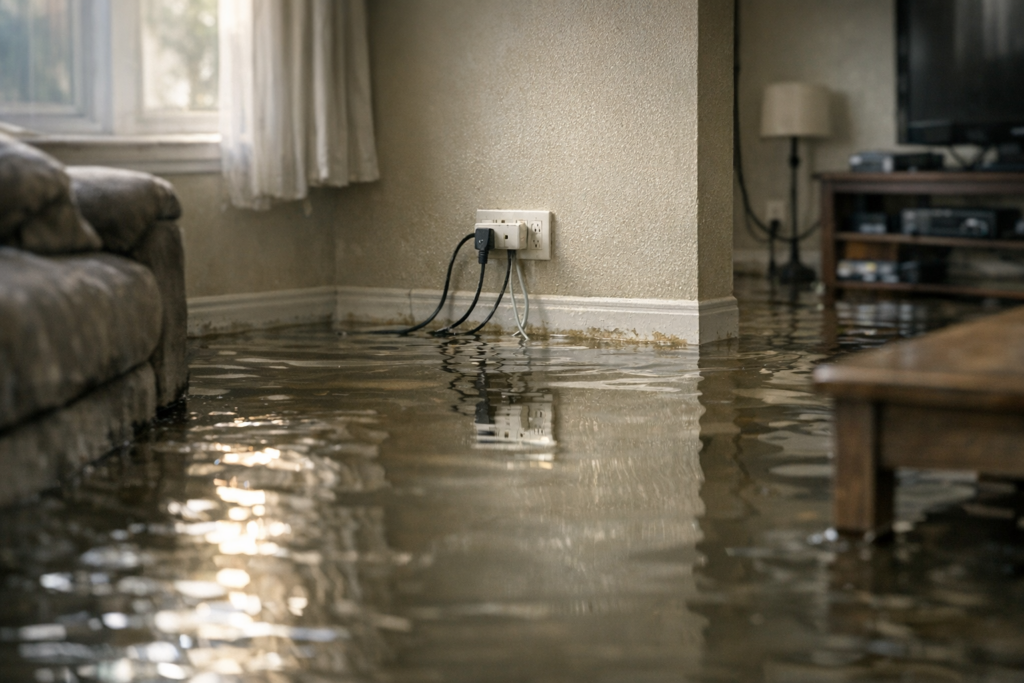
Never enter a flooded room if the panel is wet or submerged. Call your utility company or a licensed electrician to disconnect power from outside the home instead.
The Order of Operations Matters
- Stop and look before entering. Check for standing water touching outlets, cords, or appliances.
- Confirm the panel is dry. If it is wet, do not touch it.
- Shut off the main breaker only if you can stand on a dry surface.
- Wear rubber boots and rubber gloves as a backup layer, not a substitute for cutting power.
- Unplug appliances only after power is off and the area is dry.
If you cannot reach the panel safely, stay out. Waiting for the power company is far cheaper than an emergency room visit.
Flood Safety Tips for Inspecting Your Electrical System
Assume every wet outlet, switch, and appliance is damaged until proven otherwise. Floodwater degrades insulation and corrodes copper long after surfaces dry.
What to Check Before Restoring Power
- Outlets and switches: Water leaves mineral residue and rust inside them. Any submerged outlet needs replacement.
- Circuit breakers: A breaker exposed to water can fail to trip during a fault. Replace the panel if it was submerged.
- Wiring inside walls: Soaked romex wiring can corrode at connection points. This is invisible from the outside.
- Appliances: Washers, dryers, furnaces, and water heaters that sat in water often have compromised motors and controls.
One of the most overlooked risks is the furnace. In a flooded Lakewood basement, a gas furnace with a soaked control board can create both an electrical and a carbon monoxide hazard.
Signs Your Electrical System Needs Replacement
Look for a burning smell, discoloration around outlets, or a buzzing sound from the panel. Any of these means the system stays off until an electrician clears it.
A tripped GFCI outlet that will not reset is a warning, not a nuisance. It means moisture or a fault is still present in that circuit.
Common Mistakes That Cause Post-Flood Electrical Injuries
Most injuries come from rushing to restore normalcy. Homeowners want their lights and appliances back, and that urgency creates risk.
Here are the errors we see most on restoration jobs:
- Using a wet extension cord or power strip. Dry them out? No. Replace them.
- Running a generator indoors or in a wet garage. This causes both shock and carbon monoxide poisoning.
- Turning breakers back on to “test” appliances before they are inspected.
- Standing in water to reach a switch. Even a light switch can energize the water around you.
- Plugging in wet electronics to see if they still work. A shorted device can injure you or start a fire.
A phone or laptop that got wet is not worth your safety. Let it dry fully and have it checked before charging.
Handling Appliances and Electronics After a Flood
Water-damaged appliances need inspection before reuse, even if they appear to run. Hidden corrosion inside motors and control boards can cause a delayed short.
Appliance Safety Checklist
- Keep everything unplugged until an electrician or technician inspects it.
- Do not run a submerged furnace or HVAC unit. Wet electrical components can ignite.
- Have the water heater checked for a compromised element or thermostat.
- Replace anything with visible internal water residue. Rust means the part failed.
Insurance frequently covers appliance replacement after a documented flood. Photograph water lines and damage before removing anything.

 Posted on Google
When to Call a Licensed Electrician vs. a Restoration Team
A licensed electrician handles anything involving the panel, wiring, or hardwired circuits. Restoration teams handle water extraction, drying, and coordinating the safe sequence of repairs.
At Best Option Restoration, we work alongside electricians to dry the structure first. Restoring power to a still-wet wall cavity risks a fire, and drying has to happen before rewiring.
A Real Scenario
A finished basement floods four inches deep overnight. The outlets, the furnace, and a section of drywall all sat in water.
The correct sequence: power stays off, we extract the water and dry the framing, an electrician replaces the affected outlets and inspects the wiring, then the drywall is rebuilt. Skipping the drying step traps moisture behind new walls.
How to Prevent Electrical Hazards During Cleanup
Keep power off in flooded areas until every wet component is inspected and dried. Use battery-powered lights and tools during cleanup, never corded devices in damp spaces.
Ventilate the area to speed drying and reduce mold, but keep fans on GFCI-protected circuits in dry rooms. These small habits are the practical flood safety tips that keep cleanup crews safe every day.
If you smell gas or see arcing, leave immediately and call from outside. Do not flip any switch, since a spark can ignite gas.
Key Takeaways
To prevent electrical hazards after a flood, cut power before entering wet areas, treat every submerged component as damaged, and wait for inspection before restoring power. The right sequence of drying then repairing protects both your home and your life.
Best Option Restoration serves the Lakewood area with water extraction, structural drying, and coordinated flood recovery. Call or text 303-500-3187, email info@borlakewood.com, or visit https://borlakewood.com to start your recovery safely.
Sources
- Ready.gov – Floods
- CDC – Protect Yourself from Electrical Hazards After a Flood
- Electrical Safety Foundation International – Flood Safety
- American Red Cross – Staying Safe After a Flood