

Fire damage restoration follows a fixed sequence - emergency response, water removal, soot and odor removal, then reconstruction. Knowing each stage helps homeowners make sound decisions and protect their insurance claims while their home is rebuilt.
- The first 24 hours focus on safety inspection, damage assessment, emergency board-up, and water extraction since acidic soot begins etching surfaces within hours. Documentation from this visit becomes the basis for insurance claims.
- Water removal and structural drying take several days with air movers and dehumidifiers running until moisture readings match dry standards. Different soot types require specific cleaning methods to avoid smearing residue deeper into surfaces.
- Timelines vary from two to six weeks for minor fires up to six months for major structural damage. Insurance approval speed affects every stage more than any single repair task.
Fire damage restoration is a structured process that reverses damage caused by house fires. It addresses charred walls, acidic soot on drywall, water-soaked subfloors from fire hoses, and lingering smoke odors in insulation. The process follows a fixed order of steps designed to systematically repair and restore the property to its pre-fire condition.
A house fire leaves behind more than charred walls. It leaves acidic soot on drywall, water from fire hoses soaking into subfloors, and a smoke odor that clings to insulation for months. Fire damage restoration reverses that damage in a fixed order, and knowing that order removes much of the fear that follows a fire.
This post walks you step by step from the first phone call to the final walkthrough. You will see what crews do on day one, what takes weeks, and where your insurance company fits in.
Setting clear restoration process expectations early helps you plan, protect your belongings, and avoid costly surprises.
The First 24 Hours: Emergency Response and Assessment
The clock matters after a fire. Soot is acidic, and within hours it starts etching glass, discoloring grout, and corroding metal fixtures.
A restoration crew responds fast for that reason. The first visit focuses on stopping further loss, not rebuilding.
What Happens on the First Visit
- Safety inspection. Crews check for structural hazards, gas leaks, and electrical risks before anyone enters.
- Damage assessment. A technician documents fire, smoke, soot, and water damage room by room.
- Emergency board-up. Broken windows and roof holes get sealed to keep out rain and intruders.
- Water extraction. Firefighting water gets pumped out before it warps floors and feeds mold.
You receive a written scope of work from this assessment. That document becomes the basis for your insurance claim.
Working With Your Insurance Claim
Fire damage restoration and your insurance claim run side by side. A good restoration company documents everything the adjuster needs.
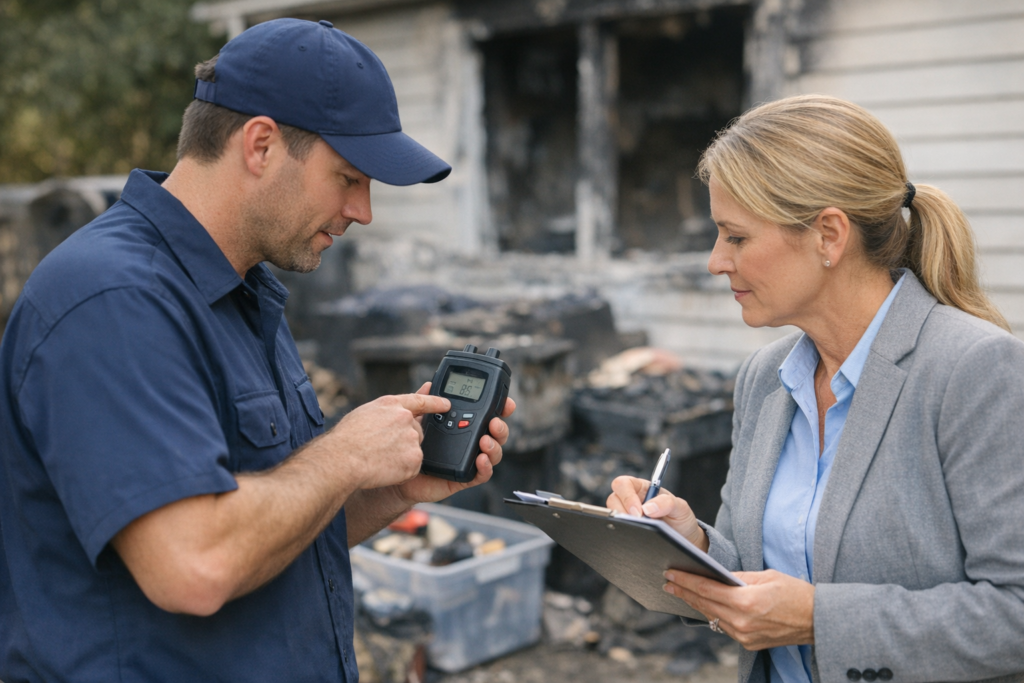
Photos, moisture readings, and an itemized loss list speed up approval. Best Option Restoration coordinates directly with adjusters to keep the claim moving.
What You Need to Track
- Your policy number and claim number once filed.
- A contents inventory of damaged personal items.
- Receipts for lodging or meals if you cannot stay home.
- Written estimates before any major work begins.
Do not throw out damaged items until the adjuster and restoration team document them. A discarded couch is a line item you cannot prove later.
Water Removal and Structural Drying
Water from firefighting efforts causes its own damage. Left alone, it warps hardwood, swells baseboards, and grows mold within 48 hours.
Crews extract standing water first, then set up drying equipment. Air movers and dehumidifiers run for several days.
Technicians take daily moisture readings in walls, subfloors, and framing. Drying continues until those numbers match the dry standard for the material.
Soot and Smoke Residue Removal
Soot removal is where fire restoration differs most from other repair work. Different fires leave different residues, and each demands a different cleaning method.
Types of Soot and How They Are Cleaned
- Dry soot from fast, high-heat fires wipes away with dry sponges and HEPA vacuums.
- Wet, greasy soot from slow, smoldering fires needs degreasing agents and careful hand cleaning.
- Protein residue from kitchen grease fires is nearly invisible but carries a strong odor.
Using the wrong method smears residue deeper into a surface. A crew that misreads a kitchen fire as a general fire will grind grease into your cabinets.
Technicians test surfaces first, then match the cleaning method to the residue. Walls, ceilings, ductwork, and contents each get treated in turn.
Odor Removal: The Step People Underestimate
Smoke odor hides in places you cannot see. It seeps into wall cavities, HVAC systems, insulation, and the underside of carpet padding.
Surface cleaning alone will not remove it. Odor returns on the first humid day if the source is missed.
Methods Crews Use for Odor
- Thermal fogging reopens the same pores that smoke entered, then neutralizes the odor inside them.
- Hydroxyl or ozone treatment breaks down odor molecules in enclosed spaces.
- Duct cleaning removes soot that recirculates every time the furnace runs.
- Sealing of framing and subfloor locks in any odor that cleaning cannot reach.
Odor work is verified by smell and by follow-up visits after the home is closed up. Skipping this step is why some fire-damaged homes still smell a year later.

 Posted on Google
Reconstruction and Repairs
Reconstruction returns your home to its pre-fire condition. This phase starts once cleaning, drying, and odor control pass inspection.
The scale depends on the fire. A small kitchen fire might need new drywall and cabinets. A whole-room fire can require new framing, wiring, and roofing.
Common Reconstruction Tasks
- Drywall replacement and repainting.
- Flooring, trim, and baseboard installation.
- Cabinet and countertop replacement.
- Electrical and plumbing repair where fire reached them.
- Roofing and exterior siding work.
Keeping cleanup and rebuild under one company avoids finger-pointing between contractors. Best Option Restoration handles both phases, so nothing falls between the cracks.
How Long Fire Damage Restoration Takes
Timelines depend on the size of the fire and the extent of water and smoke spread. Small fires and large losses follow very different schedules.
- Minor fire, one room: two to six weeks from start to finish.
- Moderate fire, multiple rooms: one to three months.
- Major structural fire: three to six months or longer.
Insurance approval speed affects every stage. Delays in adjuster sign-off push back the rebuild more than any single repair task.
What You Can Do to Help the Process
Homeowners have a real part to play. A few early actions protect your claim and shorten the timeline.
- Do not enter until crews confirm the structure is safe.
- Photograph everything before anything is moved.
- Contact your insurer and start the claim promptly.
- Set aside items you want prioritized for cleaning, like documents and photos.
- Ask questions at each phase so you know what comes next.
Clear communication with your restoration team keeps restoration process expectations aligned from start to finish.
Conclusion
Fire damage restoration moves in a fixed sequence: emergency response, water removal, soot and odor removal, then reconstruction. Knowing each stage helps you make sound decisions and protect your claim while your home is rebuilt.
Best Option Restoration handles every step, from the first board-up to the final walkthrough. Call or text 303-500-3187, email info@borlakewood.com, or visit https://borlakewood.com to start your recovery.
Sources
- U.S. Fire Administration (FEMA) – Fire Safety and Recovery Resources
- U.S. Environmental Protection Agency – Mold and Moisture Cleanup Guidance
- Institute of Inspection, Cleaning and Restoration Certification (IICRC) – Restoration Standards
- American Red Cross – Home Fire Recovery Information