

Best Option Restoration explains how to prevent mold growth during humid summers, noting that mold can form within 24 to 48 hours when indoor humidity rises above 60%.
- Keep indoor humidity between 30% and 50% using dehumidifiers and air conditioning. A digital hygrometer helps monitor levels in basements and main floors.
- Basements, bathrooms, attics, and areas around windows and AC units are most prone to moisture problems. Check these spots weekly and fix leaks quickly.
- Dry any wet areas within 24 hours and improve airflow by keeping doors open and running fans. Call a restoration crew if mold covers more than 10 square feet or spreads inside walls.
Prevent mold growth during humid summers by keeping indoor humidity below 50 percent using air conditioning or dehumidifiers. Run exhaust fans in bathrooms and kitchens, fix leaks promptly, and improve air circulation throughout your home. Clean and dry any wet areas within 24 hours, since mold can begin forming in just one to two days when moisture levels rise.
Mold can take hold in your home in as little as 24 to 48 hours when summer humidity climbs. That single fact drives most of the calls Best Option Restoration answers between June and September. The good news: you can prevent mold growth with a few targeted habits and the right moisture controls.
This post covers exact humidity targets, the rooms that fail first, and a step-by-step plan for humid summer mold prevention. Every recommendation comes from what our crews find inside real homes during the hottest, stickiest months.
Why Humid Summers Make Mold Growth So Likely
Mold is a fungus that spreads by releasing spores that float in indoor air. Those spores need moisture, a food source, and warmth to grow. Summer supplies all three at once.
Indoor relative humidity above 60% gives spores the water they need. Drywall paper, wood, dust, and carpet backing feed them. Warm air holds more moisture, which is why July and August generate the most claims.
The 24-to-48-Hour Window
Mold colonies can start forming within 24 to 48 hours of a surface staying wet. A slow AC condensate leak or a damp basement corner is enough. Speed matters more than any single product you buy.
How to Prevent Mold Growth: Control Humidity First
Keep indoor relative humidity between 30% and 50%. This range starves spores of the water they depend on. It is the most effective step you can take.
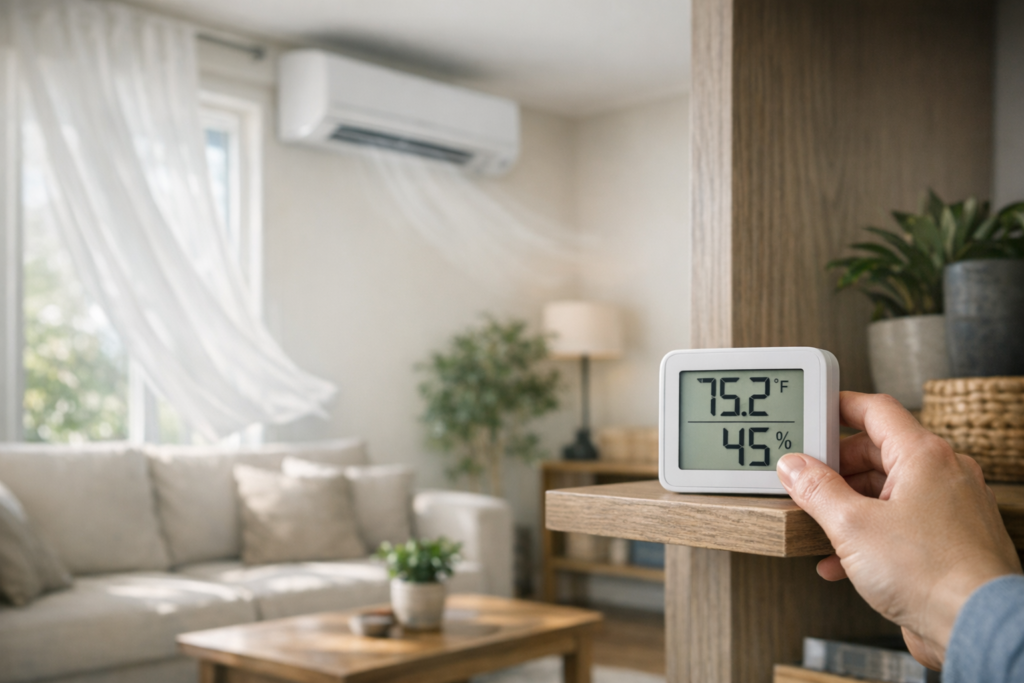
Buy a digital hygrometer for under $15 and place one in your basement and one on your main floor. Check both daily during heat waves. Numbers tell you the truth that your senses miss.
Steps to Lower Indoor Humidity
- Run a dehumidifier in the basement and set it to 45%. Empty the reservoir or route the hose to a drain.
- Keep your AC running during humid stretches, even when the temperature feels tolerable. Air conditioning removes moisture as it cools.
- Change AC filters monthly in summer. A clogged filter cuts airflow and lets condensation build on coils.
- Use exhaust fans for the full length of every shower, plus 15 minutes after.
- Vent your dryer outside, never into a crawl space or attic.
The Rooms That Fail First in Summer
Certain spaces trap moisture faster than the rest of the house. Watching them closely gives you an early warning.
Basements and Crawl Spaces
Basements are the number-one spot our crews find summer mold. Cool foundation walls meet warm humid air and produce condensation. That water lands on stored cardboard, furniture, and drywall.
Pull stored boxes off the floor and onto shelving. Cardboard soaks up moisture and feeds mold directly. Swap it for plastic bins with lids.
Bathrooms
Bathrooms combine steam, poor airflow, and grout that holds water. Caulk gaps around tubs and sinks let moisture reach the wall cavity. Reseal any cracked or peeling caulk before summer starts.
Attics
Attic mold usually traces back to blocked soffit vents or a bathroom fan dumping air into the space. Heat plus trapped moisture equals dark staining on the roof sheathing. Confirm every exhaust fan exits the roof or a gable wall.
Around Windows and AC Units
Window-unit air conditioners drip condensation that pools on sills and drywall. Check for water stains weekly. Window frames with peeling paint or soft spots signal a moisture problem behind them.
Stop Water Before It Starts Mold
Leaks are the fastest path to a mold colony. Finding them early prevents a small repair from becoming a wall replacement.
Weekly Summer Leak Check
- AC condensate line: Look under the indoor air handler for standing water or a full drain pan.
- Under sinks: Feel supply and drain connections for dampness in kitchens and bathrooms.
- Water heater: Scan the base and pan for pooling or rust streaks.
- Roof and gutters: After summer storms, watch ceilings for fresh brown rings.
- Foundation: Direct downspouts at least six feet from the house so rain drains away.
Dry Wet Areas Fast
If something gets wet, dry it inside 24 hours. Pull up soaked rugs, run fans, and open the dehumidifier nearby. A wet carpet pad that stays down becomes a mold farm within days.
Improve Airflow to Prevent Mold Growth
Stagnant air lets moisture settle on cool surfaces. Moving air keeps humidity from concentrating in corners and closets.
- Leave interior doors open when rooms are empty.
- Pull furniture a few inches off exterior walls.
- Run ceiling fans to keep air circulating in bedrooms and living rooms.
- Crack closet doors on exterior walls, where clothing traps damp air.
In humid climates, avoid opening windows on the muggiest days. Outdoor air at 80% humidity floods your home with moisture your AC then fights to remove.

 Posted on Google
Landscaping and Grading Steps That Matter
Water that pools against your foundation ends up inside. Summer storms make yard drainage a direct mold issue.
- Grade soil to slope away from the foundation.
- Keep mulch and garden beds a few inches below the siding line.
- Clean gutters so summer downpours drain instead of overflowing.
- Trim shrubs back from the house to let exterior walls dry after rain.
Signs Mold Is Already Growing
Catching mold early keeps the repair small. Watch and smell for the warning signs below.
- A musty, earthy odor that returns after cleaning.
- Black, green, or white spots on walls, grout, or ceilings.
- Peeling paint or bubbling drywall from hidden moisture.
- Worsening allergy symptoms indoors that ease when you leave.
Surface mold under 10 square feet can usually be cleaned with detergent and water. Larger patches, or any growth inside walls, call for trained help. Painting over mold hides it but never stops it.
When to Call Best Option Restoration
Call a restoration crew when mold covers more than 10 square feet, spreads inside walls, or follows water damage. We find the moisture source, contain the affected area, and remove damaged material safely. Guessing at hidden mold risks spreading spores across your home.
Our team responds fast during humid summer months, when moisture problems multiply. Early action keeps costs down and protects your indoor air.
Key Takeaways
Keep indoor humidity between 30% and 50%, dry wet spots within 24 hours, and check your basement, bathrooms, and AC line every week. Those habits stop most summer mold before it starts. Steady moisture control is the surest way to prevent mold growth in a humid climate.
If you spot mold, smell a musty odor, or discover water damage, contact Best Option Restoration. Call or text 303-500-3187, email info@borlakewood.com, or visit https://borlakewood.com.
Sources
- U.S. Environmental Protection Agency – Mold Cleanup in Your Home
- Centers for Disease Control and Prevention – About Mold
- U.S. Environmental Protection Agency – A Brief Guide to Mold, Moisture and Your Home