
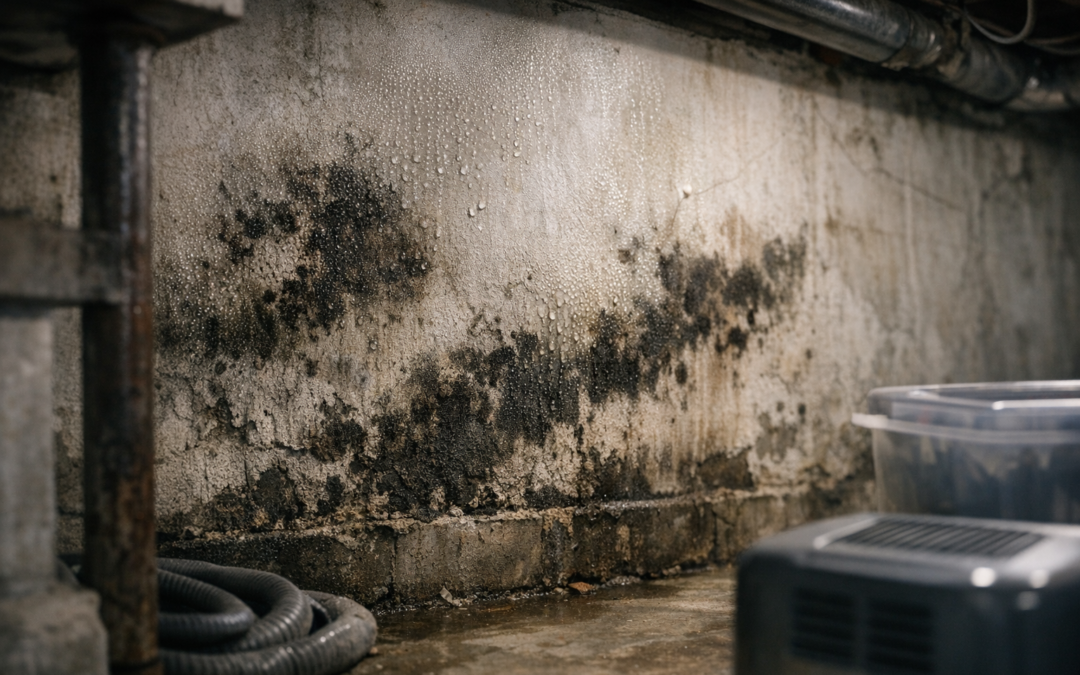
Mold spores remain dormant until indoor humidity exceeds 60%, making moisture control the key factor in preventing mold growth. This guide explains how humidity triggers mold and provides practical steps to manage moisture levels in your home.
- Mold needs spores, organic material, and moisture to grow - but moisture is the only factor you can control. The EPA recommends keeping indoor humidity between 30% and 50% to prevent mold colonization.
- Cool surfaces like basement walls, exterior closet corners, and window sills attract condensation from warm humid air, creating ideal conditions for mold even when hygrometer readings appear normal.
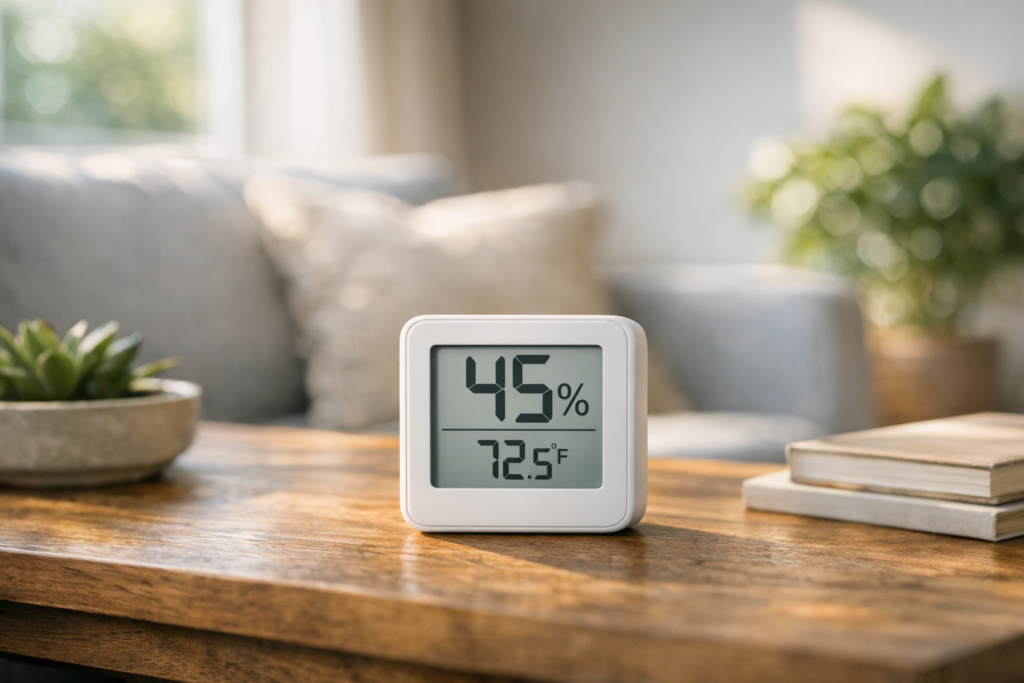
- Use digital hygrometers to monitor humidity, run dehumidifiers in spaces above 55%, vent bathroom fans outside, and dry any leaks within 24 hours to stop mold before it starts.
Mold begins to grow when indoor humidity rises above 60%. While mold spores are present in nearly every home, they remain dormant until excess moisture activates them. Keeping humidity levels between 30% and 50% helps prevent mold from developing on surfaces like walls, ceilings, and basement areas where moisture tends to accumulate.
Mold spores exist in nearly every home, but they stay dormant until moisture wakes them up. The single biggest trigger is indoor humidity above 60%. That connection between humidity and mold growth is what separates a clean basement from one covered in black spots.
This post breaks down the science of why damp air feeds mold. You will learn the exact moisture thresholds that matter, where problems start in a typical house, and specific steps to keep humidity in check.
How Humidity and Mold Growth Are Connected
Mold needs three things to grow: spores, an organic food source, and moisture. Spores float in every home. Food is everywhere in the form of drywall, wood, and dust. Moisture is the only variable you control.
Relative humidity is the amount of water vapor in the air compared to the maximum the air can hold at that temperature. When relative humidity climbs, water condenses onto surfaces. That thin film of moisture is all mold needs to colonize.
The 60% Threshold
Mold begins active growth when surface moisture rises, which happens once indoor relative humidity passes 60%. The Environmental Protection Agency recommends keeping indoor humidity between 30% and 50%.
Below 50%, most household molds struggle to establish. Above 60%, common species like Aspergillus and Cladosporium can start growing within 24 to 48 hours on a damp surface.
Why Temperature Changes Everything
Cool surfaces pull moisture out of warm, humid air. This is condensation, and it is why mold shows up in predictable spots.
- Basement walls stay cool against the surrounding soil and sweat when warm air hits them.
- Closet corners on exterior walls get little airflow and stay cooler than the room.
- Window sills collect condensation in winter as warm indoor air meets cold glass.
- Bathroom ceilings catch steam that has nowhere to escape.
The air reading might say 55%, but the cold surface itself can be far wetter. That gap explains why mold appears even when a hygrometer looks fine.
Where High Humidity Hides in a Colorado Home
Homes around Lakewood face a specific pattern. Dry outdoor air most of the year masks indoor moisture problems that build up in enclosed spaces.
Basements and Crawl Spaces
Below-grade rooms trap humidity because they sit against damp soil. A finished basement can read 65% humidity in summer even when the upstairs feels comfortable.
Crawl spaces are worse. Exposed dirt floors release moisture upward all day, and that vapor settles into joists and subflooring.
Bathrooms Without Working Ventilation
A single hot shower can spike bathroom humidity above 90%. If the exhaust fan is missing, undersized, or vents into an attic, that moisture stays trapped.
We have opened bathroom ceilings where the fan dumped warm, wet air straight into the attic insulation. The result was mold spreading across the roof sheathing.
Behind Appliances and Under Sinks
Slow leaks feed hidden mold that no hygrometer will catch. A dripping supply line under a kitchen sink keeps the cabinet base at 100% moisture in a sealed pocket.
How to Manage Humidity and Mold Growth
Controlling moisture is the one reliable way to stop mold before it starts. Follow these steps in order of impact.
- Measure first. Buy a digital hygrometer for $10 to $15. Place one in the basement and one on the main floor. Track readings for a week.
- Run a dehumidifier where readings exceed 55%. Size it to the space. A 50-pint unit handles most finished basements.
- Fix ventilation. Confirm every bathroom fan vents outside, not into the attic. Run the fan 20 minutes after each shower.
- Seal air leaks around cool surfaces. Insulate cold water pipes to stop sweating. Add insulation to exterior closet walls.
- Address standing water fast. Dry any spill or leak within 24 hours. Mold cannot colonize a surface that stays dry.
Humidity Control Devices Compared
Different tools handle different problems. Match the device to the room.
- Portable dehumidifiers — best for basements and single rooms with readings above 55%.
- Whole-home dehumidifiers — tie into HVAC ductwork for even humidity control across every floor.
- Exhaust fans — remove moisture at the source in bathrooms, kitchens, and laundry rooms.
- Air conditioning — lowers humidity as a side effect by condensing water out of cooled air.
Seasonal Adjustments
Summer brings the highest indoor humidity from outdoor moisture and air conditioning cycles. Winter creates condensation on cold windows and exterior walls.
Adjust your dehumidifier target down to 40% in winter. Cold surfaces need lower air humidity to avoid condensation.
Warning Signs Humidity Is Already Feeding Mold
Catch a moisture problem early by watching for physical clues before mold spreads.
- A musty, earthy smell that returns after cleaning.
- Peeling paint or bubbling wallpaper on exterior walls.
- Condensation beading on windows for hours each morning.
- Dark spots in grout, on ceilings, or in closet corners.
- Warped baseboards or a spongy feel underfoot.
Any of these means moisture is collecting somewhere. The mold you see is usually smaller than the mold you cannot.
When Cleaning Is Not Enough
Surface wiping removes visible growth but leaves the moisture source intact. Mold returns within weeks if humidity stays high.
Growth spreading beyond 10 square feet points to a larger moisture issue inside walls or ceilings. At that point, testing and removal by trained crews protects your health and your home.

 Posted on Google
How Best Option Restoration Handles Humidity-Driven Mold
Our team treats the moisture source, not just the visible stain. We use moisture meters and thermal imaging to find wet cavities behind walls and under floors.
We contain the affected area, remove damaged materials, and dry the structure to a verified moisture content. Then we confirm humidity stays controlled so mold does not return.
For homeowners in Lakewood and the surrounding areas, catching a humidity problem early saves thousands in structural repair.
Conclusion
Mold follows moisture, and indoor humidity above 60% gives it everything it needs to spread. Keep readings between 30% and 50%, fix ventilation, and dry any leak within 24 hours to stop growth before it starts.
If mold has already taken hold or you suspect hidden moisture, contact Best Option Restoration at 303-500-3187 by call or text, email info@borlakewood.com, or visit https://borlakewood.com.
Sources
- U.S. Environmental Protection Agency – Mold Cleanup in Your Home
- Centers for Disease Control and Prevention – About Mold
- U.S. Environmental Protection Agency – A Brief Guide to Mold, Moisture and Your Home