
Emergency water removal requires immediate action to prevent extensive property damage, with the first 24 hours being critical for saving your property. Quick response includes shutting off water and power safely, removing standing water, and documenting damage for insurance.
- Turn off water at the main shutoff valve or appliance supply valves and never touch electrical switches while standing in water. If water has reached electrical areas, shut off power from a dry location.
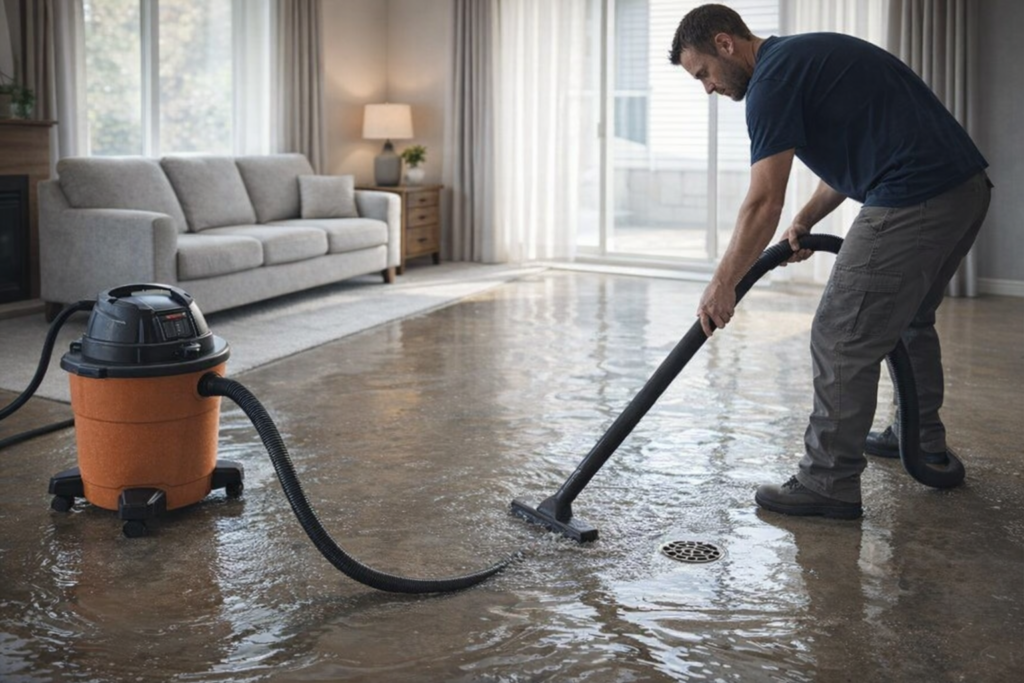
- Remove standing water using buckets or wet-dry vacuums and move belongings to dry areas. Open windows and run fans to increase air circulation and prevent mold growth.
- Call restoration experts immediately for contaminated water from sewage or toilet backups, water that has soaked into drywall or subflooring, or when you see sagging ceilings or buckling floors.
When you discover flooding, act quickly to minimize damage. First, turn off the water source if possible and shut off electricity to affected areas. Remove valuable items and furniture from standing water. Use towels, mops, or a wet-dry vacuum to extract as much water as possible. Open windows and doors to improve air circulation while waiting for professional restoration services.
Stop Water at the Source First
Water damage spreads fast, but your immediate response can prevent thousands of dollars in additional destruction. Emergency water removal begins the moment you discover flooding, whether from a burst pipe during Colorado’s freeze-thaw cycles or a failed water heater in your Lakewood, CO home.
The first 24 hours determine how much of your property you can save. Here’s what to do right now, before restoration experts arrive.
Shut Off Water and Power Safely
Turn off the water source immediately. For burst pipes, locate your main water shutoff valve near the water meter or where the main line enters your home. For appliance leaks, turn off the supply valves behind the unit.
Never touch electrical switches, outlets, or appliances while standing in water. If water has reached electrical areas, shut off power at the circuit breaker from a dry location.
Gas water heaters require special attention. If you smell gas or see water near the unit, leave the area and call your gas company before attempting any shutoffs.
Common Water Sources in Lakewood Homes
- Frozen pipes that burst during winter temperature swings
- Water heaters reaching end of life (typically 8-12 years)
- Washing machine supply lines
- Toilet supply connections
- Basement sump pump failures during spring snowmelt
Emergency Water Removal Steps You Can Take Now
Time matters when water sits on your floors, soaks into drywall, or seeps under flooring. Immediate water damage response starts with removing standing water using whatever tools you have available.
Remove Standing Water
Use buckets, pots, or large containers to bail out standing water. A wet-dry shop vacuum works well for smaller amounts. Mop up remaining moisture with towels or blankets you can throw away afterward.
Work from the outside edges toward floor drains or the lowest point where you can safely dispose of water. Avoid pushing water toward areas that haven’t been affected yet.
Move Belongings to Dry Areas
Lift furniture off wet floors using aluminum foil or wooden blocks. Remove area rugs, books, electronics, and anything else that water can damage permanently.
Separate items by material type. Wood furniture needs different drying treatment than electronics or fabric items.
Start Air Circulation
Open windows if weather permits, but avoid this during humid summer days when outside moisture can slow drying. Run fans to move air across wet surfaces.
Point fans toward wet walls and floors, not just into the room. Air movement prevents mold growth and speeds evaporation.
What Not to Do During Emergency Water Removal
Some well-meaning actions can make water damage worse or create safety hazards. Avoid these common mistakes that we see in Lakewood properties.
Don’t Use Regular Household Vacuums
Standard upright or canister vacuums can be damaged by water and may create electrical hazards. Only use wet-dry vacuums designed for liquid cleanup.
Don’t Wait for Small Leaks
A small drip under a kitchen sink can saturate cabinet floors and spread to adjacent rooms. Colorado’s dry climate can make moisture problems seem less urgent, but hidden dampness still causes mold and structural damage.
Don’t Ignore Safety Signs
Sagging ceilings, buckling floors, or standing water deeper than two inches require expert help. Water weighs 8 pounds per gallon and can cause structural failure.
When to Call Restoration Experts Immediately
Some water damage situations exceed what homeowners can handle safely with basic emergency water removal techniques. Restoration companies have specialized equipment and training for complex scenarios.
Category 2 and 3 Water Contamination
Water from washing machine overflows, toilet backups, or sewage contains bacteria and requires different cleanup methods than clean water from supply lines.
Basement flooding from groundwater or storm drainage can contain harmful microorganisms. Professional cleaning protects your family’s health.
Extensive Water Penetration
Water that has soaked into drywall, insulation, or subfloring often requires removal and replacement. Attempting to dry these materials can lead to mold problems weeks later.
Hardwood floors, laminate, and carpet padding may look salvageable but can harbor moisture in places you can’t reach with household equipment.
HVAC System Contamination
Water in ductwork or around air handling units can spread contamination throughout your entire home. Professional duct cleaning and system disinfection may be necessary.

His team was great. They were professional, easy to work with, and got the cleanup and drying done quickly. They even checked for mold just to be safe. You can tell Paul takes his work seriously and really cares about helping people.
If you ever have water damage, call Paul. We’re so grateful for everything he and his team did for us.
 Posted on Google
Document Everything for Insurance
Take photos and videos before you start emergency water removal. Insurance adjusters need to see the original extent of damage to approve claims properly.
Photograph water levels on walls, damaged belongings, and the water source. Include close-ups showing how far water penetrated into materials.
Keep receipts for any supplies you buy for emergency cleanup. Many insurance policies cover reasonable mitigation expenses.
What to Photograph
- Standing water depth and coverage area
- Water stains on walls showing high-water marks
- Damaged furniture, electronics, and personal items
- The source of water damage (broken pipe, failed appliance)
- Serial numbers on damaged appliances
Monitor for Hidden Damage Signs
Water travels behind walls, under floors, and into areas you can’t see. Even after completing emergency water removal, watch for signs that moisture remains trapped.
Check for musty odors, soft spots in walls, or new stains appearing days after the initial flooding. These indicate moisture problems that need professional attention.
Use a moisture meter if you have one, or press firmly on drywall and flooring to feel for soft spots that indicate ongoing saturation.
Prepare for Future Water Emergencies
Lakewood homes face seasonal water damage risks from frozen pipes in winter, spring snowmelt basement flooding, and summer hailstorm roof damage. Having emergency supplies ready saves precious time.
Water Emergency Kit
- Wet-dry shop vacuum
- Large plastic buckets
- Tarps and plastic sheeting
- Battery-powered or electric fans
- Flashlights with fresh batteries
- Rubber gloves and boots
- Camera for documentation
Know where your main water shutoff valve is located and test it annually. Valves can seize up from lack of use, leaving you unable to stop water flow during emergencies.
Emergency water removal requires quick action and the right approach to minimize property damage. While you can handle initial water extraction and safety steps, extensive flooding or contaminated water needs expert restoration help. Best Option Restoration provides 24/7 water damage response throughout Lakewood, CO and the Denver metro area. Call 303-500-3187 for immediate assistance with severe water damage situations.
Sources
- Ready.gov – Flood Safety and Response
- EPA – Brief Guide to Mold, Moisture, and Your Home
- American Red Cross – Flood Preparedness and Recovery
- Insurance Information Institute – Preventing Water Damage