

A finished basement can flood with two inches of water in under an hour, and understanding the causes helps homeowners avoid costly repairs. This guide covers specific flooding causes and prevention steps for Lakewood and Front Range homes.
- The most common causes include sump pump failure, poor yard grading, gutter problems, foundation cracks, sewer backups, and failed water heaters. Each source requires a different cleanup approach and fix.
- Prevention steps include testing sump pumps monthly, installing battery backups, extending downspouts six feet from the foundation, regrading soil, sealing cracks, and adding backwater valves.
- Warning signs like white residue on walls, musty smells, and growing cracks indicate moisture has found a path inside. Acting within 48 hours of water intrusion prevents mold growth.
The most common causes of basement flooding include poor drainage around the foundation, clogged or damaged gutters, foundation cracks, sump pump failure, sewer line backups, and improper grading that directs water toward the home. Heavy rainfall, rapid snowmelt, and burst pipes also contribute to water entering basements unexpectedly.
A finished basement can go from dry to two inches of standing water in under an hour. Most homeowners never see it coming, and the damage rarely announces itself politely. Knowing the real basement flooding causes is the difference between a quick fix and a five-figure repair bill.
This post breaks down the specific ways water gets into basements around Lakewood and the Front Range. You get concrete prevention steps for each one, not vague warnings.
The Most Common Basement Flooding Causes
Basement flooding is water entering below-grade living space from groundwater, plumbing failure, or surface runoff. The source determines both the cleanup method and the fix. Here are the culprits we see on calls week after week.
1. Sump Pump Failure
A dead or overwhelmed sump pump is the number one reason we get emergency calls during spring melt. Pumps fail for predictable reasons.
- Power loss during the same storm that floods the pit
- Stuck float switch jammed against the basin wall
- Worn motor after seven to ten years of service
- Undersized pump that cannot match heavy inflow
We once responded to a Lakewood home where the sump ran fine, but the discharge line froze solid outside. Water had nowhere to go and backed straight into the basement.
2. Poor Yard Grading and Surface Runoff
Ground that slopes toward the foundation sends rainwater directly against your walls. Over time, that water finds cracks and gaps in the concrete.
Many Colorado homes were graded correctly at build time. Settling soil and new landscaping later reversed the slope without anyone noticing.
3. Downspout and Gutter Problems
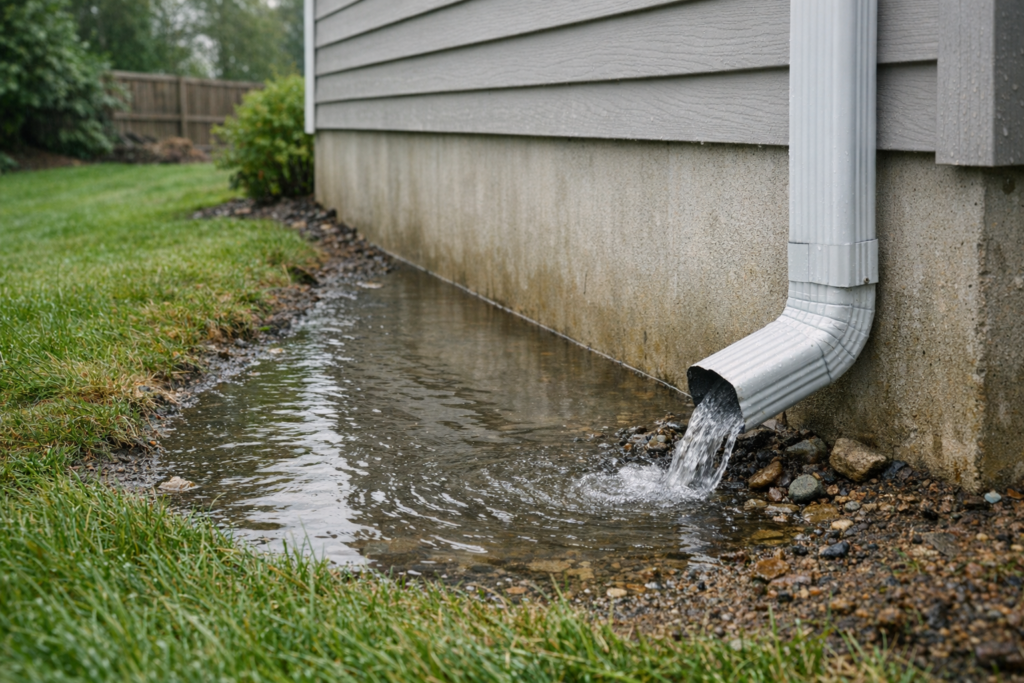
Downspouts that dump water within three feet of the foundation are a frequent offender. One clogged gutter can pour hundreds of gallons against a single spot during a summer thunderstorm.
4. Foundation Cracks and Wall Seepage
Hydrostatic pressure from saturated soil pushes water through hairline cracks. In older Front Range homes, we find seepage along the cove joint where the wall meets the floor slab.
A crack thinner than a credit card can leak steadily during a wet week. The water is clean at first but grows contaminated as it sits.
5. Sewer and Drain Backups
A sewer backup pushes contaminated water up through floor drains and low fixtures. This is the worst category because the water carries bacteria and requires special handling.
Tree roots invading the main line and municipal overload during heavy rain are common triggers. A backwater valve prevents most of these events.
6. Failed Water Heaters and Plumbing
A burst supply line or a rusted-out water heater tank can release forty gallons in minutes. Basement water heaters cause flooding quietly, sometimes running for hours before anyone finds it.
How to Prevent Basement Flooding: Step by Step
Prevention costs a fraction of restoration. Work down this list in order of impact.
- Test your sump pump monthly. Pour a bucket of water into the pit and confirm it kicks on and drains fully.
- Install a battery backup pump. This runs during the power outages that accompany major storms.
- Extend downspouts. Move discharge at least six feet from the foundation with a solid or buried extension.
- Regrade the soil. Build a slope dropping six inches over the first ten feet away from the house.
- Seal foundation cracks. Fill visible cracks with hydraulic cement or polyurethane injection before they widen.
- Add a backwater valve. This one-way valve blocks sewer water from reversing into floor drains.
- Replace aging water heaters. Swap tanks past the ten-year mark and add a drain pan with a sensor.
Seasonal Flood Prevention Tips for Colorado Homes
Front Range weather creates two distinct risk windows. Match your prevention to the season for the best return.
- Spring: Clear snow away from foundation walls and check that discharge lines are thawed and flowing.
- Summer: Clean gutters before monsoon storms and inspect the sump pit after the first heavy rain.
- Fall: Insulate exterior discharge pipes and clear leaves from gutters and window wells.
- Winter: Watch for ice damming near the foundation and keep the basement heated to prevent pipe bursts.
These flood prevention tips take an afternoon each season. That small habit heads off the calls we take at 2 a.m.
Warning Signs Your Basement Is at Risk
Water rarely floods without hinting first. Catch these early markers and you can act before a disaster.
- White chalky residue (efflorescence) on concrete walls
- A musty smell that returns after cleaning
- Rust stains around the base of the water heater
- Cracks that grow wider or longer over a few months
- Pooling water near the foundation after rain
Any one of these signals moisture that already found a path inside. The path only widens with time.
What to Do When Your Basement Floods
Fast action limits both damage and mold growth. Mold can start colonizing wet materials within 24 to 48 hours.
- Cut the power to the basement if you can reach the breaker safely.
- Stop the source by shutting the main water valve or clearing the drain if you know the cause.
- Document everything with photos and video for your insurance claim.
- Call a restoration crew to extract water and begin structural drying.
Never wade into standing water near outlets or a running water heater. Wait for the power to be off.

 Posted on Google
Why Water Category Matters for Cleanup
Not all flood water is equal, and treating it wrong risks your health. Restoration crews classify water into three groups.
- Clean water: from supply lines or rain, safe to handle with basic gear
- Gray water: from appliances or seepage, carrying some contaminants
- Black water: from sewer backups, requiring full protective protocols
A sump pump overflow that sits for two days can move from clean to gray. Timing changes the whole cleanup plan.
Key Takeaways
The most common basement flooding causes are sump pump failure, poor grading, gutter problems, foundation cracks, and sewer backups. Testing your pump, extending downspouts, sealing cracks, and adding a backwater valve stop the majority of events. Act within 48 hours of any water intrusion to keep mold from taking hold.
When water gets in despite your best effort, Best Option Restoration handles extraction, drying, and full repair for Lakewood homes. Call or text 303-500-3187, email info@borlakewood.com, or visit https://borlakewood.com for emergency help.
Sources
- FEMA – Protect Your Home From Flooding
- EPA – Mold Cleanup in Your Home
- Ready.gov – Floods