

DIY disaster cleanup after floods, fires, or sewage backups carries hidden risks that most homeowners miss. What appears manageable can lead to costly mold remediation, health hazards, or denied insurance claims.
- Mold grows within 24 to 48 hours on wet materials, and surface drying rarely reaches moisture trapped in walls or subfloors. Most homeowners stop drying too early because they lack moisture meters to verify safe levels.
- Category 3 water from sewage or floods contains dangerous pathogens like E. coli and hepatitis A. Porous materials like carpet and drywall touched by this water cannot be safely cleaned and must be discarded.
- Insurance claims can be reduced or denied when homeowners remove damaged materials before documenting evidence. Restoration companies provide moisture logs and thermal images that adjusters recognize and accept.
DIY disaster cleanup after a fire, flood, or sewage backup carries hidden dangers that often go unnoticed at first. Homeowners face exposure to mold growth, contaminated water, structural damage, electrical hazards, and harmful airborne particles. Without proper protective equipment and professional assessment, these risks can lead to serious health problems and additional property damage over time.
A flooded basement looks manageable with a wet vac and a few fans. That assumption is where most homeowners get hurt. The DIY disaster cleanup risks that follow a fire, flood, or sewage backup are rarely visible on day one.
What starts as a weekend project can turn into a $20,000 mold remediation job or a denied insurance claim. This post breaks down the hidden dangers people miss when they clean up alone.
You will learn where DIY efforts fail, what health hazards hide behind walls, and when to call for help.
Why DIY Disaster Cleanup Risks Are Worse Than They Look
The visible damage after a disaster is usually a fraction of the total. Water travels sideways along floor joists and wicks up drywall. Fire leaves corrosive residue in places smoke never seemed to reach.
Homeowners clean what they can see, then assume the job is done. The moisture trapped inside a wall cavity keeps working for weeks.
The 48-Hour Mold Window
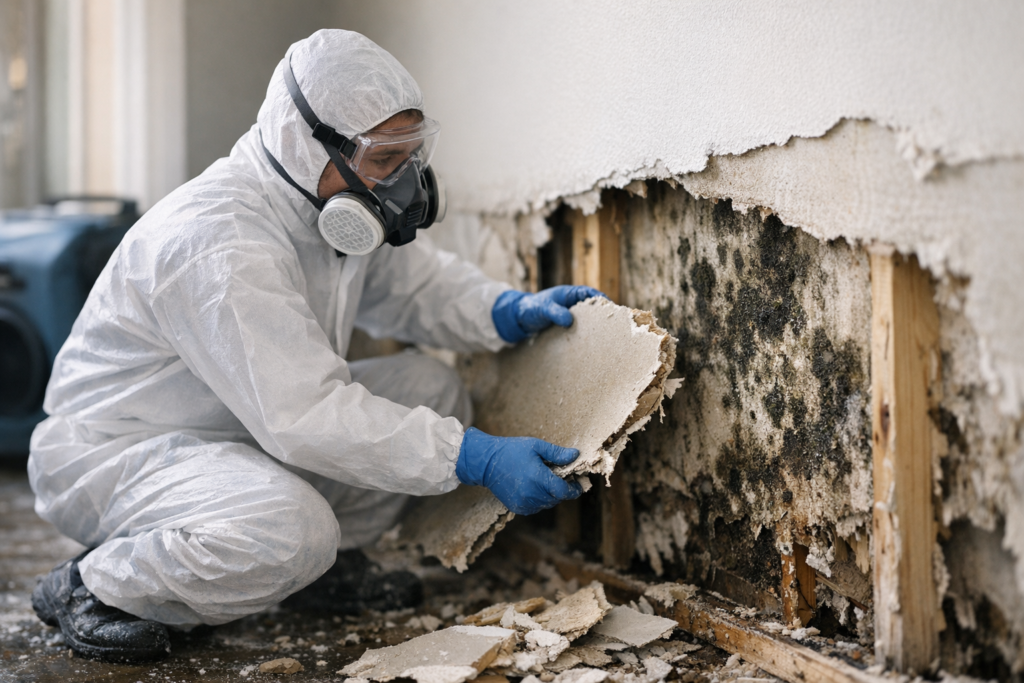
Mold begins growing on wet building materials within 24 to 48 hours. A shop vacuum removes standing water but leaves the substrate damp.
Drywall, insulation, and subfloor hold moisture that surface drying never reaches. By the time you smell mold, colonies have spread behind the wall.
A moisture meter reading below 16% is the target for drywall. Most people have no way to measure this, so they stop drying too early.
Hidden Health Hazards People Underestimate
Disaster debris is not household dirt. The materials involved carry risks that ordinary cleaning gloves and a mask cannot stop.
Category 3 Water Is Toxic
Category 3 water is grossly contaminated water containing sewage, chemicals, or floodwater from outside. Sewage backups and river flooding fall into this class.
This water carries E. coli, hepatitis A, and other pathogens. Contact with skin, eyes, or open cuts causes infection.
Porous items touched by Category 3 water cannot be cleaned safely. Carpet, padding, and drywall must be removed and discarded.
Fire Residue and Soot
Soot contains fine particles that lodge in lung tissue. Burned synthetic materials release compounds linked to respiratory illness.
Wiping soot with a wet cloth smears it and drives particles into porous surfaces. This makes the damage harder to reverse and spreads contamination.
Airborne Mold Spores
Cutting into moldy drywall without containment releases millions of spores. Those spores settle across the home and start new growth.
People with asthma, allergies, or weakened immune systems react to this exposure. A DIY cleanup can turn one moldy room into a whole-house problem.
Electrical and Structural Dangers
Water and electricity share space after most floods. Standing water near outlets, panels, or submerged appliances carries a shock risk.
Turning off the main breaker is not always enough if the panel itself is wet. Homeowners have been injured stepping into flooded basements to assess damage.
Structural risks add another layer:
- Waterlogged subfloors lose load-bearing strength and can collapse underfoot.
- Fire-weakened joists may look intact but fail under weight.
- Saturated ceilings hold hundreds of pounds of water before they give way.
- Compromised staircases become hazards during cleanup traffic.
The Insurance Problem Most People Miss
DIY cleanup can void or reduce your insurance payout. Adjusters need documentation of the damage before it is disturbed.
When you tear out drywall and throw away carpet, you erase the evidence. The claim gets questioned or denied for lack of proof.
What Insurers Expect
Most policies require prompt, correct mitigation to prevent further damage. Doing the work wrong can count as neglect.
- Document everything with photos and video before touching anything.
- Stop ongoing damage without discarding evidence prematurely.
- Keep records of all materials removed and work performed.
- Use licensed contractors whose reports insurers accept.
Restoration companies produce moisture logs, thermal images, and itemized scopes. Adjusters recognize this paperwork and pay claims faster.
Where DIY Costs More Than It Saves
The money saved on labor evaporates when the job goes wrong. A repeated remediation costs more than doing it right once.
DIY vs. Trained Restoration
- Drying: Fans move surface air. Commercial dehumidifiers and air movers pull moisture from within materials.
- Detection: The eye misses hidden moisture. Thermal cameras and meters find it behind walls.
- Containment: Open cleanup spreads contamination. Negative air machines and barriers isolate it.
- Disposal: Household trash rules do not cover biohazard waste. Trained crews handle it legally.
The gap widens with mold and sewage. A missed pocket of moisture restarts the whole cycle.

Honest assessment of damage, recommendations, follow-through. Professional lead technician.
 Posted on Google
When to Skip DIY and Call for Help
Some situations demand equipment and training no homeowner has on hand. Call a restoration crew right away when you see any of the following:
- Water covering more than a small area or standing longer than a day
- Any sewage backup or floodwater from outside
- Fire or smoke damage of any size
- A musty smell without a visible source
- Water near electrical panels or outlets
- Damage you plan to file an insurance claim on
Best Option Restoration in Lakewood responds to water, fire, mold, and sewage emergencies. Our crews carry the meters, dehumidifiers, and containment gear the job requires.
What Trained Crews Do Differently
The difference is not effort. It is method, equipment, and knowing where damage hides.
A trained team maps moisture before drying and monitors it daily until materials hit safe readings. They contain mold before cutting into it, not after.
They document every step for your insurer and dispose of biohazard material by code. That protects your health, your home, and your claim at the same time.
Conclusion
The DIY disaster cleanup risks that hurt homeowners most are the ones they never see: trapped moisture, toxic water, spreading spores, and denied claims. Cleaning what you can see is not the same as restoring what the disaster damaged. The safest, least expensive path is correct mitigation the first time.
If your home has water, fire, mold, or sewage damage, call Best Option Restoration at 303-500-3187, text 303-500-3187, or email info@borlakewood.com. Visit https://borlakewood.com to request emergency help.
Sources
- U.S. Environmental Protection Agency – Mold Cleanup in Your Home
- Centers for Disease Control and Prevention – Mold Cleanup Guidance
- Federal Emergency Management Agency – Cleaning Flood Water Safely