

A burst supply line can release hundreds of gallons of water per hour, making business water damage prevention the difference between a quick cleanup and weeks of closure. This guide covers where leaks start, what equipment stops them early, and how fast response limits damage.
- Most commercial water damage begins behind walls or above ceilings from supply line failures, water heater ruptures, clogged HVAC drains, roof leaks, or sewer backups. Restaurants and retail face higher risk due to constant water pressure and ground-level inventory storage.
- Practical steps include labeling the main shutoff, replacing rubber hoses with stainless steel, installing leak sensors and automatic shutoff valves, and flushing HVAC lines twice yearly. Quarterly inspections catch problems while they are cheap to fix.
- The first hour determines cost since water moves from clean to contaminated quickly and mold can form within 24 to 48 hours. A written response plan with shutoff locations and a 24/7 restoration contact keeps small leaks from closing your doors.
Protecting your business from water damage starts with regular inspections of plumbing systems, supply lines, and appliances. Install water leak detection sensors in high-risk areas like break rooms and bathrooms. Maintain proper drainage around your building, check roof conditions seasonally, and train employees to report leaks immediately. Having an emergency response plan helps minimize damage when incidents occur.
A burst supply line under a break-room sink can release hundreds of gallons of water in a single hour. For a small office in Lakewood, that means soaked drywall, ruined inventory, and days of closure. Business water damage prevention is the difference between a quick cleanup and a claim that shuts you down for weeks.
This post covers the exact steps that reduce water risk in a commercial building. You will learn where leaks start, what equipment stops them early, and how fast response limits the damage.
Business Water Damage Prevention Starts With the Failures You Cannot See
Most commercial water damage does not begin with a storm. It begins behind walls, above ceiling tiles, and under floors where no one is watching.
The common sources we find on service calls are predictable:
- Supply line failures — braided hoses to toilets, sinks, and ice machines split with age.
- Water heater tank rupture — most tanks fail between years 8 and 12.
- HVAC condensate lines — clogged drains overflow into ceilings and walls.
- Roof and window leaks — small gaps widen after freeze-thaw cycles.
- Sewer backups — heavy rain overloads municipal lines and pushes water back inside.
Each of these has a fix that costs far less than restoration. Knowing which one applies to your building is the starting point.
Why Restaurants and Retail Face Higher Risk
Food-service kitchens run constant water pressure to dishwashers, ice makers, and prep sinks. Every added fixture is another connection that can fail overnight.
Retail stores store inventory low to the ground. A slow leak that would spare a bare office floor can destroy stacked stock in hours.
Practical Steps to Protect Your Commercial Property
Commercial property protection works best when you act before a leak, not after. Here is the order we recommend to Lakewood business owners.
- Locate your main water shutoff. Every employee who opens or closes should know exactly where it is. Label it clearly.
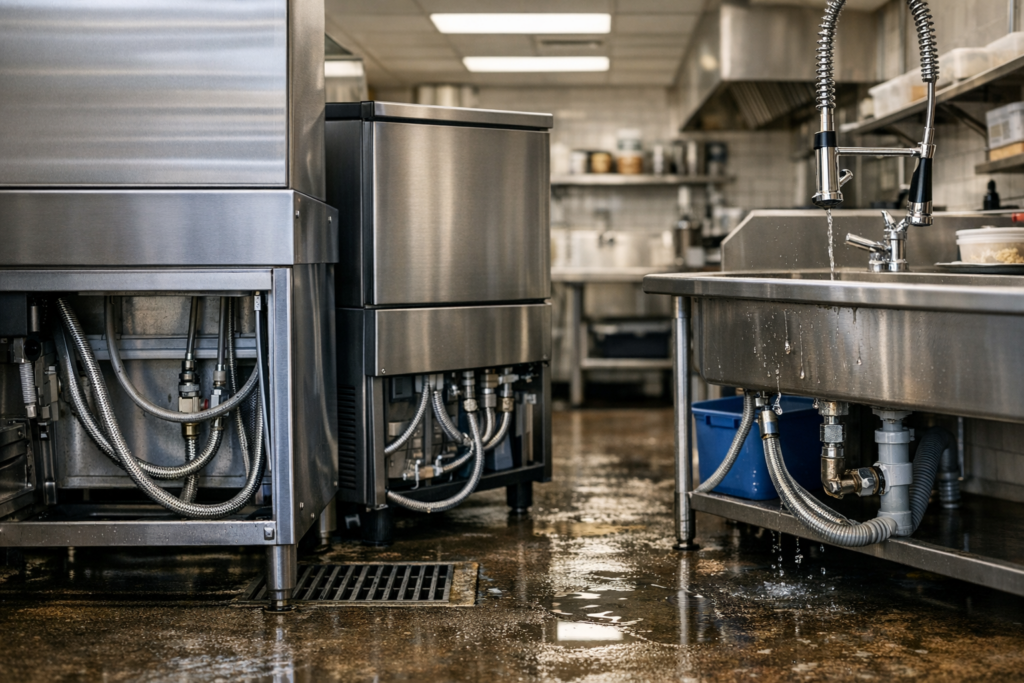
- Replace rubber supply hoses with braided stainless steel. Do this on every toilet, sink, and appliance line.
- Install water leak sensors near high-risk points. Place them under sinks, behind the water heater, and near HVAC drain pans.
- Add an automatic shutoff valve. Smart valves detect abnormal flow and close the main before a small leak floods a floor.
- Flush HVAC condensate lines twice a year. A clogged drain is one of the most preventable ceiling leaks we see.
- Grade landscaping away from the foundation. Standing water at the base of a wall finds its way inside.
Steps two through four often cost under a few hundred dollars. That figure is minor next to a five-figure water loss.
Build a Quarterly Inspection Habit
A calendar reminder every three months catches problems while they are cheap to fix. Walk the building and check these points:
- Ceiling tiles for brown staining or sagging.
- Under-sink cabinets for warping, musty smell, or dampness.
- The base of the water heater for rust or moisture.
- Window and door frames for gaps and failed caulk.
- Roof drains and gutters for debris after storms.
Brown staining on a ceiling tile means water is already moving above your head. Replace the tile and find the source the same week.
Winter Freeze: The Denver-Area Threat People Underestimate
Lakewood winters swing hard between warm afternoons and hard overnight freezes. Water inside an unheated wall or exterior pipe expands as it freezes.
That expansion cracks the pipe. When temperatures climb the next day, the crack releases water into the structure.
Three moves cut this risk sharply:
- Insulate exposed pipes in crawl spaces, exterior walls, and unheated storage rooms.
- Keep the thermostat at 55°F or higher overnight, even when the building is empty.
- Disconnect and drain outdoor hose bibs before the first freeze.
A vacant building over a holiday weekend is where frozen-pipe claims start. A dropped thermostat setting to save money can cost thousands.
Have a Written Response Plan Before You Need One
The size of a water loss depends on how fast someone reacts. Water spreads across a floor in minutes and wicks up drywall within hours.
A one-page plan posted in a back room removes guesswork during a panic. Include the following:
- Location of the main water shutoff and how to close it.
- Location of the electrical panel to cut power to wet areas safely.
- The phone number for a restoration company that answers 24/7.
- Your insurance policy number and claims contact.
- A short list of who to call, in order, during business and off hours.
Speed matters more than most owners expect. Mold can begin forming within 24 to 48 hours of standing water on porous materials.
Why the First Hour Sets the Cost
When water sits, it moves from category one (clean) toward category three (contaminated). Contaminated water forces removal of drywall, flooring, and insulation that clean water might spare.
Closing the shutoff and calling for extraction fast keeps a loss in the low-cost category. Waiting until morning frequently doubles the scope.

 Posted on Google
Document Everything for Your Insurance Claim
Photos and records turn a stressful claim into a paid one. Keep a folder with these items ready.
- Dated photos of your building interior in normal condition.
- Serial numbers and receipts for equipment and inventory.
- Your current commercial policy with water and flood coverage confirmed.
- Maintenance records showing hose replacements and inspections.
Standard commercial policies cover sudden pipe bursts. They rarely cover damage traced to long-term neglect, which is why your inspection records matter.
Key Takeaways
Business water damage prevention comes down to three habits: inspect the parts you cannot see, install sensors and shutoffs that catch leaks early, and respond within the first hour. Commercial property protection is cheaper than restoration every single time. A written plan and a 24/7 restoration contact keep a small leak from closing your doors.
Best Option Restoration handles water extraction, drying, and repair for Lakewood-area businesses around the clock. Call or text 303-500-3187, email info@borlakewood.com, or visit https://borlakewood.com to plan your response before a leak starts.
Sources
- FEMA – Floods & Flooding
- EPA – Mold Cleanup and Moisture Control
- Insurance Information Institute – Facts About Flood Insurance