

This guide explains what to do in the first 48 hours after storm roof damage, covering safety checks, damage assessment, water prevention, and insurance documentation to protect your home and maximize your claim.
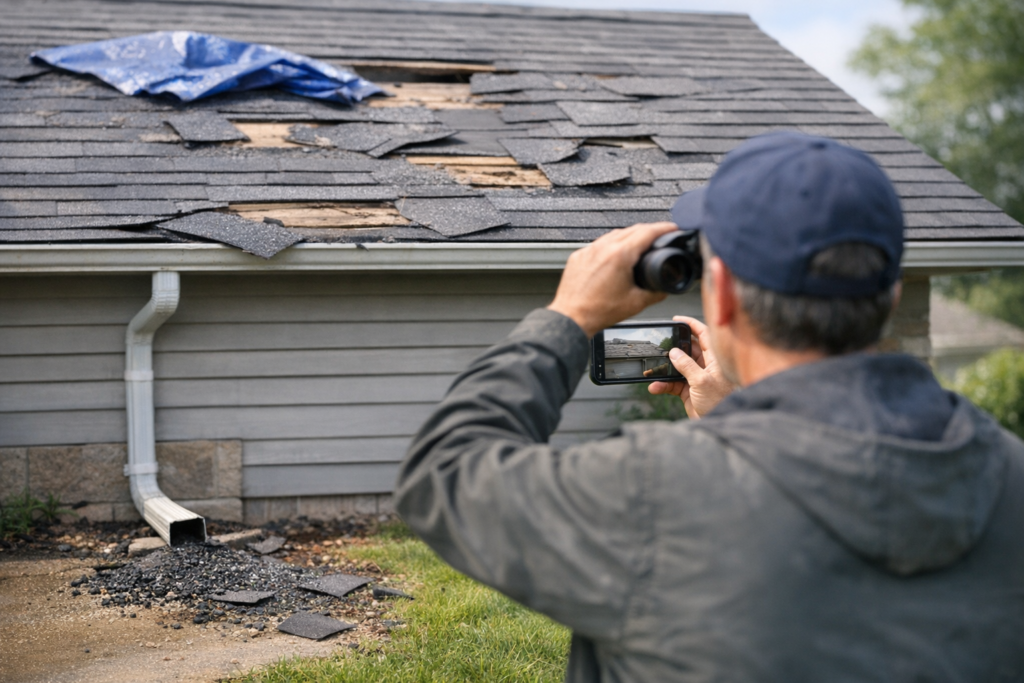
- Stay off wet or damaged roofs and check for hazards like downed power lines, sagging ceilings, and gas smells before entering. Use binoculars to spot missing shingles, hail dents, or puncture holes from the ground.
- Stop water spread by placing buckets under drips, draining bulging ceilings with a small hole, and covering breaches with a properly anchored tarp. Photograph all damage before moving or cleaning anything.
- File your insurance claim promptly with dated weather records and get an independent contractor inspection before the adjuster arrives. Acting within 24 to 48 hours prevents mold growth and costly structural repairs.
After storm roof damage occurs, act within the first 48 hours to protect your safety and maximize your insurance payout. Document all visible damage with photos, cover exposed areas with tarps to prevent water intrusion, and contact your insurance company to file a claim. Then schedule a professional roof inspection to assess the full extent of the damage before repairs begin.
A hailstorm can crack a shingle roof in under ten minutes. High winds peel back flashing, and a single fallen branch can puncture decking straight into your attic. When storm roof damage hits, what you do in the first 48 hours affects your safety, your insurance payout, and the final repair bill.
This post walks you step by step from the moment the storm passes to the day repairs begin. You will learn how to spot hidden damage, stop water from spreading, and document everything your insurer needs.
First Steps After Storm Roof Damage: Safety Before Anything Else
Your first job is to confirm the house is safe to occupy. Storm roof damage often comes with hazards you cannot see from the ground.
Do not climb onto a wet or damaged roof. Wet shingles are slippery, and compromised decking can give way under your weight.
Check for these dangers before doing anything else:
- Downed power lines touching the roof, gutters, or standing water
- Sagging ceilings that signal trapped water pooling above drywall
- Gas smell near vents or where debris struck the structure
- Broken glass or exposed nails in the yard and driveway
If a ceiling bulges from trapped water, keep everyone out of that room. A saturated drywall panel can collapse without warning and bring insulation and framing down with it.
How to Assess Roof Damage From the Ground
You can spot most storm roof damage without a ladder. A pair of binoculars and a phone camera cover the assessment safely.
Signs of Wind Damage
Wind lifts shingles at the edges and tears them off in strips. Look for missing shingles, curled corners, and bare patches showing the black underlayment.
Check your yard for shingle granules and torn pieces. A pile of granules at the base of a downspout means the shingle surface is wearing away.
Signs of Hail Damage
Hail leaves round dents and dark bruises where it strips granules from asphalt shingles. On metal vents and gutters, hail leaves dimples the size of coins.
Hail damage is easy to miss from the ground. Bruised shingles look intact but fail months later, letting water seep into the decking.
Signs of Impact Damage
Fallen limbs and airborne debris punch holes straight through the roof. Check for branches resting on the roof and any spot where the roofline dips or splinters.
Stop the Water: Temporary Protection Steps
Water spreads fast once your roof is breached. Stopping it early keeps a small repair from becoming a full attic and ceiling rebuild.
Follow these steps in order:
- Move valuables and electronics out of rooms below the damage.
- Place buckets under active drips and lay towels to catch splash.
- Poke a small hole in a bulging ceiling to drain trapped water into a bucket. This controls the leak instead of letting the whole panel burst.
- Cover the roof breach with a tarp only if you can do it safely from a stable position.
- Photograph everything before you move or clean anything.
A tarp should extend past the damaged area and be anchored under the ridge, not just weighed down with bricks. Wind will lift a loose tarp within hours and reopen the leak.
If the damage is large or the roof is steep, skip the DIY tarp. A restoration crew carries fall protection and can secure a proper emergency cover the same day.
Document Everything for Your Insurance Claim
Insurance adjusters pay based on evidence. The more you document, the smoother your claim and the fewer disputes over what the storm caused.
What to Photograph
- Wide shots of each roof face showing the overall damage
- Close-ups of missing shingles, hail bruises, and puncture holes
- Interior water stains on ceilings, walls, and attic decking
- Damaged belongings before you throw anything away
- Debris like fallen branches next to the point of impact
Record the Date and Weather
Note the exact date and time of the storm. Save a screenshot of the local weather report or a news alert confirming hail or high winds in your area.
Insurers cross-check claims against reported storm activity. A dated weather record ties your damage to a covered event and blocks denials.
Keep Every Receipt
Save receipts for tarps, buckets, hotel stays, and any emergency work. Most policies reimburse reasonable costs you spend to prevent further damage.
How to File a Storm Roof Damage Insurance Claim
File your claim within your policy’s deadline, which runs from a few days to a year depending on the carrier. Call your insurer as soon as the property is safe.
Follow this order when filing:
- Call your insurance company and open a claim. Write down the claim number.
- Ask what your policy covers for roof replacement, water damage, and temporary lodging.
- Schedule the adjuster inspection and be present for it.
- Get an independent inspection from a restoration contractor before the adjuster arrives.
- Compare estimates so you know if the insurer’s offer covers real repair costs.
Having a contractor present during the adjuster visit helps catch damage the adjuster misses. Hail bruising and lifted flashing are easy to overlook, and a missed item means money out of your pocket later.

 Posted on Google
Why Fast Action Matters After Storm Roof Damage
Water follows the path of least resistance. A leak that starts at a cracked shingle travels down rafters, soaks insulation, and pools above drywall far from the entry point.
Within 24 to 48 hours, trapped moisture starts growing mold. Once mold reaches framing and insulation, the repair scope grows from a roof patch to gutting rooms.
Acting fast protects three things:
- Your health — mold spores spread through the air you breathe
- Your structure — soaked wood rots and loses strength
- Your wallet — early drying costs far less than rebuilding
When to Call a Restoration Professional
Call for help the moment water enters your living space or attic. Roof repair services address the leak, but water that has already spread needs drying and cleanup too.
Best Option Restoration handles both sides of storm roof damage: the emergency tarp and roof repair, plus the water extraction, drying, and mold prevention inside.
Reach out right away if you see any of the following:
- Water dripping from ceiling light fixtures
- Spreading brown stains on ceilings or walls
- A musty smell in the attic or upper floors
- Daylight visible through the roof from inside the attic
- A roof breach too large or steep to tarp safely
A restoration crew documents damage in the format adjusters accept, which strengthens your claim from the start.
Key Takeaways
After storm roof damage, confirm your home is safe, then stop water from spreading and photograph every detail. File your insurance claim promptly with dated weather records and a contractor’s independent inspection.
Fast action keeps a small leak from becoming a mold and structural problem that costs thousands more.
If a storm has damaged your roof, Best Option Restoration can secure your property and start repairs the same day. Call or text 303-500-3187, email info@borlakewood.com, or visit https://borlakewood.com.
Sources
- FEMA – Protect Your Property from Tornadoes and Severe Storms
- CDC – About Mold
- Insurance Information Institute – How to File a Homeowners Claim
- National Weather Service – Homepage