

A musty smell or visible mold patches are late-stage warnings that mold has spread behind walls. Recognizing early signs and calling professionals when growth exceeds 10 square feet can prevent costly repairs and health issues.
- Warped baseboards, bubbling paint, and rooms that stay humid signal hidden moisture where mold thrives. Allergy symptoms that improve when you leave home may also point to indoor mold.
- DIY cleaning with bleach treats only surface mold and the colony returns if moisture remains. Professional help is needed for areas over 10 square feet or growth in HVAC systems.
- Trained crews use containment and negative air pressure to prevent spore spread. They locate hidden moisture with thermal cameras and address the water source to stop regrowth.
Key signs you need professional mold remediation include a persistent musty odor, visible mold growth larger than 10 square feet, water damage or past flooding, unexplained allergic symptoms among household members, and discoloration on walls or ceilings. If mold keeps returning after cleaning or you suspect hidden growth behind walls, contact a professional remediation service immediately.
A faint musty smell in a spare bedroom is easy to ignore. That smell is one of the earliest warnings that mold has taken hold behind your walls. Knowing when to call for professional mold remediation can save you thousands in structural repairs and protect your family’s health.
Most homeowners wait until they see black patches on drywall before acting. By then, the colony has usually spread into places you cannot see. This article covers the obvious signs and the overlooked ones that restoration crews find every week.
The Obvious Mold Removal Signs Most People Already Know
Visible mold growth is the clearest trigger for action. Dark green, black, or fuzzy white patches on walls, grout, or ceilings mean an active colony is present.
A persistent musty odor is the second classic warning. That damp, earthy smell comes from gases released by growing mold.
Water damage history rounds out the familiar list. If a pipe burst or a basement flooded in the past year, mold has had time to settle.
- Visible patches on walls, ceilings, or tile grout
- Musty odors that linger after cleaning
- Recent flooding or plumbing leaks
- Water stains spreading on drywall or ceilings
These signs are real, but they represent late-stage problems. The warnings below show up much earlier.
Lesser-Known Mold Removal Signs Homeowners Miss
Mold rarely announces itself on a clean, visible surface first. Our crews find most colonies hidden behind materials that look fine from the outside.
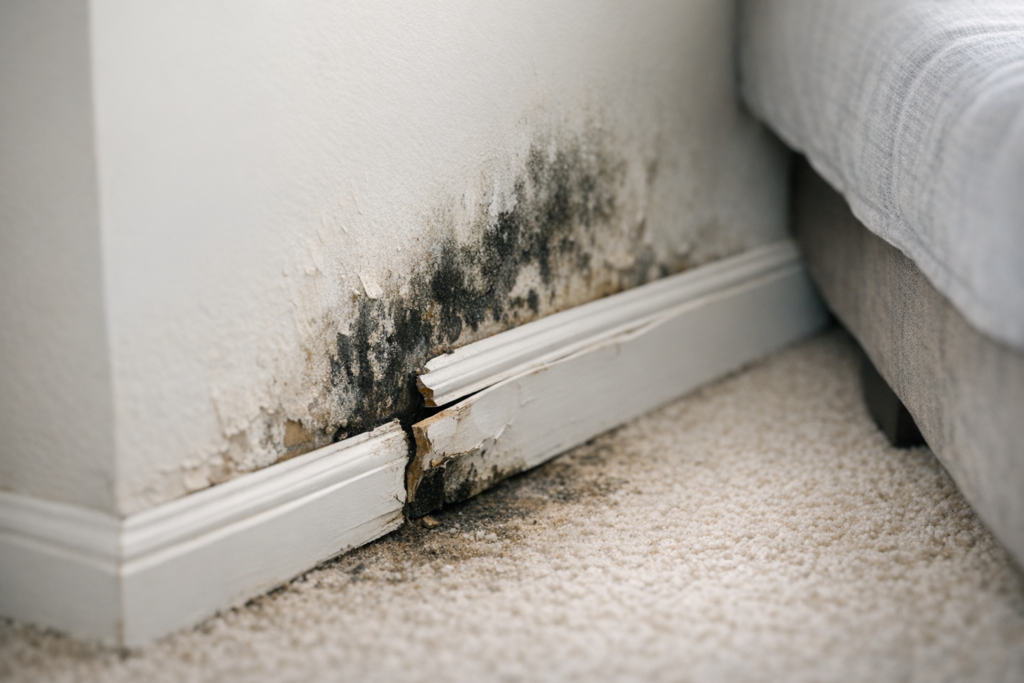
Warped or Bubbling Paint and Baseboards
Paint that bubbles or peels without a clear cause points to moisture trapped behind the surface. Mold feeds on that trapped moisture inside the wall cavity.
Baseboards that cup, swell, or pull away from the wall tell the same story. Water is wicking up from the subfloor or a hidden leak.
A Room That Always Feels Humid
One room staying damp when the rest of the house feels dry is a red flag. Humidity above 60 percent gives mold everything it needs to grow.
Basements and bathrooms are common culprits. A bathroom mirror that fogs for an hour after a shower signals poor airflow and rising moisture.
Allergy Symptoms That Clear Up When You Leave Home
Health clues are among the most overlooked mold removal signs. Pay attention if symptoms improve the moment you step outside or travel.
- Sneezing, congestion, or a runny nose indoors
- Itchy or watery eyes that ease when you leave
- Unexplained headaches or fatigue at home
- Worsening asthma with no outdoor trigger
When a family member feels better at work or school, the house itself may be the source.
Dark Grout, Discolored Caulk, or Pink Staining
Grout that turns dark no matter how hard you scrub holds moisture underneath. The staining returns because the colony lives inside the porous material.
Pink or orange film around drains is a bacteria often found alongside mold. Its presence means the area stays wet long enough for fungal growth.
Condensation on Windows and Metal Fixtures
Heavy condensation on window frames shows indoor humidity running high. That moisture collects in window sills and wall corners where mold starts.
Rust forming on nails, hinges, or HVAC components is a quieter sign. Metal corrodes fastest in the same damp conditions mold loves.
When DIY Cleaning Is Not Enough
Professional mold remediation becomes necessary once growth spreads beyond a small surface patch. The EPA recommends calling a specialist when affected areas exceed about 10 square feet.
Scrubbing surface mold with bleach treats the symptom, not the source. If moisture remains, the colony returns within weeks.
Call for help in any of these situations:
- The affected area is larger than 10 square feet
- Mold returns after repeated cleaning
- Growth appears inside HVAC ducts or vents
- A household member has asthma or a weakened immune system
- Sewage or contaminated water caused the moisture
- You smell mold but cannot find it
Why Hidden Mold Needs Trained Crews
Disturbing a colony without containment spreads spores across your home. Opening a wall releases millions of spores into the air within seconds.
Trained crews seal the work zone and use negative air pressure to trap spores. They remove contaminated materials and treat the moisture source that started it all.
What Restoration Teams Find Behind the Walls
Our technicians frequently pull back drywall to find colonies far larger than the visible stain suggested. A one-inch spot on the surface can hide two square feet of growth inside the cavity.
Moisture meters and thermal cameras locate wet framing you cannot see. This is the difference between cleaning a symptom and fixing the cause.

 Posted on Google
The Health Risk of Waiting
Mold exposure affects breathing, skin, and sinuses over time. The CDC links indoor dampness and mold to upper respiratory symptoms in otherwise healthy people.
Infants, older adults, and people with asthma face higher risk. Long-term exposure can trigger chronic coughing and worsening allergic reactions.
Acting on early mold removal signs protects both your home’s structure and the people inside it.
How Best Option Restoration Handles Mold
Our team starts with moisture mapping to find every damp area before touching the mold. This step stops the problem from returning after the work is done.
From there, we contain the area, remove affected materials, and treat surfaces to prevent regrowth. We finish by addressing the water source that allowed mold to take hold.
Fast action limits the damage. Mold can begin growing on wet materials within 24 to 48 hours of water exposure.
Key Takeaways
Visible patches and musty smells are late warnings, but warped baseboards, humid rooms, and allergy flare-ups show up earlier. Any mold spreading past 10 square feet, returning after cleaning, or growing in your HVAC system calls for professional mold remediation.
If you spot any of the signs above, contact Best Option Restoration at 303-500-3187, text 303-500-3187, or email info@borlakewood.com. You can also visit https://borlakewood.com to request an inspection.
Sources
- U.S. Environmental Protection Agency – Mold Cleanup in Your Home
- Centers for Disease Control and Prevention – About Mold
- U.S. Environmental Protection Agency – A Brief Guide to Mold, Moisture and Your Home