

This guide explains how to detect mold early in your home before it becomes visible and causes expensive damage. It covers warning signs, a room-by-room inspection checklist, and when to call professionals.
- Mold often starts hidden behind walls or under floors and can begin growing within 24 to 48 hours of moisture exposure. Early signs include musty odors, peeling paint, discoloration, window condensation, and worsening allergy symptoms indoors.
- Key areas to inspect include bathroom grout and caulk, under kitchen sinks, basement corners, window sills, and attic roof decks. Hidden mold commonly grows in wall cavities, HVAC ducts, and beneath flooring after leaks.
- Keep indoor humidity between 30 and 50 percent, fix leaks within days, and dry wet materials within 24 hours. Call a restoration team for mold larger than a bath towel or growth with no visible source.
The most reliable early sign of mold is a faint musty smell, especially in basements or enclosed spaces. Mold often grows hidden behind walls or under flooring before becoming visible. Other warning signs include unexplained allergic reactions, peeling paint or wallpaper, persistent condensation on windows, and discoloration on walls or ceilings.
A faint musty smell in your basement rarely means nothing. It is one of the first and most reliable early signs of mold growing somewhere out of sight. Mold damage starts small, hidden behind walls or under flooring, long before you see a visible patch.
This post gives you a checklist of subtle warning signs that homeowners miss every day. You will learn where mold hides, what your senses can catch before it spreads, and when to call for help.
Catching mold early saves thousands in repairs. Here is how to find it before it becomes a structural problem.
What Mold Needs to Grow in Your Home
Mold is a fungus that grows on damp surfaces and spreads by releasing airborne spores. It needs three things: moisture, organic material to feed on, and temperatures between 60 and 80 degrees Fahrenheit.
Drywall, wood, carpet padding, and dust all feed mold. That means almost any room in your house can support growth if water is present.
Mold can begin colonizing a wet surface within 24 to 48 hours. A single slow leak under a sink is enough to start a colony you never see.
Early Signs of Mold Most Homeowners Overlook
The clearest early signs of mold are smells and surface changes, not visible green or black patches. By the time you see a patch, the colony is established. Catch it earlier with these signals.
1. A Musty or Earthy Odor
Mold produces gases called microbial volatile organic compounds. They smell damp, stale, or like wet soil. If a closet or basement smells musty even after cleaning, mold is the likely cause.
The smell gets stronger after rain or when the HVAC runs. That spike is a strong clue growth is active.
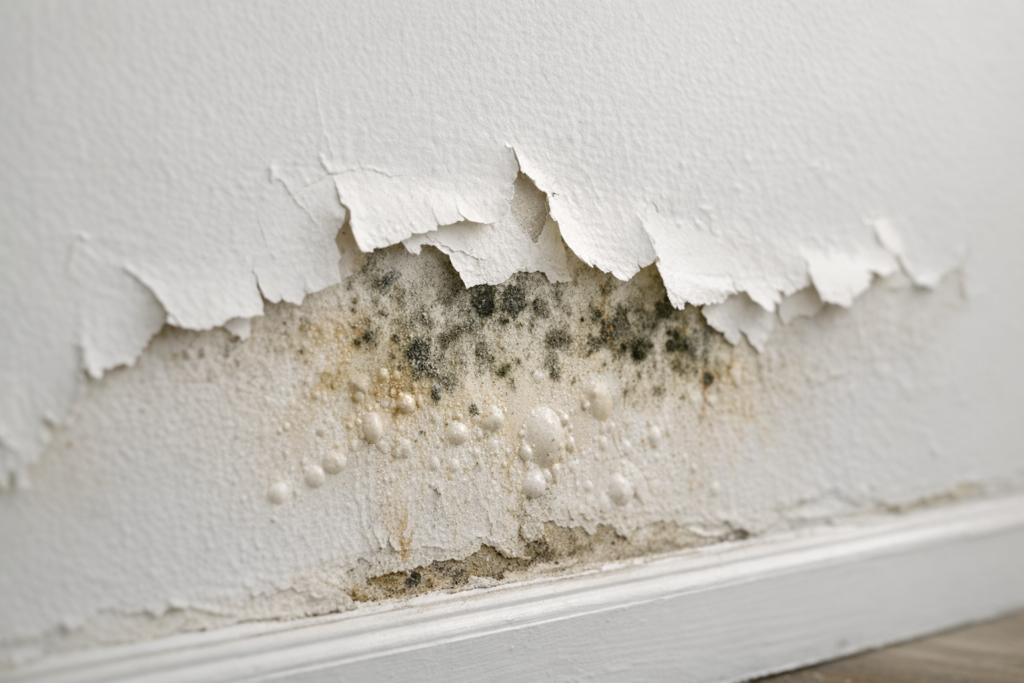
2. Warping, Bubbling, or Peeling Paint
Paint that bubbles, cracks, or peels points to moisture behind the surface. Wallpaper that lifts at the seams signals the same problem. Mold frequently grows in the damp layer underneath.
3. Discoloration You Dismiss as Dirt
Faint yellow, brown, or gray staining on walls and ceilings is water damage. Water stains feed mold even after they dry. A stain near a window, roofline, or pipe deserves a closer look.
4. Condensation on Windows and Pipes
Frequent condensation means high indoor humidity. Mold thrives when relative humidity stays above 60 percent. Foggy windows and sweating pipes are an invitation for growth.
5. Worsening Allergy or Respiratory Symptoms Indoors
Sneezing, coughing, or itchy eyes that ease when you leave the house suggest an indoor trigger. Mold spores irritate airways. If symptoms track with time spent at home, air quality is the suspect.
Room-by-Room Mold Detection Checklist
Mold detection works best when you inspect the spots most likely to stay damp. Walk your home with this checklist and look closely at each location.
Bathrooms
- Grout lines and caulk around the tub or shower
- The ceiling above the shower where steam collects
- Under the sink around the drain trap
- Behind the toilet tank where condensation forms
- Inside the exhaust fan cover
Kitchen
- The cabinet floor under the sink
- Behind and beneath the refrigerator, near the water line
- The seal around the dishwasher door
- The wall behind the backsplash near the faucet
Basement and Crawl Space
- Corners where the floor meets exterior walls
- Around the water heater and furnace
- Exposed joists and subfloor for dark streaking
- Stored cardboard boxes, which hold moisture and feed mold
Bedrooms and Living Areas
- Behind furniture pushed against exterior walls
- Window sills and tracks where condensation pools
- Ceiling corners on the top floor near the roof
- Carpet edges in rooms that flooded before
Attic
- Underside of the roof deck for dark spots
- Around plumbing vents and bathroom fan ducts
- Insulation that looks matted or darkened
Hidden Mold: Where It Grows Without a Trace
The most costly mold grows where you cannot see it. These locations stay damp and dark, which is why colonies spread for months undetected.
- Inside wall cavities after a slow pipe leak
- Under carpet padding following a flood or spill
- Behind drywall near tubs and showers
- Inside HVAC ducts where condensation collects
- Beneath flooring after a dishwasher or washer overflow
A musty smell with no visible source usually means hidden growth. Rising humidity readings in one room point to the same.
How to Confirm You Have a Mold Problem
You can run a few checks before calling anyone. These steps help you confirm whether the warning signs add up.
- Measure humidity. Use a hygrometer. Readings above 60 percent across several rooms mean conditions favor mold.
- Trace the odor. Walk room to room and note where the musty smell peaks.
- Inspect recent leaks. Check any spot that flooded or leaked in the past year.
- Look behind fixtures. Pull out the refrigerator and look under sinks with a flashlight.
- Watch for recurrence. Spots that return after cleaning signal a moisture source still active.
Do not disturb visible mold by scrubbing or sanding. That releases spores and spreads the problem to clean rooms.

 Posted on Google
When to Call a Restoration Team
Small surface mold on tile grout is a manageable cleaning task. Anything larger than roughly ten square feet calls for trained help, according to the EPA.
Call a restoration team when you notice:
- Mold covering an area larger than a standard bath towel
- Growth returning after you clean it
- A musty smell with no visible source
- Mold following a flood, burst pipe, or sewage backup
- Family members with worsening breathing symptoms
Hidden mold behind walls or in ducts needs moisture mapping and containment. Removing it without proper controls spreads spores across the home.
Preventing Mold After You Find the Signs
Finding mold early means little if the moisture source stays. Fix the water problem first, then address the growth.
- Repair leaks at pipes, roofs, and windows within days, not weeks
- Run bathroom and kitchen fans during and after use
- Keep indoor humidity between 30 and 50 percent
- Dry any wet material within 24 hours
- Grade soil away from your foundation to stop basement seepage
A dehumidifier in the basement makes the biggest difference for most homes. Pair it with a hygrometer to track results.
Key Takeaways
The earliest signs of mold are smells, stains, and peeling surfaces, not visible patches. Use a room-by-room checklist to find moisture before colonies spread into walls and flooring. Measure humidity, trace odors, and act within days when warning signs appear.
If you spot mold larger than a towel, smell it without a source, or face it after flooding, Best Option Restoration can inspect and remove it safely. Call or text 303-500-3187, email info@borlakewood.com, or visit https://borlakewood.com.
Sources
- U.S. Environmental Protection Agency – Mold Cleanup in Your Home
- Centers for Disease Control and Prevention – About Mold
- U.S. Environmental Protection Agency – A Brief Guide to Mold, Moisture and Your Home