

Safe debris removal after a natural disaster requires assessing hazards first, wearing proper protective gear, and sorting waste as you clear it. Acting within the 24-to-48-hour window before mold sets in is critical for saving water-damaged materials.
- Walk the perimeter before touching anything and watch for downed power lines, gas leaks, structural damage, and contaminated floodwater. Wear heavy gloves, steel-toe boots, safety glasses, and an N95 respirator during all cleanup work.
- Sort debris into categories like vegetative, construction, hazardous waste, and appliances as you go. Photograph damaged property before removal for insurance claims.
- Remove saturated drywall, carpet, and insulation within two days to prevent mold growth. Call a restoration team for sewage flooding, large mold areas, or structural damage beyond safe DIY handling.
Start by slowing down and assessing hazards before touching anything. Watch for broken glass, downed power lines, and waterlogged materials that create dangerous conditions. Wear protective gear including heavy gloves, sturdy boots, and eye protection. Never handle debris near power lines until utility crews confirm the area is safe. Work methodically and avoid rushing through cleanup.
The first steps after a storm or flood are the most dangerous ones. Broken glass, downed power lines, and waterlogged drywall turn a familiar yard into a hazard zone. Smart debris removal starts with slowing down and reading the risks before you touch anything.
This post walks you step by step through safe cleanup after a disaster. You will learn how to protect yourself, sort what you clear, and recognize the moments that call for trained help.
Assess the Site Before You Touch a Single Pile
Debris removal is the sorting, hauling, and disposal of material left behind after an event like a flood, tornado, or windstorm. Before any of that begins, the site itself has to be judged safe to enter.
Walk the perimeter first. Look up for hanging branches and sagging power lines. Look down for nails, glass, and standing water that may hide sharp objects.
Hazards That Are Easy to Miss
- Downed power lines — treat every fallen line as live. Stay at least 35 feet away and call your utility company.
- Gas leaks — if you smell rotten eggs, leave immediately and call from outside.
- Structural damage — cracked foundations, bowed walls, and sagging ceilings can collapse without warning.
- Contaminated floodwater — flood debris may carry sewage, chemicals, and mold spores.
A tornado near Lakewood, for example, can drop a neighbor’s roofing nails across your entire lawn. That kind of scatter is invisible until a tire or a boot finds it.
Gear Up Before Any Debris Removal Starts
Proper protective equipment prevents most cleanup injuries. Cuts, puncture wounds, and eye damage top the list of post-disaster ER visits.
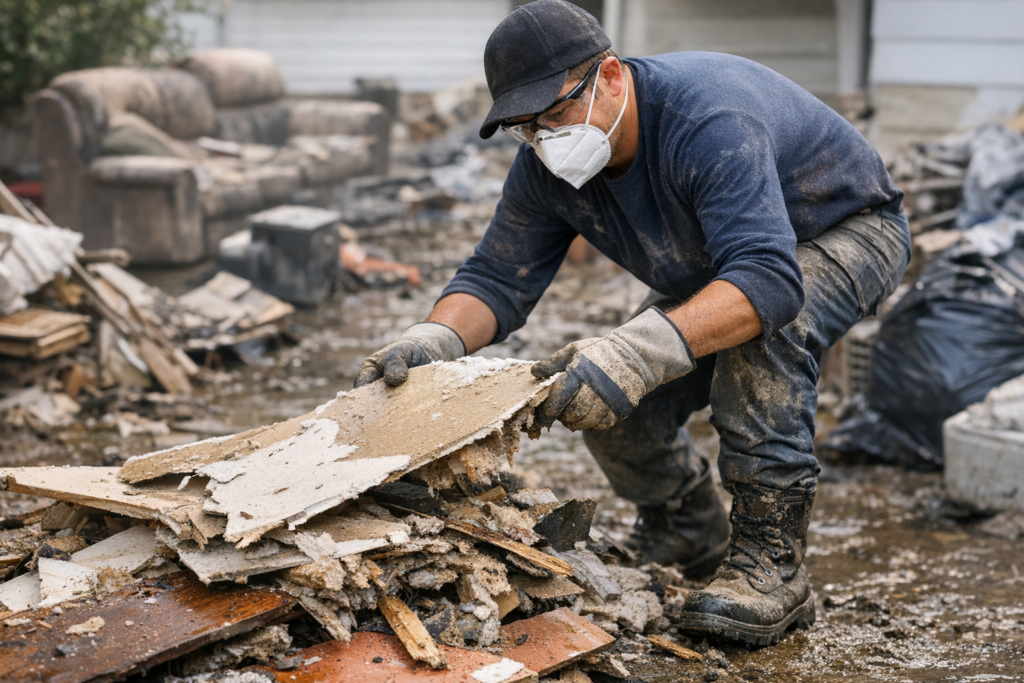
Wear the following every time you handle debris:
- Heavy work gloves — leather or cut-resistant, not thin garden gloves.
- Steel-toe or thick-soled boots — a single roofing nail can pierce a sneaker.
- Safety glasses — flying splinters and dust are constant during hauling.
- N95 respirator — mold and fine particulate hang in the air after floods.
- Long sleeves and pants — a barrier against contaminated water and sharp edges.
Keep a stocked first aid kit within reach. Update your tetanus shot if it has been more than five years, since puncture wounds from rusty metal are common.
Sort Debris as You Clear It
Sorting during removal saves hours later and keeps disposal legal. Mixed piles get rejected at transfer stations and slow the whole cleanup.
Create separate zones as you work. This approach also helps you spot salvageable items before they get buried in a landfill run.
Common Debris Categories
- Vegetative debris — branches, leaves, and trees. Many municipalities collect this separately for mulching.
- Construction debris — drywall, lumber, roofing, and insulation.
- Household hazardous waste — paint, batteries, cleaners, and propane tanks. Never mix this with general trash.
- Appliances and electronics — refrigerators and TVs need special handling for their coolants and metals.
- Salvageable items — anything that can be cleaned, dried, and kept.
Photograph damaged property before you haul it away. Insurance adjusters need visual proof, and a cleared pile is a lost claim.
Handle Water-Damaged Materials the Right Way
Waterlogged materials grow mold within 24 to 48 hours. That short window shapes every decision during flood-related natural disaster cleanup.
Porous items that stayed wet longer than two days rarely recover. Drywall, carpet padding, and mattresses usually need to go.
What to Remove vs. What to Dry
- Remove: saturated drywall, carpet, upholstered furniture, and insulation.
- Dry and keep: solid wood furniture, metal, glass, and sealed hard surfaces.
Cut drywall about 12 inches above the visible water line. Moisture wicks upward inside walls where you cannot see it, and that hidden dampness feeds mold behind fresh paint.
Move and Lift Debris Without Injury
Back strains and dropped loads cause more cleanup injuries than any tool. Debris is heavy, awkward, and unevenly balanced after a storm.
Follow these lifting rules:
- Bend at the knees, not the waist, and keep the load close to your body.
- Split large piles into loads you can carry without straining.
- Use a wheelbarrow or dolly for anything over 50 pounds.
- Work with a partner on long boards, appliances, and furniture.
- Take breaks and drink water, especially in heat.
Never stack debris on top of a covered storm drain or septic lid. Blocked drainage turns the next rainfall into a second flood.

 Posted on Google
Know Your Local Disposal Rules
Disposal rules change fast after a declared disaster. Cities in the Denver metro area frequently set up temporary collection points and curbside pickup schedules for storm debris.
Check with your local waste authority before hauling. Placing debris incorrectly can bring fines or leave your pile sitting for weeks.
Questions to Ask Your Municipality
- Is there a separate pickup for vegetative and construction debris?
- How should household hazardous waste be dropped off?
- Are there weight or bag limits for curbside collection?
- Does the county have a temporary debris site during the recovery period?
When to Stop and Call a Restoration Team
Some cleanup crosses the line into work that requires trained crews and equipment. Pushing past that line puts your health and your home at risk.
Call a restoration team when you face any of the following:
- Sewage or black water flooding — this carries bacteria and viruses that home cleaning cannot fully remove.
- Mold covering more than 10 square feet — containment and negative air pressure are needed to stop spread.
- Structural or roof damage — unstable framing needs assessment before anyone enters.
- Asbestos or lead concerns — older homes built before 1980 may release fibers when materials are disturbed.
- Large volumes of debris — a full home flood produces more waste than most families can clear safely.
Best Option Restoration crews arrive with commercial extraction, drying, and containment equipment. That means faster removal and a documented record for your insurance claim.
A Realistic Timeline for Safe Cleanup
Rushing debris removal leads to missed hazards and rejected insurance claims. A steady sequence protects both you and your property.
- Hours 0–24: document damage, shut off utilities if unsafe, and stop water intrusion.
- Days 1–2: remove saturated porous materials before mold sets in.
- Days 2–4: sort remaining debris and arrange disposal.
- Week 1 and beyond: dry the structure, treat mold, and begin repairs.
Every hour matters in the first two days. That early window decides whether materials can be saved or must be cut out.
Key Takeaways
Safe debris removal after a disaster comes down to reading hazards first, wearing real protection, and sorting waste as you clear it. Move heavy loads with care, follow local disposal rules, and act inside the 24-to-48-hour mold window.
When flooding, mold, or structural damage goes beyond what you can handle alone, Best Option Restoration is ready to step in. Call or text 303-500-3187, email info@borlakewood.com, or visit https://borlakewood.com for help with natural disaster cleanup.
Sources
- Ready.gov – Floods
- U.S. EPA – Mold Cleanup in Your Home
- CDC – Natural Disasters and Severe Weather Safety
- FEMA – Debris Management