

A family disaster kit keeps your household self-sufficient for at least 72 hours after floods, wildfires, or power outages. Our restoration crews see that families who prepare supplies in advance recover fastest after emergencies.
- Stock one gallon of water per person per day, three days of non-perishable food, and a seven-day supply of prescriptions. A family of four needs 12 gallons of water minimum.
- Include first aid supplies, flashlights, a battery-powered radio, important documents in waterproof bags, and items for special needs like infants, pets, or medical conditions.
- Store your main kit near an exit, keep a smaller version in your car, and refresh all supplies every six months by testing batteries and replacing expired items.
A family disaster kit is a stocked container of supplies designed to keep your household safe and self-sufficient for at least 72 hours following a disaster. It includes items like water, food, first aid supplies, flashlights, and important documents. Having one ready helps your family survive when floods, wildfires, power outages, or severe storms cut off access to stores and utilities.
Why a Family Disaster Kit Matters Before Storm Season Hits
A family disaster kit is a stocked container of supplies that keeps your household safe and self-sufficient for at least 72 hours after a disaster. Floods, wildfires, power outages, and severe storms can cut off access to stores, clean water, and electricity fast.
Our restoration crews respond to homes across Colorado after fires, burst pipes, and flooding. The families who recover fastest almost always had supplies ready before the damage happened.
This post lists every item your kit needs, organized by category. Each recommendation comes from what we see families scramble for during real emergencies.
The 72-Hour Rule Behind Emergency Preparedness
Emergency responders may take up to three days to reach some neighborhoods after a major event. Roads flood, power lines fall, and bridges close. Your kit must cover that gap without outside help.
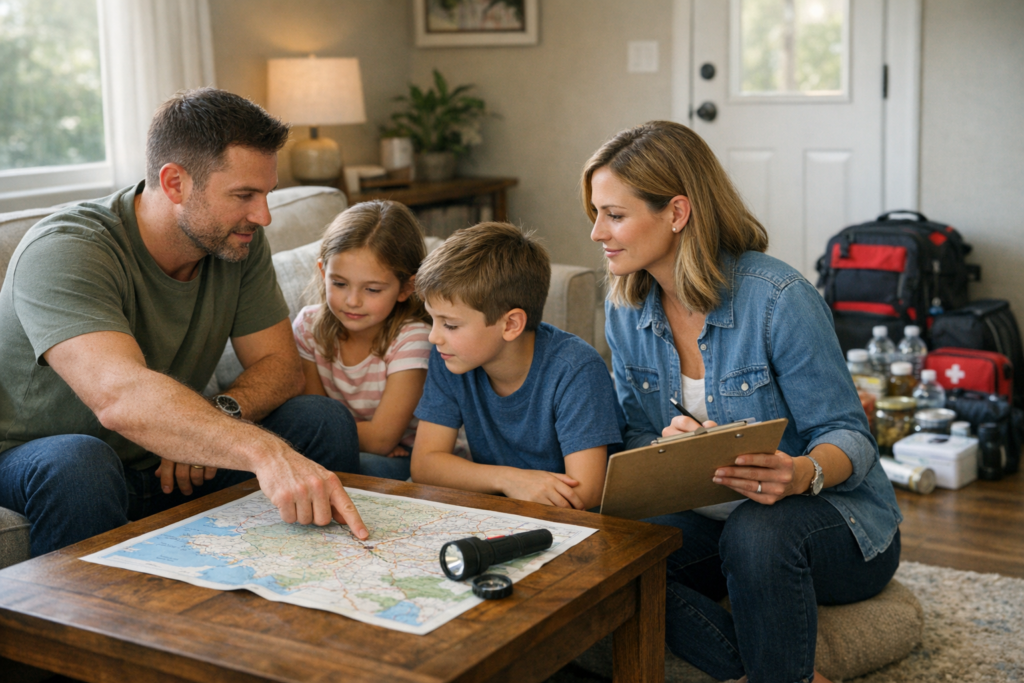
Federal guidance sets 72 hours as the minimum baseline. Households in wildfire zones or mountain areas should stock for a full week when storage allows.
How Much to Stock Per Person
- Water: One gallon per person per day
- Food: Three days of non-perishable calories per person
- Medication: A seven-day supply of prescriptions
A family of four needs 12 gallons of water for three days. Store it in sealed, food-grade containers away from direct sunlight.
What Should Be Included in a Family Disaster Kit
A complete kit covers water, food, medical care, communication, documents, and comfort. Below is the full list our teams recommend to homeowners after we finish a job.
Water and Food Supplies
- One gallon of water per person per day for three days
- Water purification tablets or a portable filter
- Canned proteins, beans, and vegetables
- Peanut butter, granola bars, and dried fruit
- A manual can opener
- Baby formula and food if you have infants
- Pet food for three days
Rotate food and water every six months. Mark expiration dates on the outside of the container.
First Aid and Medical Items
- Adhesive bandages in multiple sizes
- Sterile gauze pads and medical tape
- Antiseptic wipes and antibiotic ointment
- Pain relievers and anti-diarrhea medication
- A seven-day supply of prescription drugs
- A digital thermometer
- Scissors, tweezers, and disposable gloves
- Extra eyeglasses or contact lens supplies
Include a printed list of each family member’s medications and dosages. Pharmacy systems go down when power fails.
Lighting, Power, and Communication
- Flashlights with extra batteries
- A battery-powered or hand-crank radio
- A portable phone charger or power bank
- Glow sticks for children
- Whistles to signal for help
A NOAA weather radio keeps you informed when cell towers overload. Charge power banks fully every few months.
Tools and Sanitation
- A multi-tool or basic wrench set
- Duct tape and plastic sheeting
- Work gloves and dust masks
- Moist towelettes and garbage bags
- Hand sanitizer and toilet paper
- A fire extinguisher rated for home use
A wrench lets you shut off gas or water lines during a leak. We see far less damage in homes where residents knew how to shut off utilities.
Important Documents
Store copies of key papers in a waterproof, sealed bag. Water and fire destroy originals in minutes, and replacing them takes weeks.
- Insurance policies and agent contact information
- Photo IDs, passports, and birth certificates
- Property deeds and vehicle titles
- Bank account and credit card records
- Medical records and vaccination cards
- A list of emergency contacts on paper
Save digital copies to a password-protected cloud account as backup. Photograph each room of your home for insurance claims.
Clothing and Warmth
- One change of clothing per person
- Sturdy shoes or boots
- Rain ponchos
- Emergency mylar blankets
- A sleeping bag per person for cold climates
Colorado nights drop fast even in summer. Cold weather turns a manageable situation dangerous within hours.
Special Needs Your Disaster Kit Should Cover
Every household has requirements a generic checklist misses. Build your kit around the people and animals under your roof.
Families With Infants or Young Children
- Diapers, wipes, and rash cream
- Formula and bottles
- A comfort toy or small blanket
- Coloring books to reduce stress
Households With Pets
- A leash, collar, and ID tags
- Vaccination records in your document bag
- A carrier for each animal
- Food, bowls, and waste bags
Many shelters refuse pets without proof of vaccination. Keep those records with your other documents.
Older Adults and Medical Conditions
- Backup power for medical devices
- Spare hearing aid batteries
- Mobility aids like a cane or walker
- A cooler and ice packs for insulin
Where to Store Your Family Disaster Kit
Keep your main kit in a place everyone can reach in seconds. A hall closet near an exit works better than a basement that might flood.
Build three versions for full coverage:
- Home kit: The full supply for sheltering in place
- Car kit: A smaller set for evacuations or roadside breakdowns
- Grab-and-go bag: Documents, medications, and one day of essentials
Use a plastic bin with a tight lid for the home kit. A backpack works best for the grab-and-go version.

 Posted on Google
How to Maintain Your Kit Year-Round
A kit only helps if the supplies work when you open it. Batteries corrode, food expires, and children outgrow clothing.
Follow this schedule:
- Every six months: Test flashlights and replace expired food and water
- Every year: Update clothing sizes and medication lists
- After each use: Restock immediately, not later
Set a reminder tied to daylight saving time changes. Two dates a year keep the whole kit current.
When Disaster Strikes, Have a Recovery Plan Too
A stocked kit protects your family during the first 72 hours. Once the immediate threat passes, water damage, smoke, and mold become the next problem.
Best Option Restoration handles fire, water, and storm cleanup for homes in the Lakewood area. Fast response limits secondary damage like warped floors and spreading mold.
Keep our number in your grab-and-go bag alongside your insurance details.
Conclusion
A well-stocked family disaster kit covers water, food, first aid, documents, and the special needs of your household for at least 72 hours. Store it where everyone can reach it, and refresh the supplies twice a year.
When damage does happen, call Best Option Restoration at 303-500-3187 or email info@borlakewood.com for cleanup and repair. Add the number to your kit today and visit https://borlakewood.com to learn more.
Sources
- Ready.gov – Build A Kit
- American Red Cross – Survival Kit Supplies
- FEMA – How to Build an Emergency Kit
- CDC – Personal Needs Emergency Kit