

Multi-family fire damage affects multiple units through shared walls, HVAC systems, and structural elements, requiring coordinated response among landlords, tenants, and restoration crews. Quick action on safety, stabilization, and hidden damage in common areas helps get residents home faster.
- Fire spreads beyond the origin unit through ductwork, plumbing chases, and party walls - shut down shared HVAC immediately and document damage separately for each unit to prevent insurance disputes.
- Assign one coordinator to approve all work and provide daily updates to displaced tenants, while keeping personal property claims separate from building policy claims.
- Address hidden damage in shared spaces including duct cleaning, moisture readings on lower floors, and opening party walls to check for soot and char behind surfaces that look fine.
Handling fire damage in a multi-family building requires coordinating repairs across multiple units and shared spaces simultaneously. Smoke travels through shared walls, heat damages common areas, and firefighting water affects floors below. Property managers must address displaced residents, communicate with multiple tenants, work with insurance for various units, and prioritize structural repairs to common elements before individual unit restoration can begin.
A fire in one unit of an apartment building rarely stays in one unit. Smoke travels behind shared walls, heat warps common hallways, and water from firefighting soaks floors below. Multi-family fire damage creates problems that single-family fires never do, because dozens of people and one shared structure are affected at once.
This post covers how to respond in the first hours, how to coordinate multiple tenants, and how to restore shared spaces without leaving hidden damage behind. You will learn the order of steps that keeps a building safe and gets residents back home faster.
Why Multi-Family Fire Damage Is Different
Fire damage in a duplex, fourplex, or apartment complex spreads across property lines that exist on paper but not in the walls. A kitchen fire in unit 3B can leave smoke residue in 3A, 3C, and the units directly above and below.
Shared building systems carry damage further than the flames. HVAC ductwork pulls smoke into units that never saw a spark. Shared plumbing chases and electrical conduits act as pathways for soot and heat.
Three features make these fires harder to manage than a house fire:
- Multiple ownership and tenancy — landlords, tenants, and sometimes an HOA all have a stake.
- Shared structural elements — party walls, roofs, and floor assemblies affect several units.
- Displacement at scale — one fire can force many families out at the same time.
First Steps After Multi-Family Fire Damage
Life safety comes before property every time. Once the fire department clears the scene, the building still may not be safe to enter.
1. Confirm the Building Is Structurally Sound
Do not let residents return until a fire marshal or structural engineer approves entry. Floor assemblies weakened by fire can collapse hours after flames are out. In multi-story buildings, a fire on a lower floor can compromise everything above it.
2. Secure the Property Against Further Loss
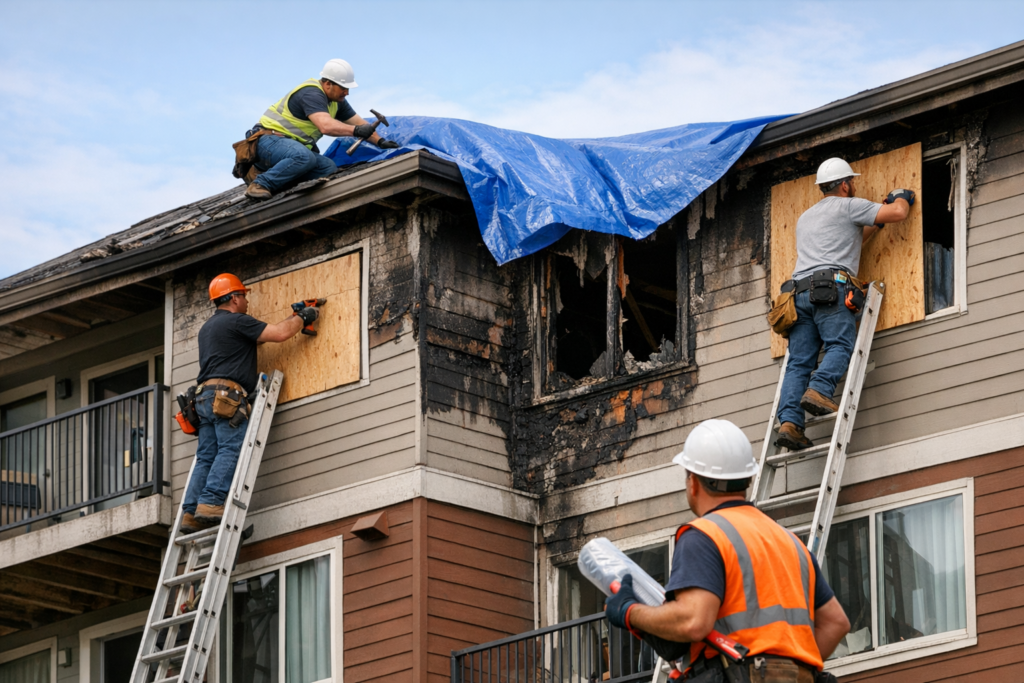
Board up broken windows and tarp roof openings within the first day. Open units invite theft, weather intrusion, and liability for anyone who wanders in. Board-up and stabilization should happen before cleanup begins.
3. Shut Down Shared Systems
Turn off the central HVAC to stop smoke from circulating into unaffected units. Isolate damaged electrical panels and water lines. In a shared building, leaving one system running can spread contamination to units that survived the fire untouched.
4. Document Damage Unit by Unit
Photograph and log damage separately for each affected unit and common area. Insurance claims in multi-family buildings involve overlapping policies. Clear per-unit records prevent disputes over who pays for what.
Coordinating Multiple Tenants and Owners
The people side of a multi-family fire is harder than the physical repair. A single point of contact keeps decisions moving and stops conflicting instructions.
Assign One Coordinator
Name one person — usually the property manager or owner — to approve work and speak for the building. Restoration crews cannot take orders from twelve different tenants. A single approver keeps the timeline intact.
Communicate on a Fixed Schedule
Give displaced residents updates at set times, even when there is little news. Silence breeds panic and phone calls. A short daily message about progress cuts down on friction between tenants and management.
Separate Personal Property Claims
Tenant belongings fall under renters insurance, not the building policy. Building repairs fall under the owner’s policy. Explaining this split early prevents residents from expecting the landlord to replace their furniture.
Track Displacement and Relocation
Keep a record of which units are habitable and which are not. Some tenants may return in days; others may wait weeks. Habitability decisions affect rent obligations and temporary housing benefits.
Restoring Shared Spaces and Hidden Damage
Smoke and water damage in common areas need the same attention as the burned unit. A clean hallway with lingering smoke odor still makes the building feel unsafe to residents.
Clean the HVAC and Ductwork
Smoke residue coats duct interiors and spreads odor every time the system runs. Duct cleaning and sealing are non-negotiable after a fire that reached shared air handling. Skipping this step means the smell returns weeks later.
Address Water Damage on Lower Floors
Firefighting water flows downward and pools in units below the fire. Standing water behind walls breeds mold within 24 to 48 hours. Moisture readings on every affected floor catch damage that eyes miss.
Treat Party Walls and Floor Assemblies
Shared walls between units hide soot, char, and moisture inside cavities. Opening and drying these assemblies matters even when the surface looks fine. A wall that appears clean can hold smoke residue behind the drywall.
Deodorize the Whole Building
Smoke odor migrates far beyond the fire unit in a connected structure. Thermal fogging and hydroxyl treatment reach spaces that wiping cannot. Odor left untreated in one unit spreads back into cleaned units over time.

 Posted on Google
Building Restoration Tips for Property Managers
A few habits shorten recovery and lower disputes. These building restoration tips apply before and after a fire strikes.
- Keep current tenant contact information so you can reach everyone within an hour.
- Store building plans off-site to help crews locate shared systems fast.
- Know your insurance limits for common areas versus individual units.
- Pre-select a restoration company before an emergency forces a rushed choice.
- Test smoke barriers and firestops annually to slow spread between units.
The last point matters most in older buildings. Missing firestops in shared chases let a small fire become a whole-building loss. An annual check is cheaper than a total rebuild.
Working With Insurance on a Multi-Family Claim
Multi-family fire claims involve more parties than a single-family loss. The building policy, each tenant’s renters policy, and sometimes an HOA master policy all overlap.
Documentation decides how smoothly a claim settles. Per-unit photos, moisture logs, and itemized scopes give adjusters what they need. A restoration company that writes detailed estimates speeds up approval and reduces back-and-forth.
Keep receipts for board-up, water extraction, and emergency work. These costs are usually covered as mitigation, and prompt action supports the claim.
Conclusion
Multi-family fire damage demands more coordination than any single-family loss because shared systems, party walls, and many tenants are all affected at once. Move fast on safety and stabilization, assign one point of contact, and treat hidden damage in common areas and ductwork before residents return.
Best Option Restoration handles fire damage in apartment buildings, duplexes, and condos across the Lakewood area, from board-up to full rebuild. Call or text 303-500-3187, email info@borlakewood.com, or visit https://borlakewood.com to get help now.
Sources
- U.S. Fire Administration – Residential Fire Statistics
- National Fire Protection Association – Apartment and Condominium Safety
- U.S. Environmental Protection Agency – Mold Cleanup and Moisture Control