
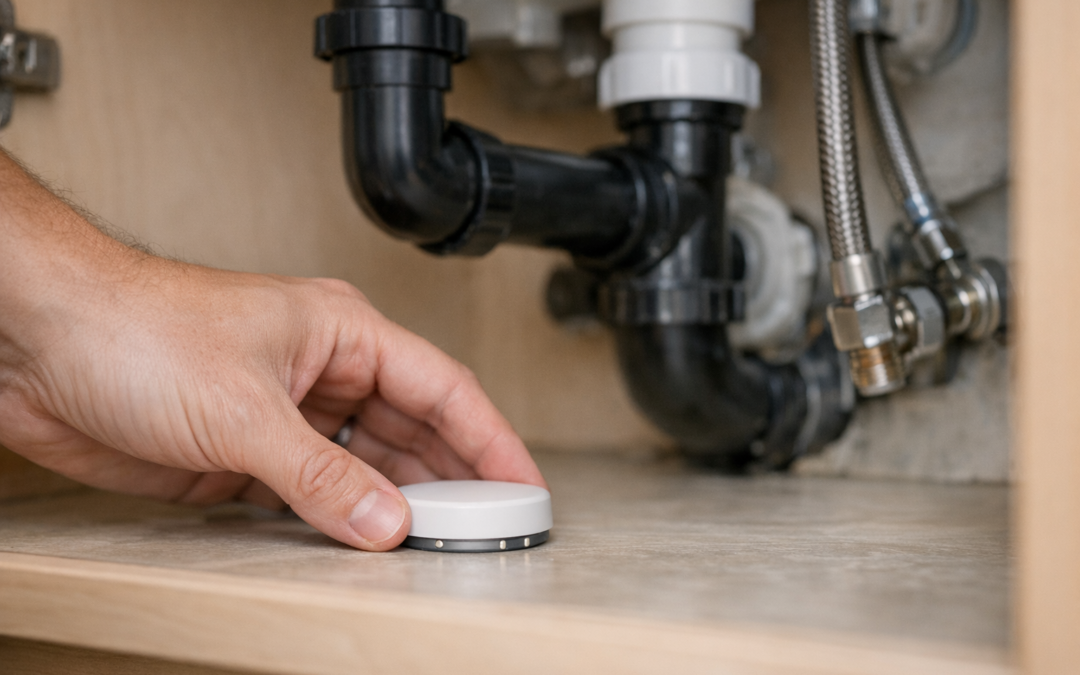
Water leak detection technology catches problems early, giving homeowners hours or days of warning instead of costly surprises. Best Option Restoration handles extraction and drying when leaks cause damage.
- Spot sensors cost $15 to $50 and alarm when contacts touch water, best placed under sinks, water heaters, and appliances. Flow monitors attach to the main water line and detect hidden leaks like slab leaks or pinhole leaks inside walls.
- Automatic shutoff valves close the water supply when a leak is confirmed, providing the strongest protection for empty homes or vacation properties. Smart home devices add real-time phone alerts and temperature readings.
- Detection technology warns you fast but does not dry your home. Mold can begin growing within 24 to 48 hours, so quick extraction and professional drying are needed to prevent lasting damage.
Water leak detection technology uses sensors placed near pipes, water heaters, and appliances to monitor for moisture or unusual water flow. When a sensor detects water where it should not be, it sends an alert to your smartphone or triggers an automatic shutoff valve. This early warning system helps prevent damage by catching leaks within hours rather than weeks, saving you from expensive repairs and mold growth.
A slow leak behind a wall can waste thousands of gallons before you notice a single water stain. By then, the drywall is soft, the framing is damp, and mold has a head start. Water leak detection technology catches problems at the source, giving you hours or days of warning instead of a costly surprise.
This post breaks down the sensors, monitors, and smart shutoff valves that guard your home. You will learn how each type works, where to place it, and which situations call for which tool.
Why Early Leak Detection Matters More Than You Think
Water damage is one of the most common and expensive home insurance claims in the country. The average claim runs into the thousands, and much of that comes from leaks that went unseen for weeks.
The damage rarely stays put. Water travels along joists, drips into ceilings, and pools under flooring. A pinhole leak in a copper supply line can release water 24 hours a day without any visible sign.
Early detection changes the math. A sensor that alerts you within minutes turns a five-figure restoration into a simple repair. That gap between “caught early” and “caught late” is where the value lives.
Water Leak Detection Technology: The Main Types
Water leak detection technology falls into three groups: spot sensors, flow-based monitors, and automatic shutoff systems. Each answers a different question about your plumbing.
1. Spot Leak Sensors
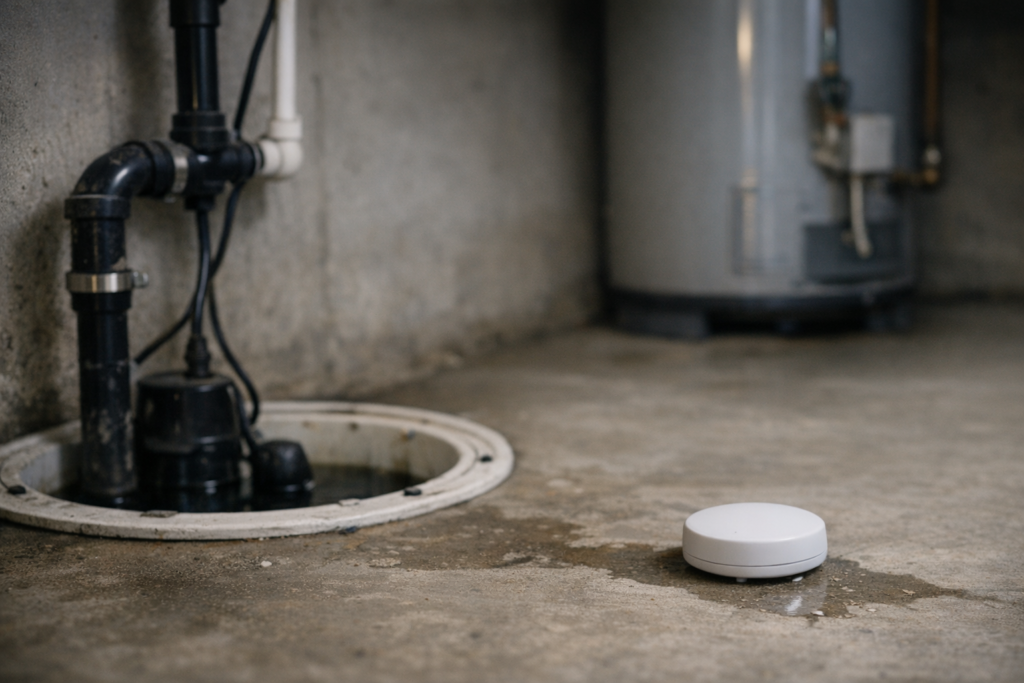
A spot sensor is a small puck or strip that alarms when its contacts touch water. You place it exactly where leaks tend to start.
These devices are the cheapest entry point, usually running $15 to $50 each. Battery-powered models last a year or more and send alerts to your phone over Wi-Fi.
Best placement spots include:
- Under kitchen and bathroom sinks
- Behind or beneath the water heater
- Next to the washing machine and its hoses
- Around sump pumps and basement floor drains
- Under the dishwasher and refrigerator water line
The limitation: spot sensors only catch water that reaches them. A leak inside a wall cavity may never trigger a floor-level puck.
2. Flow-Based Water Monitors
A flow monitor attaches to your main water line and watches how water moves through the whole house. It learns your normal patterns and flags anything unusual.
If a faucet runs for six hours straight at 3 a.m., the monitor knows that is not normal. It sends an alert before a hidden pipe floods a room.
Flow monitors catch leaks that spot sensors miss entirely, including:
- Slab leaks under a concrete foundation
- Pinhole leaks inside finished walls
- Running toilets that quietly waste hundreds of gallons
- Underground irrigation line breaks
Installation often requires a plumber, and units cost more than spot sensors. The trade-off is whole-home coverage from a single point.
3. Automatic Shutoff Valves
An automatic shutoff valve closes your water supply the moment a leak is confirmed. It acts even when you are asleep, at work, or away on vacation.
Many flow monitors include this feature built in. Others pair with a separate motorized valve installed on the main line.
This is the strongest protection for empty homes. A burst supply line while you are away for a week can release tens of thousands of gallons. A shutoff valve stops that in seconds.
Smart Home Devices That Add Another Layer
Smart home devices tie your leak sensors into the same app that runs your lights and thermostat. Alerts reach you anywhere your phone has signal.
Many models connect to voice assistants and hubs, letting you check status with a spoken command. Some link to your smart thermostat and cut heat if a freeze risk threatens your pipes.
When shopping, look for smart home devices that offer:
- Real-time phone alerts so you hear about a leak within a minute
- Temperature and humidity readings that warn of freeze or damp conditions
- Battery-low notifications so a dead sensor never leaves you exposed
- Local hub backup that keeps working if the internet drops
Matching the Technology to Your Home
The right setup depends on your house, your plumbing, and how much time you spend away.
Older Homes With Aging Pipes
Homes built before 1990 may have galvanized steel or early copper supply lines. Pinhole leaks and corrosion are common risks here.
A flow monitor on the main line gives the best warning for these hidden failures. Pair it with spot sensors at every fixture for full coverage.
Homes You Leave for Weeks at a Time
Vacation homes and rental properties need protection that works without you. An automatic shutoff valve is the priority.
Set it to close the supply after any confirmed leak. That single device prevents the worst outcome: a slow flood that runs for days into an empty house.
Newer Homes With Modern Plumbing
Newer construction still faces risks from appliance failures and connection points. Washing machine hoses and water heater tanks fail regardless of home age.
Spot sensors at each appliance handle most of the risk here at low cost. Add a flow monitor later if you want whole-home visibility.

Best Option responded immediately. Paul and his team were incredibly efficient, courteous, friendly, and responsive. Also, I have needed help from Paul as much as 8 months after the initial job and he has responded within one day of my reaching out to him with photos needed to prove original home status to reconstruction contractors. I would not hesitate to recommend this excellent company.
 Posted on Google
What Technology Cannot Do
Leak detection technology warns you fast, but it does not dry your home. Once water reaches drywall, insulation, or subfloor, the damage clock starts.
Mold can begin growing within 24 to 48 hours of the water making contact. A sensor that alerts you at hour one buys time, but only if you act on that alert.
The alert is step one. Extraction and drying are step two. Sensors and cleanup work together, not as substitutes for one another.
Steps to Take the Moment You Get an Alert
- Shut off the water at the main valve if it did not close automatically
- Move furniture and belongings away from the wet area
- Photograph the damage for your insurance claim
- Call a restoration team to extract water and start drying
Speed matters. Every hour water sits raises the odds of warped floors, ruined baseboards, and mold behind walls.
How Best Option Restoration Fits In
Detection buys you warning. Best Option Restoration handles what comes next when a leak has already caused damage.
Our Lakewood team responds around the clock with commercial extraction, structural drying, and moisture mapping. We find water that has migrated into places a homeowner cannot see or reach.
We use meters and thermal cameras to confirm that walls and subfloors are dry before we close the job. A surface that feels dry can still hold enough moisture to grow mold.
Conclusion
Spot sensors, flow monitors, and automatic shutoff valves each guard a different part of your home. Pairing water leak detection technology with a fast response gives you the best defense against costly water damage. Detection warns you early, and quick extraction stops the damage from spreading.
If a leak has already reached your floors or walls, call Best Option Restoration at 303-500-3187, text 303-500-3187, or email info@borlakewood.com. You can learn more at https://borlakewood.com.
Sources
- Insurance Information Institute – Facts + Statistics: Homeowners and Renters Insurance
- U.S. Environmental Protection Agency – Fix a Leak Week
- Centers for Disease Control and Prevention – Mold FAQs