
Best Option Restoration explains how HVAC systems become breeding grounds for mold when moisture and debris accumulate, and outlines maintenance steps to prevent growth before it spreads into homes.
- Mold thrives inside HVAC units because they provide moisture, organic material from dust, and stable temperatures. Common failure points include clogged drain lines, dirty coils, and oversized systems that fail to remove humidity.
- Regular maintenance tasks like flushing condensate drains, cleaning evaporator coils, and replacing filters every 30 to 90 days keep moisture moving out of the system instead of pooling inside.
- Warning signs include musty smells when the system runs, visible growth around vents, and water stains near the air handler. Once mold spreads into ductwork or walls, professional remediation is needed.
Regular HVAC maintenance prevents mold by addressing the moisture that builds up inside your system. Your HVAC unit pulls in humidity, cools it, and creates condensation at every stage. Without routine cleaning and inspection, this moisture accumulates in ducts, coils, and drain pans - creating ideal conditions for mold growth that spreads throughout your home via circulating air.
Mold does not start on your walls. It starts inside the equipment that moves air around your home. Your HVAC system pulls in humidity, cools it, and creates condensation at every stage.
Regular HVAC maintenance keeps that moisture moving out of the system instead of pooling inside it. When water sits still, mold spores find a food source and multiply. This post explains where moisture builds up, why it turns into mold, and what maintenance steps stop it.
At Best Option Restoration, our crews open up neglected systems every week. What we find inside tells a clear story about what went wrong.
Why HVAC Systems Become Mold Factories
An air conditioner works by cooling air below its dew point. That cooling creates condensation on the evaporator coil. A functioning system drains this water away before it collects.
Mold needs three things: moisture, organic material, and a stable temperature. An HVAC system supplies all three at once. Dust caught on wet coils becomes the food source, and the cabinet stays dark and warm.
The most common failure points we see inside residential units are predictable:
- Clogged condensate drain lines that let water back up into the pan
- Cracked or rusted drain pans that hold standing water for days
- Dirty evaporator coils coated in dust that traps moisture
- Oversized systems that cool fast but never run long enough to remove humidity
- Leaky return ducts pulling humid air from crawl spaces and attics
How HVAC Maintenance Prevents Moisture Buildup
HVAC maintenance prevents mold by removing the standing water and organic debris that mold needs to grow. Each maintenance task targets a specific moisture problem before it becomes a colony.
Clearing the Condensate Drain Line
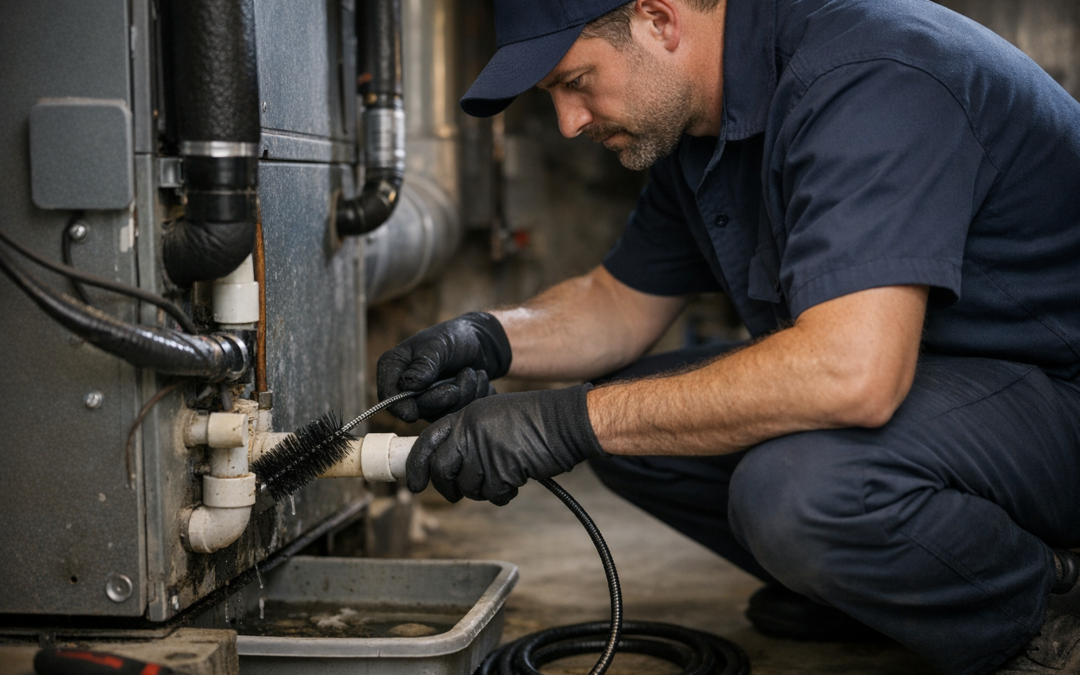
The condensate drain carries water from the coil pan to the outside or a floor drain. Algae and dust clog this narrow line over a summer of heavy use. When it clogs, the pan overflows and water spreads into the surrounding cabinet and floor.
A technician flushes this line and confirms water flows freely. Many newer systems have a safety float switch that shuts the unit off when water backs up. Testing that switch during maintenance stops a slow leak from soaking drywall for weeks.
Cleaning the Evaporator Coil
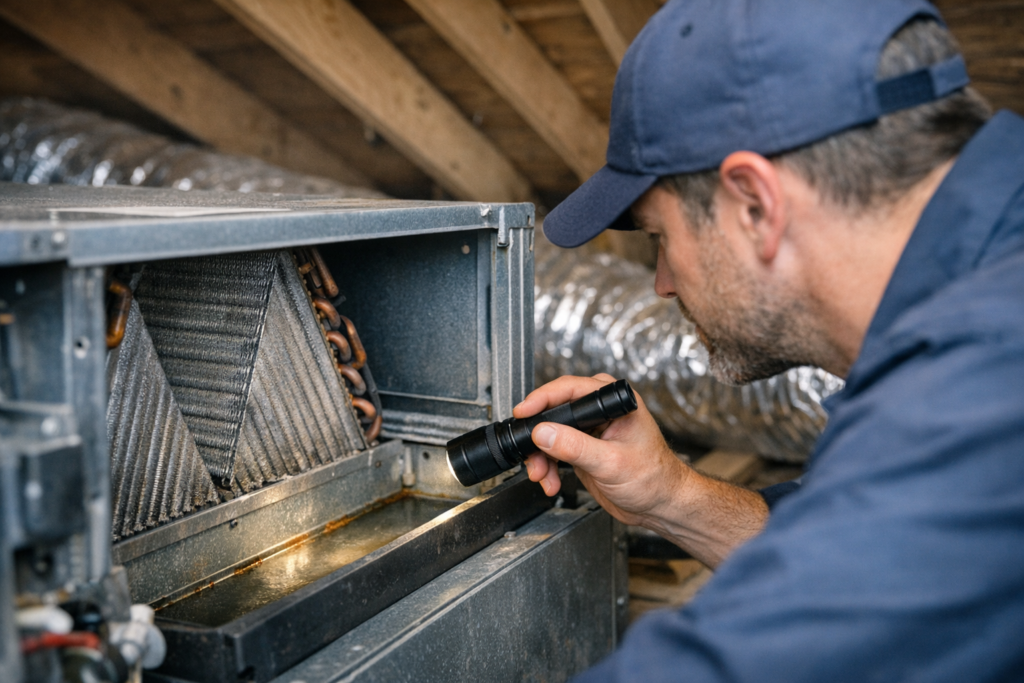
A dirty coil holds moisture longer and drips less predictably. Dust builds a film that water clings to instead of draining. Cleaning the coil lets condensation shed quickly into the pan and out the drain.
We have opened air handlers where the coil looked more like a gray felt pad than metal fins. That layer was pure mold food, wet every time the unit ran.
Replacing Filters on Schedule
A clogged filter restricts airflow across the coil. Reduced airflow makes the coil colder than designed, which can cause frost and then extra water when it melts. A clean filter keeps airflow steady and moisture predictable.
Change filters every 30 to 90 days depending on the type. Homes with pets or nearby construction need the shorter interval.
The Humidity Problem Most Homeowners Miss
Indoor humidity above 60 percent lets mold grow on surfaces even away from the HVAC unit. Your system controls humidity only when it is sized and running correctly.
An oversized air conditioner cools a room fast, then shuts off. It never runs long enough to pull real moisture out of the air. The room feels cold but clammy, and mold appears on baseboards and closet walls.
During maintenance, a technician can measure indoor humidity and check runtime patterns. If the system short-cycles, that is a warning sign worth acting on. Keeping indoor humidity between 30 and 50 percent is the target for preventing mold.
Duct Leaks That Import Moisture
Return ducts running through a crawl space or attic can pull in unconditioned, humid air. That air hits the cold coil and drops its moisture inside the system. Sealing duct leaks stops this hidden humidity source.
We have traced musty smells back to a single disconnected return duct in an attic. Once sealed, the moisture load on the coil dropped and the odor cleared.
A Maintenance Schedule That Stops Mold
Consistency matters more than any single visit. Mold does not need much time when moisture is constant. Follow this schedule to stay ahead of it:
- Monthly: Check and replace the air filter as needed
- Every spring: Have a technician clean the coil and flush the drain line before cooling season
- Mid-summer: Inspect the drain pan and confirm the float switch works
- Every fall: Check ductwork for leaks and inspect insulation for damp spots
- Year-round: Watch indoor humidity with a simple hygrometer
This rhythm catches moisture problems in weeks, not after a colony has spread. A drain line flush costs far less than tearing out moldy drywall.

 Posted on Google
Warning Signs Your HVAC Is Growing Mold
Mold inside an HVAC system rarely stays hidden. The air pushes spores and odor into every room. Watch for the following signals:
- A musty smell that gets stronger when the system runs
- Visible black or green growth around vents and registers
- Water stains on the ceiling near the air handler
- Family members with worsening allergy or respiratory symptoms indoors
- Water pooling near the indoor unit or furnace
Any one of these means the moisture is already winning. At that point maintenance alone is not enough. The existing growth needs removal before it spreads farther.
When Maintenance Is Not Enough
Once mold colonizes ductwork or drywall, cleaning it takes containment and the right equipment. Spraying store-bought cleaner into a vent scatters spores instead of killing the source. The colony returns within weeks.
Best Option Restoration handles mold that has moved past the equipment into the building. Our crews contain the affected area, remove damaged material, and dry the space to stop regrowth. We also find the moisture source, because mold always comes back to standing water.
If your HVAC system has a leak or a musty smell you cannot clear, act before the growth spreads behind walls. Early action keeps a small repair from becoming a full remediation.
Key Takeaways
Regular HVAC maintenance stops mold by clearing drain lines, cleaning coils, and controlling indoor humidity between 30 and 50 percent. The moisture that mold needs collects inside neglected systems first, then spreads into your home. Catch it early with seasonal service and a filter you change on schedule.
If you smell mold, see growth around your vents, or find water near your air handler, contact Best Option Restoration. Call or text 303-500-3187, email info@borlakewood.com, or visit https://borlakewood.com.
Sources
- U.S. Environmental Protection Agency – Mold and Health
- U.S. Environmental Protection Agency – A Brief Guide to Mold, Moisture and Your Home
- U.S. Department of Energy – Maintaining Your Air Conditioner
- Centers for Disease Control and Prevention – About Mold