
We explain how choosing flood resilient materials before disaster strikes can cut recovery costs by thousands and shorten cleanup from weeks to days. After drying out hundreds of Lakewood-area homes, we see that homes built with water-tolerant materials recover quickly while those with standard drywall and particleboard get gutted.
- Closed-cell spray foam insulation, cement board, and removable PVC wainscoting panels resist water damage in walls. These materials do not absorb water or support mold growth.
- Ceramic tile, sealed concrete, rubber flooring, and vinyl plank with stone-plastic composite cores survive flooding. Avoid carpet, hardwood, and laminate in below-grade spaces.
- Replace particleboard cabinets with marine-grade plywood or metal options. Raise mechanical equipment at least one foot above expected flood levels to protect expensive systems.
The best flood resilient materials include concrete, ceramic tile, and pressure-treated lumber for structural elements. For flooring, choose porcelain tile, polished concrete, or vinyl plank. Use marine-grade plywood, solid surface countertops, and fiber cement board for walls. These materials resist water absorption, dry quickly after flooding, and prevent mold growth - reducing recovery time and repair costs significantly.
Water rises fast, but the damage it leaves behind depends on what your walls, floors, and cabinets are made of. Choosing the right flood resilient materials before disaster strikes can cut your recovery costs by thousands and shorten cleanup from weeks to days.
After drying out hundreds of Lakewood-area homes, we see the same pattern. Homes built with water-tolerant materials dry out and reopen quickly. Homes built with paper-faced drywall and particleboard cabinets get gutted.
Below are the materials that hold up when water gets in, plus where each one belongs in a home renovation for floods.
What Makes a Material Flood Resilient?
A flood resilient material is one that survives at least 72 hours of water contact and cleans up without needing replacement. FEMA calls this “flood damage-resistant.”
The best-performing materials share three traits:
- They don’t absorb standing water or wick it upward into wall cavities.
- They resist mold growth because mold needs organic food to feed on.
- They clean and dry without warping, swelling, or crumbling.
Paper, wood pulp, and gypsum fail on all three. Concrete, closed-cell foam, and certain plastics pass.
Best Flood Resilient Materials for Walls
Wall assemblies take the worst hit during a flood because water sits inside the cavity long after the room looks dry.
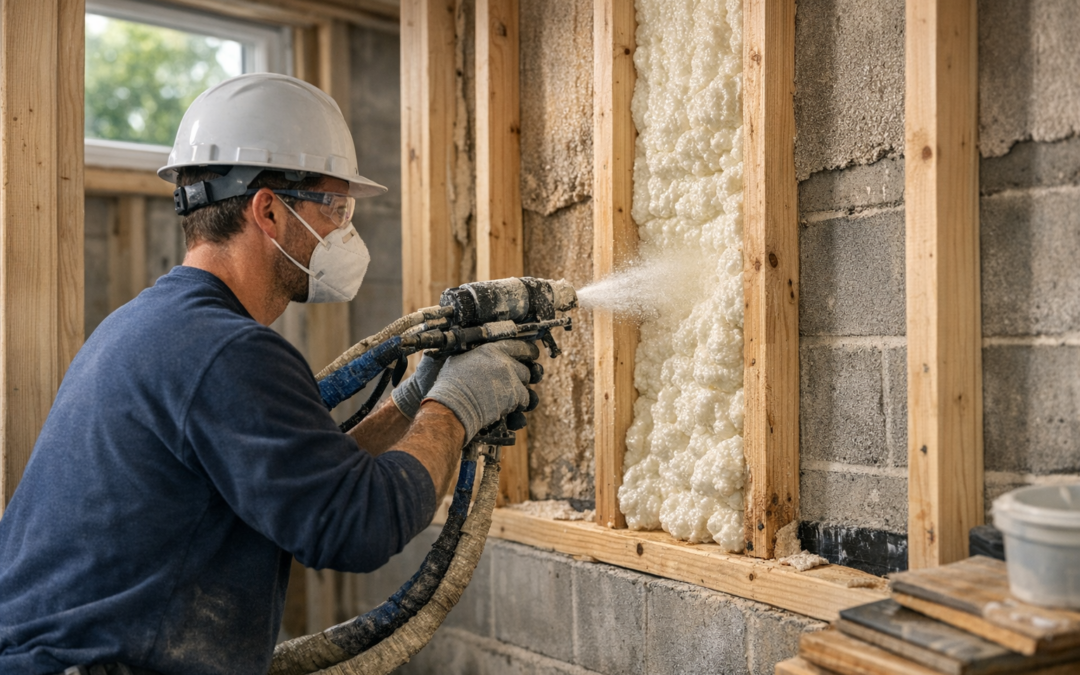
Closed-Cell Spray Foam Insulation
Closed-cell spray foam does not absorb water and keeps its R-value after a flood. Fiberglass batts, by contrast, hold water like a sponge and must be torn out every time.
We have seen crawlspaces insulated with closed-cell foam pass inspection after a flood with no removal needed. That single choice saved the homeowner an entire wall demolition.
Cement Board and Fiber-Cement Panels
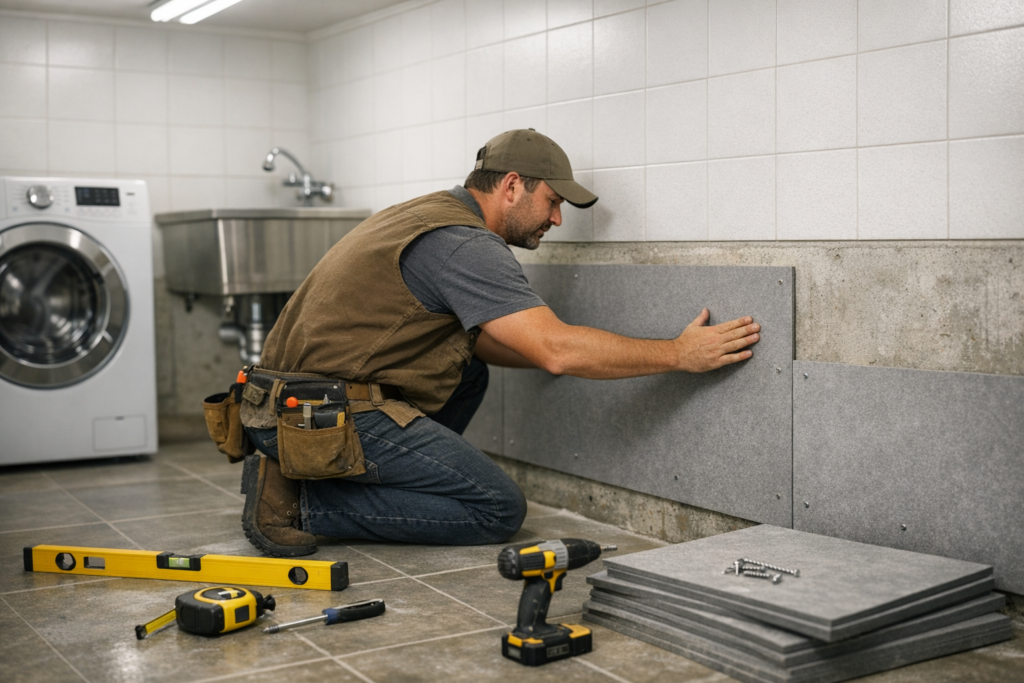
Cement board shrugs off water contact and pairs with tile for a fully washable wall. It works well in basements, laundry rooms, and lower bathroom walls.
Fiber-cement sheeting also resists rot and mold. Unlike drywall, it does not need to be cut out at the flood line.
Removable Wainscoting Panels
For finished basements, PVC or foam wainscoting installed as removable panels lets water pass without destroying the finish. Panels pop off, dry, and reinstall.
Best Flood Resilient Flooring
Flooring is where homeowners lose the most money after a flood. Carpet and glued laminate almost always end up in a dumpster.
The materials that survive water contact best:
- Ceramic and porcelain tile — waterproof, mold-proof, and cleanable with a mop.
- Sealed concrete — nothing to swell or lift, ideal for basements.
- Rubber flooring — flexible, non-absorbent, and easy to sanitize.
- Vinyl plank rated for wet areas — check that it uses a rigid, waterproof core.
Avoid solid hardwood, engineered wood, and carpet in any space below grade. In Lakewood basements, tile over sealed concrete outlasts every other choice we install.
A Note on Vinyl Plank
Not all luxury vinyl plank survives a flood. Products with a wood-composite core swell when submerged. Choose planks with a stone-plastic composite core if flooding is a real risk.
Cabinets, Trim, and Doors That Survive Water
Kitchen and bathroom cabinets are a common casualty because most are built from particleboard.
Particleboard swells, delaminates, and grows mold within days of getting wet. The water-tolerant replacements:
- Marine-grade plywood cabinet boxes — resist delamination far better than particleboard.
- Stainless steel or metal base cabinets — common in restaurants for a reason.
- PVC or polymer trim and baseboards — no rot, no swelling at the floor line.
- Solid-core doors with fiberglass or metal skins instead of hollow-core interior doors.
Mounting base cabinets on raised feet or a tiled toe-kick also keeps the boxes above shallow flood levels.
Insulation, Fasteners, and the Small Details
The materials nobody sees decide how fast a home dries out.
- Stainless or hot-dipped galvanized fasteners resist the corrosion that plain steel screws suffer after a soak.
- Closed-cell foam or foam-board insulation beats fiberglass and cellulose in every flood scenario.
- Mold-resistant, paperless drywall uses a fiberglass mat instead of paper facing.
Paperless drywall matters because standard drywall paper feeds mold within 48 hours of getting damp.

 Posted on Google
How to Prioritize a Flood Resilient Renovation
You do not have to rebuild everything at once. Start where water enters and where damage costs the most.
- Basements and crawlspaces first — the lowest point floods most.
- Lower walls and flooring — replace the first two feet with water-tolerant materials.
- Kitchen and bath cabinetry — swap particleboard boxes during your next remodel.
- Mechanical equipment — raise the furnace, water heater, and electrical panel above expected flood height.
FEMA recommends elevating utilities at least one foot above the base flood elevation for your area. That single step protects the most expensive equipment in the home.
Materials to Avoid Below the Flood Line
Some common building products almost guarantee a full gut after a flood:
- Paper-faced gypsum drywall
- Fiberglass batt insulation
- Particleboard and MDF cabinets
- Carpet and carpet pad
- Solid and engineered hardwood in basements
Replacing any of these with a water-tolerant equivalent turns a total loss into a quick cleanup.
Conclusion
Flood resilient materials—closed-cell foam, cement board, tile, sealed concrete, and marine-grade plywood—let a flooded home dry out and reopen instead of getting gutted. Focus first on basements, lower walls, and cabinetry, and raise your mechanical equipment above expected water levels. A smart home renovation for floods pays for itself the first time water rises.
Best Option Restoration helps Lakewood homeowners plan flood-resistant repairs and responds fast when water damage hits. Call or text 303-500-3187, email info@borlakewood.com, or visit https://borlakewood.com.
Sources
- FEMA – Homeowner's Guide to Retrofitting (P-312)
- FEMA – Flood Damage-Resistant Materials Requirements (Technical Bulletin 2)
- EPA – Mold Cleanup in Your Home