
This post explains how Colorado businesses can prepare for natural disasters like hail, wildfire, flooding, and heavy snow by creating a customized readiness plan rather than relying on generic checklists.
- Business disaster preparation should address building-specific weak points including roof age, window exposure, utility placement, and drainage slope. A written commercial disaster plan assigns roles, lists contacts, and sets recovery priorities.
- Protect data with cloud backups tested monthly and raise physical inventory six inches off floors. Review insurance policies for flood coverage, business interruption, and ordinance coverage before storms hit.
- Train staff on utility shutoffs and keep printed contact lists available. Line up a restoration partner like Best Option Restoration in advance since mold can start within 24 to 48 hours of flooding.
Business disaster preparation starts with identifying location-specific risks like hail, wind, wildfire, flooding, and heavy snow. Create an emergency response plan, secure physical assets, back up data offsite, and review insurance coverage annually. Establish communication protocols for employees and customers. Proper preparation can reduce downtime from weeks to just days after a disaster strikes.
A single hailstorm can shut down a Lakewood storefront for weeks if the roof fails and water reaches inventory. Colorado businesses face wind, wildfire, flash flooding, and heavy snow load in the same calendar year. Business disaster preparation reduces that downtime from weeks to days.
This post walks you through building a readiness plan sized for your operation. You will learn what to document, what to stock, and who to call before damage happens.
Why Business Disaster Preparation Matters More Than a Generic Checklist
Most downloadable checklists assume every business faces the same threats. A restaurant with walk-in coolers has different risks than a dental office with digital records.
Effective business disaster preparation starts with the hazards specific to your building and county. In Jefferson County, that means hail, grass fires along the foothills, and spring snowmelt flooding.
According to FEMA, roughly 25% of businesses do not reopen after a major disaster. The gap between reopening and closing usually comes down to preparation done months earlier.
Identify Your Building’s Actual Weak Points
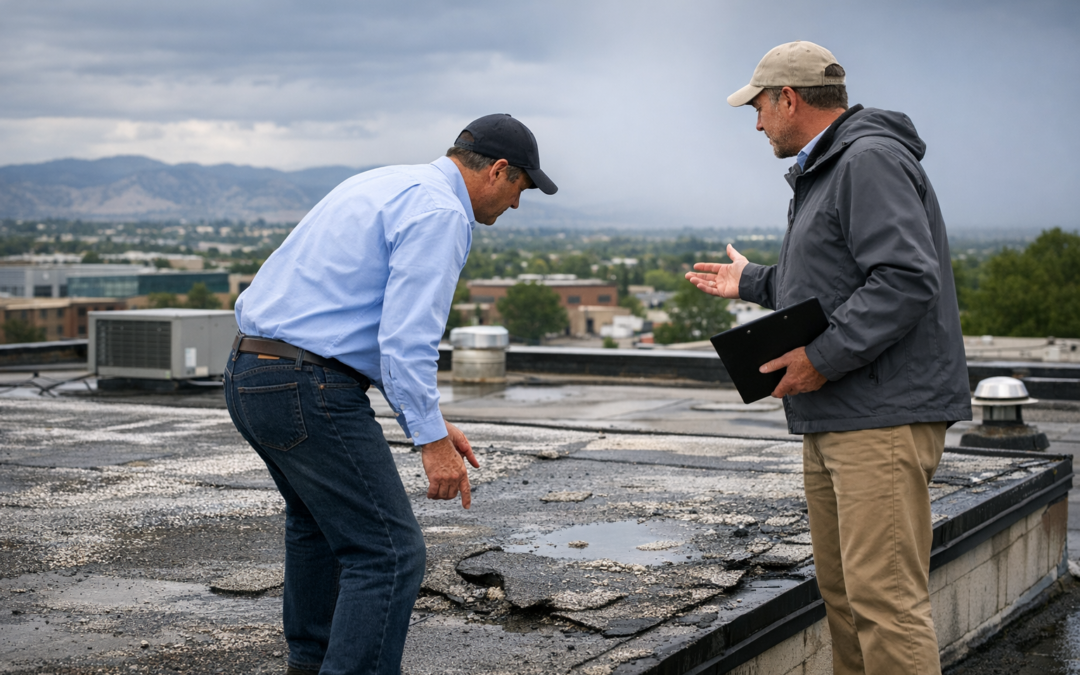
Walk your property and note where water could enter. Flat commercial roofs, loading dock seals, and basement floor drains are common failure spots.
- Roof age and material — asphalt over 15 years old fails under Colorado hail.
- Window exposure — west and south-facing glass takes the worst wind-driven debris.
- Utility placement — electrical panels below grade flood first.
- Drainage slope — parking lots that pitch toward the building push water inside.
Build a Commercial Disaster Plan in Seven Steps
A commercial disaster plan is a written document that assigns roles, lists resources, and sets recovery priorities before an emergency. Follow these steps to create one.

- Assign a coordinator. One named person makes decisions during the event, with a backup if they are unavailable.
- Map your critical functions. List what must run first: payroll, order fulfillment, patient records.
- Document vendors and contacts. Insurance agent, landlord, IT provider, and restoration company on one page.
- Set communication rules. Decide how staff learn whether to report to work.
- Protect your data. Store backups offsite or in the cloud, tested monthly.
- Stock physical supplies. Sandbags, tarps, wet-dry vacuum, and a battery lantern per exit.
- Schedule a drill. Run one tabletop scenario each quarter so staff know their role.
Keep this document short. A ten-page binder no one reads helps no one during a flood at 2 a.m.
Put Recovery Priorities in Writing
Decide now which equipment gets restored first. A dental practice restores its imaging server before the waiting room carpet.
Rank your assets by revenue impact. Anything that stops income should top the list.
Protect Documents, Data, and Inventory
Paper records and computer servers rarely survive standing water. Both need a plan that assumes the worst.
Digital Records
Back up files to a cloud service and a physical drive kept offsite. Test a restore once a month to confirm the backup works.
Store scanned copies of your lease, insurance policy, and vendor contracts in that same backup. You will need policy numbers within hours of filing a claim.
Physical Inventory
Raise stock off the floor on pallets or steel shelving. Six inches of clearance keeps most flash-flood water away from goods.
Photograph your inventory and equipment annually. Timestamped images speed up insurance claims and reduce disputes over value.
Review Your Commercial Insurance Before the Storm
Standard property policies exclude flood damage in most cases. Many Colorado owners learn this only after snowmelt reaches the floor.
- Flood coverage — purchased separately, often with a 30-day waiting period.
- Business interruption — pays lost income during closure, but only if listed on the policy.
- Extra expense coverage — funds a temporary location while yours is repaired.
- Ordinance or law coverage — pays to rebuild to current code, which older buildings need.
Call your agent and ask what a burst pipe or hail claim would actually pay. Read the deductible for wind and hail separately, since Colorado policies price it high.

 Posted on Google
Prepare Your Staff and Physical Building
Employees who know the plan act fast. Employees left guessing create injury risk and delay.
Train and Assign Roles
Post the shutoff locations for water, gas, and electricity near each panel. Show two staff members how to operate each one.
Keep a printed contact tree at the front desk and in the coordinator’s vehicle. Phones die and networks fail during widespread events.
Harden the Building
Small upgrades cut damage before a storm arrives. Trim tree limbs within ten feet of the roofline to reduce wind debris.
- Install backflow valves on floor drains to block sewer backup.
- Anchor rooftop HVAC units against high wind.
- Seal loading dock gaps with rubber sweeps.
- Keep gutters clear before spring runoff and monsoon season.
Know Who to Call Before Damage Spreads
Water damage worsens by the hour. Mold can start within 24 to 48 hours of a flood, according to the EPA.
The step most owners skip is lining up a restoration partner in advance. Having Best Option Restoration’s number in your commercial disaster plan means one call starts water extraction and drying the same day.
Best Option Restoration handles water extraction, structural drying, fire and smoke cleanup, and mold remediation for Lakewood-area businesses. We work directly with your insurance adjuster to document the loss.
Key Takeaways
Strong business disaster preparation combines a written plan, tested data backups, current insurance, and a restoration contact ready before the storm. Match every step to the real hazards your building faces, not a generic template. The businesses that reopen fastest are the ones that planned when skies were clear.
Ready to protect your operation? Call or text Best Option Restoration at 303-500-3187, email info@borlakewood.com, or visit https://borlakewood.com to add a restoration partner to your plan.
Sources
- FEMA – Plan Ahead for Disasters
- Ready.gov – Business Preparedness
- EPA – Mold and Moisture
- FloodSmart.gov – Why Buy Flood Insurance