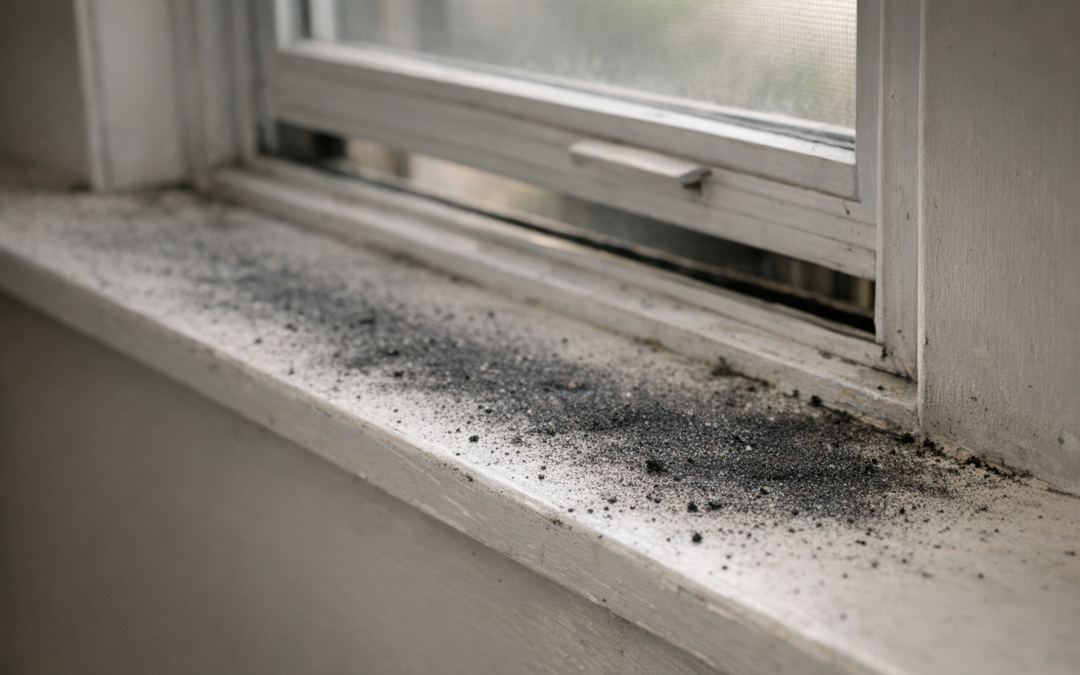
A wildfire can be 30 miles away and still leave soot on your windowsills, a sharp smell in your closets, and fine particles circulating through your vents. Wildfire smoke damage reaches homes that never saw a flame. Along Colorado’s Front Range, that gap between “my house didn’t burn” and “my house is fine” catches many Lakewood homeowners off guard.
This post covers what smoke actually does to your home, how to respond in the first 48 hours, and when cleanup moves past what a bucket and sponge can fix. You will learn how to protect your health, document damage for insurance, and decide whether you need help.
Why Wildfire Smoke Damage Happens Without Flames
Smoke travels far beyond the fire itself. Smoke from wildfires tens or hundreds of miles away can affect your home and your health, according to the EPA.
Wildfire smoke is a mixture of gases and fine particles produced when trees, buildings, and other materials burn. It contains carbon monoxide, carbon dioxide, particulate matter, and other compounds that vary depending on what is burning and how hot the fire is.
The particle that matters most is PM2.5. The fine particles the EPA says pose the greatest risk to health are small enough that a human hair is about 30 times wider.
How Smoke Gets Inside a Closed House
You do not have to leave a window open for smoke to enter. Wildfire smoke can seep into a home through open doors and windows, HVAC systems, or small cracks and gaps, affecting indoor air quality even if the home is outside the fire zone.
Once inside, the particles settle into porous materials. Smoke particles can be absorbed into porous materials, causing damage to the materials themselves and affecting the health of anyone who inhales them or has skin contact.
That is why a home can smell smoky weeks later with no visible black film. Upholstery, carpet, insulation, closets, dust reservoirs, mechanical components, and ventilation pathways can continue releasing odor even after exposed surfaces have been wiped.
The Health Risk Is Real Even Miles From the Fire
Smoke that enters your home raises indoor particle levels. If outdoor smoke enters the home, indoor particle levels can rise.
Some people feel it faster and harder than others. While everyone can be affected by wildfire smoke, healthy adults are usually not at major risk; however, people with heart or lung disease, older adults, children and teenagers, and people more likely to be exposed are at increased risk of health effects.
Longer-term exposure concerns go past PM2.5. The EPA’s indoor air guidance on volatile organic compounds lists eye, nose and throat irritation, headaches, loss of coordination and nausea among the effects, with damage to the liver, kidneys and central nervous system and, for some compounds, cancer among the longer-term concerns.
What to Do in the First 48 Hours After Wildfire Smoke
Your first steps shape both your health and your insurance claim. Work in this order:
- Follow safety instructions first. Follow public safety and evacuation instructions before addressing property damage.
- Keep generators outside. Always put generators outside well away from doors, windows, and vents, and never use a generator inside homes, garages, crawlspaces, sheds, or similar areas.
- Photograph the smoke path. Document windowsills, vents, corners, and any discolored surfaces before you touch anything.
- Control ash and soot without spreading it. Avoid dry wiping large areas, which pushes particles deeper into surfaces and the air.
- Limit movement of smoke-exposed items. Limit movement of smoke-damaged contents and document visible damage.
- Use filtered air inside. Public health advice for protection from smoke exposure is to stay indoors, preferably in a “clean room” with filtered air, close windows and doors, and minimize physical exertion.
Why Not to Paint or Mask the Odor
Covering the smell does not remove the source. Painting over smoke-stained surfaces without proper odor neutralization is a particularly common reason the smell returns within weeks of what seemed like a finished job.
The two problems are separate. Visible soot and smoke odor are separate problems. Solving one does not solve the other.
Where Hidden Smoke Damage Lives in Your Home
Smoke does not stop at the rooms you use most. Smoke damage can affect areas far from the flames, including rooms, ductwork, and belongings that appear untouched.
These spots deserve a closer look when odor lingers:
- HVAC systems and ductwork — they pull smoke particles in and redistribute them every time the system runs.
- Wall and ceiling cavities — wall cavities, ceiling voids, attic spaces, recessed fixtures, and utility penetrations deserve attention when odors persist without an obvious surface source.
- Closets and cabinets — it is common to find smoke contamination in closets, cabinets, and rooms that show no visible fire damage.
- Soft contents — upholstery, carpet, clothing, and insulation hold odor longest.
Cleaning Your HVAC System and Air After Smoke
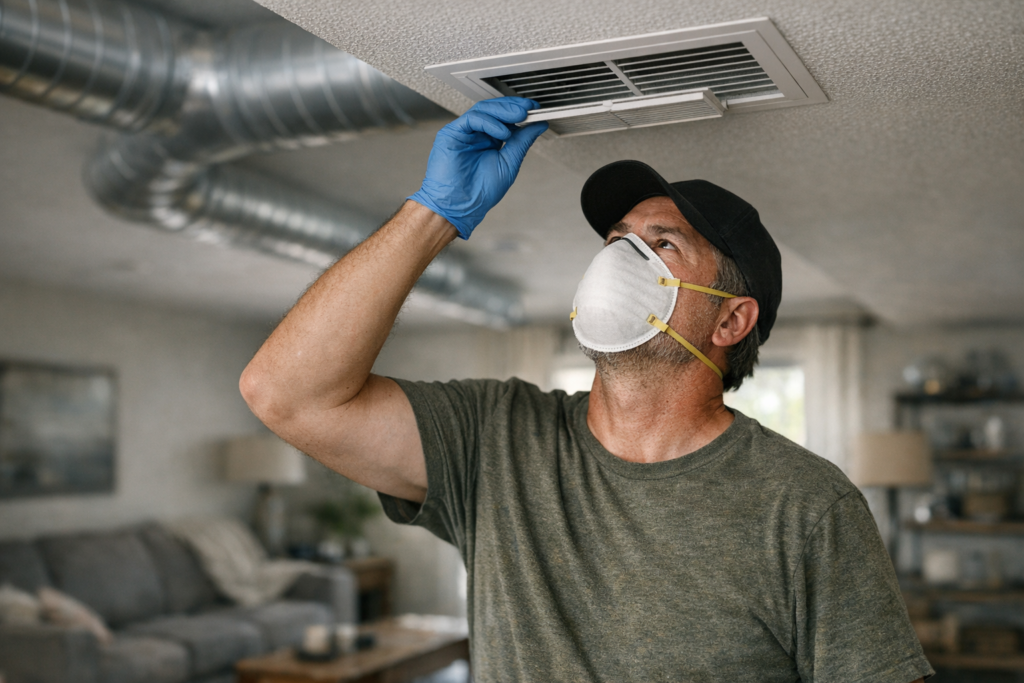
Running a contaminated HVAC system spreads particles into every room. Smoke damage cleanup for a home that survived includes HVAC cleaning to remove contaminated particulates from the air distribution system.
Surface cleaning follows a sequence that matters. Professional soot removal uses a correct dry-before-wet cleaning sequence, followed by HVAC system cleaning, odor elimination using thermal fogging or hydroxyl treatment, contents assessment, and full insurance documentation.
Dry wiping before wet cleaning prevents smearing soot into surfaces. Skipping that order can set stains permanently.

From that point on, he helped us through the entire process. He explained what the next steps would look like with insurance, helped coordinate packing out our house and getting everything into storage, helped us navigate the asbestos remediation, and was extremely comfortable and knowledgeable working with the insurance company throughout the process.
More than anything, Paul was responsive, prompt, and always willing to help. When something like this happens to your home, you really don’t know what to do or where to start, and having someone who knows the process and takes care of things the way Paul did made a huge difference for us.
Honestly, this was some of the best service I’ve received from any company in a really long time. I can’t say enough good things about Paul and Best Option Restoration.
Highly, highly recommend these guys!
 Posted on Google
Home Protection: Documenting Damage for Your Insurance Claim
Smoke claims are harder to prove than fire claims because the damage is less visible. Smoke damage is often underestimated or delayed without professional inspection, since it spreads throughout the property via air and HVAC systems.
The good news on coverage: smoke damage from a wildfire is covered under most standard homeowner policies even when the fire did not directly contact the structure.
To support home protection and a clean claim, keep strong records. Documentation including air quality testing, professional assessment of smoke infiltration, and a detailed remediation scope is essential because smoke damage without visible structural damage can be difficult to quantify.
One benefit homeowners miss: additional living expenses coverage applies if the home is uninhabitable during restoration.
When to Call for Smoke Damage Restoration
Light residue on a single windowsill may be a DIY task. A whole-house odor or HVAC contamination is not.
Treating wildfire smoke as a surface-only job leaves the source behind. Residential and multi-tenant properties benefit from treating wildfire smoke restoration as a whole-property problem rather than a quick surface-cleaning project.
Contents often need specialized recovery too. Professional contents restoration recovers furniture, clothing, electronics, documents, and personal property exposed to wildfire smoke using ultrasonic cleaning, ozone treatment, and material-specific cleaning protocols.
Key Takeaways for Lakewood Homeowners
Wildfire smoke damages homes miles from the fire line by seeping through vents and gaps, settling into porous materials, and lingering in hidden cavities. Document everything, keep your HVAC off until it is checked, and avoid masking odors with paint. Most standard policies cover this damage, but a detailed assessment makes the claim stick.
If your Lakewood home carries the smell of a nearby wildfire or shows soot on surfaces, Best Option Restoration of Lakewood can assess smoke infiltration, clean your HVAC and contents, and document the damage for your insurer. Call or text 303-500-3187, email info@borlakewood.com, or visit https://borlakewood.com.